


More news on this day
Emirates is reporting robust summer travel demand in 2026 as Dubai’s aviation sector edges close to pre-pandemic capacity, with network operations and passenger volumes approaching or exceeding historic benchmarks across the city’s airports.
Get the latest news straight to your inbox!
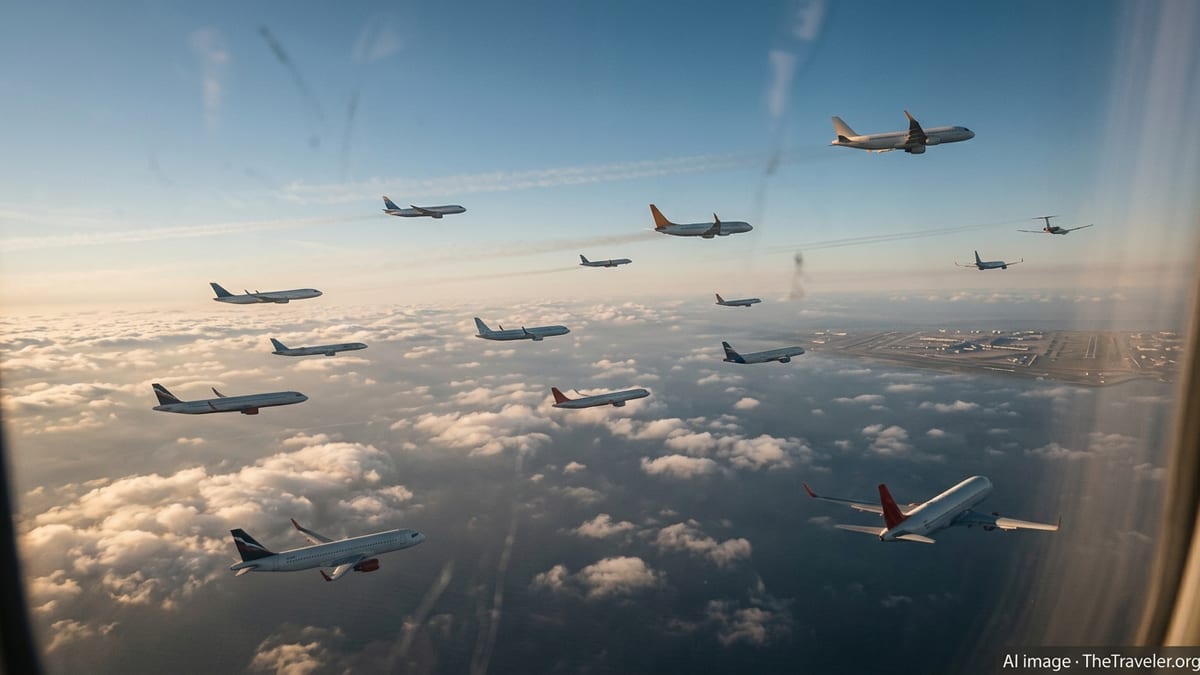
Dubai Aviation Nears Pre-Pandemic Capacity Thresholds
Publicly available traffic data indicates that Dubai International Airport has effectively returned to, and in some metrics surpassed, its pre-pandemic role as the world’s busiest international hub. Dubai Airports reported handling 95.2 million passengers in 2025, the highest annual figure in the gateway’s history and a new global benchmark for international traffic. This followed 92.3 million passengers in 2024, illustrating how the city’s hub has moved from recovery mode to a new phase of sustained, high-volume operations.
Wider UAE aviation statistics point in the same direction. National reports for 2025 show that airports across the country handled about 156.8 million passengers, with Dubai’s airports accounting for more than 104 million of those travellers. The figures underscore how aggressively capacity has been restored and scaled, bringing the overall system to roughly 98 percent of its pre-pandemic operating levels when measured by available seats and flight movements.
Dubai’s aviation stakeholders attribute the near-complete recovery to a combination of fast network reinstatement by home carriers, extensive infrastructure upgrades at DXB, and rising transfer flows between Asia, Europe and the Americas routed through the emirate. As airspace restrictions in the wider region have eased in 2026, schedules have been progressively rebuilt, giving airlines greater scope to match the surging demand seen in peak periods such as the northern-hemisphere summer.
The renewed scale is not only visible in annual totals, but also in month-by-month performance. Traffic through DXB in the first half of 2026 has continued to grow from already record-high baselines, with the airport handling more than 31 million guests in the first six months alone and reporting steadily rising monthly volumes through the second quarter.
Emirates Restores Network and Capacity to Near-Full Levels
On the airline side, Emirates has been central to that rebound, rebuilding a global network that now operates at virtually the same breadth as before the pandemic. The carrier’s most recent annual reporting shows that total capacity, measured in available tonne-kilometres, has recovered to around 99 percent of pre-2020 levels, while passenger capacity in seat-kilometre terms has also inched close to its historic high watermark.
By mid-2026, the airline was flying to roughly 137 destinations across more than 70 countries, with over 1,300 weekly frequencies, placing it within a few percentage points of its pre-crisis reach in terms of destinations served. Public material from Emirates and Dubai’s investment entities highlights that seat factors have stabilised close to 80 percent, broadly matching levels achieved in the final pre-pandemic year despite significantly higher absolute passenger numbers.
The company has also been adding capacity through fleet expansion and cabin retrofits. New Airbus A350 deliveries, alongside an expanded retrofit programme for Boeing 777 and A380 aircraft, have enabled Emirates to deploy more Premium Economy seats and refresh its long-haul product. Investment reports note that the retrofit programme has been scaled up to cover more than 200 aircraft, a move that effectively locks in a higher-capacity, four-class offering on many of the airline’s busiest routes.
Emirates’ cargo arm has contributed to the overall capacity story as well. SkyCargo has expanded its freighter operations and leveraged bellyhold space on passenger services, supporting trade flows through Dubai at the same time as the passenger business has returned to near-normal. Together, these trends help explain why analysts often describe the group as operating at roughly 98 to 100 percent of its pre-pandemic network and capacity, even as it sets new internal records for revenue and profitability.
Summer Travel Peaks Underscore Resilient Demand
The summer of 2026 is reinforcing how quickly long-haul demand has come back to Dubai and Emirates. Seasonal forecasts and airport advisories show that peak holiday windows continue to generate intense pressure on capacity, with DXB preparing for multiple stretches in which daily passenger throughput surpasses a quarter of a million travellers. Previous summer periods in 2024 and 2025 saw similar surges, including multi-day windows where more than three million passengers passed through the hub in less than two weeks.
Travel agency data and regional booking trends indicate that outbound leisure demand from the UAE remains strong, with international trips making up the clear majority of summer bookings. At the same time, Dubai continues to attract sizeable inbound tourist flows even in the hottest months, supported by indoor attractions, major shopping events and an expanding calendar of business and sports gatherings that fill aircraft cabins in both directions.
For Emirates, these conditions translate into consistently high load factors on trunk routes across Europe, Asia and North America during the June to August window. The airline has been deploying A380s with upgraded cabins on key summer routes and adding extra frequencies where fleet and airspace constraints allow. Public statements around the group’s 2024 to 2025 financial performance emphasise that forward bookings into the current year remain strong, suggesting that the pattern of intense summer peaks followed by robust winter high seasons is now firmly re-established.
Industry observers note that the pace of demand recovery has, in some segments, outstripped the speed at which capacity can be added back, especially given aircraft delivery timelines and ongoing regional airspace adjustments. This imbalance has helped support yields on many routes, contributing to the record profitability reported by the Emirates Group over recent financial periods.
Tourism and Connectivity Gains for Dubai
The near-complete restoration of Emirates’ network and the broader Dubai aviation system has had a visible impact on the emirate’s tourism indicators. Visitor statistics compiled by Dubai’s tourism authorities show that the city welcomed more than 17 million international overnight visitors in 2024, extending its position as one of the world’s top city destinations. Earlier, between January and July 2024 alone, Dubai attracted over 10 million visitors, an 8 percent increase year-on-year that set the stage for a record full year.
These visitor flows are closely intertwined with the hub role played by Emirates and DXB. International transfer traffic through Dubai accounts for a significant share of global connecting journeys, especially on east–west long-haul corridors linking Europe with Asia and Australasia. As airline schedules have normalised, this transfer segment has resumed its place as a core engine of passenger volumes, with more than 22 million annual transfer journeys estimated to be routed through DXB across Middle East hubs.
Connectivity rankings compiled by international organisations consistently place the UAE near the top of global air connectivity indices, with Dubai’s airports cited as key contributors. Industry reports attribute this performance to a mix of high-frequency links on major long-haul routes, extensive regional coverage across the Middle East, Africa and South Asia, and growing reach into secondary cities in Europe and the Americas through Emirates’ network strategy.
The rebound in aviation has also supported Dubai’s wider economic agenda. Government-linked investment entities report that Emirates alone contributed tens of billions of dirhams to Dubai’s economy in gross value added during 2023, with that figure expected to rise as capacity and visitor numbers continue to grow. Ancillary sectors such as hospitality, retail and events have all benefited from the return of high-volume air connectivity and the resumption of large international conferences, exhibitions and festivals hosted in the city.
Operational Challenges as Capacity Nears 98 Percent
Operating at roughly 98 percent network capacity presents its own challenges for Emirates and Dubai’s aviation system. With traffic volumes at or above previous peaks, there is limited flexibility to absorb disruptions from weather, airspace closures or technical issues without knock-on effects across the schedule. This has been evident during periods of regional airspace restrictions in recent years, when airlines were forced to reroute or temporarily trim services even as demand remained strong.
Dubai Airports has responded by emphasising efficiency and resilience. Operational data for 2024 and 2025 shows that the vast majority of passengers at DXB experienced short processing times at immigration and security, despite the record traffic. Investment in biometrics, smart gates and baggage systems has been ramped up, while the airport continues to work with airlines to optimise slot usage and turnaround times.
For Emirates, sustained high utilisation of wide-body aircraft and tight scheduling across its global network leaves little slack in fleet deployment. The airline is seeking to mitigate this by accelerating fleet renewal, adding new-generation aircraft and extending retrofit programmes to ensure cabin consistency and reliability. At the same time, it is gradually rebuilding capacity at Dubai World Central (Al Maktoum International Airport), which can serve as a pressure valve for future growth and potential large-scale infrastructure transitions.
Industry commentary suggests that the overarching priority for Dubai’s aviation players over the next few years will be to manage this near-full-capacity environment while continuing to deliver the service standards on which the hub’s reputation is built. With demand indicators for both leisure and business travel remaining positive, Emirates and Dubai’s airports appear set to operate at or near full stretch across upcoming peak seasons, making the current summer’s strong performance a likely template for years ahead.
Emirates Group financial performance 2024–25
Dubai Airports 2025 traffic and capacity update