


More news on this day
UAE air travellers are facing fresh disruption as Emirates, Etihad, Air Arabia and flydubai contend with rolling delays and cancellations, while Air France extends its suspension of Dubai flights amid ongoing regional security concerns and airspace restrictions.
Get the latest news straight to your inbox!
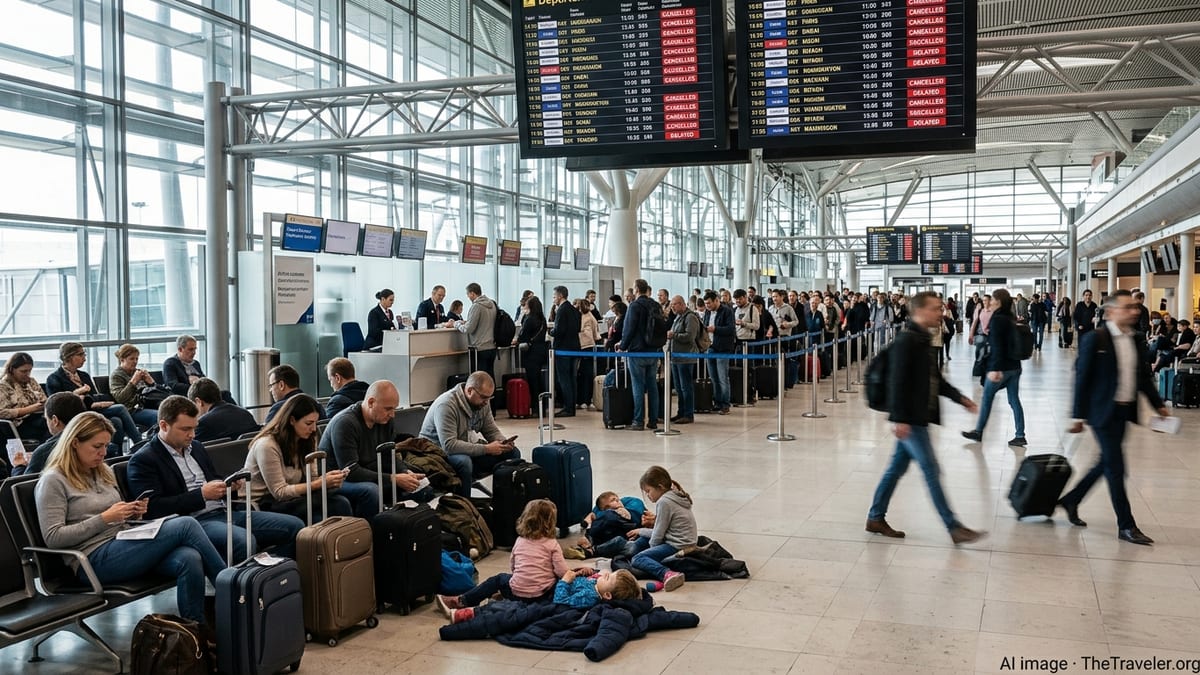
Air France prolongs Dubai suspension amid regional risks
Publicly available airline updates show that Air France has repeatedly extended a pause on flights to and from Dubai as it reviews security conditions affecting Gulf airspace. The carrier initially halted Dubai operations in late summer and subsequently pushed back the restart date several times, most recently confirming that services will remain suspended at least through mid-September while flights to Tel Aviv and Riyadh operate and Beirut remains suspended on later dates.
Reports from UAE-focused aviation coverage indicate that the latest extension has left Dubai as one of the few destinations in Air France’s Middle East network still without scheduled passenger services, even as other regional routes gradually return. The airline continues to cite the evolving security environment and conflict-related risks in the wider Gulf as key drivers of its cautious approach to routing and overflight.
Travel industry trackers note that Air France is not alone in maintaining a conservative stance on UAE routes. Several European and Asian carriers, including Air Canada, British Airways, Singapore Airlines, KLM and Cathay Pacific, have kept partial or full suspensions of Dubai and Abu Dhabi services in place into late 2026 or beyond, reflecting broader uncertainty around airspace stability and insurance requirements.
Advisories from European aviation regulators have also played a role. The European Union Aviation Safety Agency has extended its conflict-zone information bulletin for parts of the Gulf through the end of September, encouraging operators to carefully assess risks associated with flight paths that cross areas affected by the US–Iran confrontation and related regional tensions.
Emirates and Etihad juggle delays while keeping key routes open
While foreign carriers scale back, UAE-based airlines have largely kept their networks running, but not without disruption. Gulf-based news reports on 9 and 10 September describe Emirates and Etihad Airways managing pockets of delays and diversions from Dubai International Airport and Abu Dhabi’s Zayed International Airport as they navigate shifting airspace constraints, operational issues and weather-related complications on some long-haul routes.
Etihad has continued to operate many of its Abu Dhabi services to Bahrain and Kuwait with relatively limited cancellations, but flight-status snapshots show select services to cities such as Barcelona, Bangkok, Jakarta and several South Asian destinations either delayed, diverted or rescheduled. One Abu Dhabi–Barcelona flight was rerouted to Madrid due to adverse weather, while separate services experienced timing adjustments attributed to operational reasons.
Emirates has focused on preserving connectivity on high-demand Gulf and Asia services, with Dubai–Bahrain and Dubai–Kuwait flights appearing in schedules even as the wider regional picture remains fluid. At the same time, disruption has been evident on certain long-haul links, particularly those involving the UK following an air traffic control outage, and on selected services to destinations such as Shanghai and Brisbane where knock-on delays have been recorded.
On its travel updates page, Emirates advises customers to check flight status and monitor email and SMS notifications closely before heading to the airport. The airline highlights that schedules may change at short notice due to external factors, reinforcing a broader message being echoed across the industry as carriers attempt to maintain operations through a volatile period.
Air Arabia and flydubai adjust regional schedules
Low-cost carriers Air Arabia and flydubai, which provide vital point-to-point links across the Gulf, Middle East, Caucasus and South Asia, have also taken a flexible approach to scheduling in response to the latest disruptions. Flight-status data from early September shows clusters of delays and cancellations on Air Arabia’s services from Sharjah and Abu Dhabi to Kuwait and Bahrain, as well as to cities such as Cairo, Tbilisi, Baku and Thiruvananthapuram.
Coverage tracking operations at Dubai International Airport and Sharjah points to Air Arabia cancelling or rescheduling several flights on days when regional tensions or airport-specific issues were most acute. For example, some Sharjah–Kuwait and Sharjah–Bahrain services on early September dates were marked as cancelled, with others operating as planned or shifted to later times. The airline has been encouraging passengers to verify departure times shortly before travel.
flydubai, meanwhile, has kept much of its Gulf network open, with flights to Kuwait and Bahrain reported as operating on schedule even as the airline contends with wider ripple effects. Recent disruption reports list a series of delayed or cancelled arrivals from Russian, Saudi, Central Asian and Balkan cities, including services from Yekaterinburg, Moscow, Jeddah, Minsk, Kazan, Abha, Baku and Sarajevo, attributed to a combination of airspace, technical and airport-related factors.
The carrier has urged passengers to arrive at Dubai International Airport at least four hours before departure, complete online check-in where possible and allow additional time for security and immigration. This guidance reflects expectations of busier terminals and potential last-minute gate or timing changes as flight plans are adjusted around restricted corridors and congestion in neighbouring airspace.
Security advisories and airspace warnings shape airline decisions
The current wave of schedule changes is rooted in a complex security backdrop rather than in issues specific to UAE airports themselves. Regional media and industry sources consistently link the disruptions to heightened tensions between the United States and Iran, intermittent military activity and precautionary airspace measures affecting parts of the Gulf and surrounding region.
As security agencies update their assessments, aviation regulators and insurers weigh the risks associated with flights that overfly or approach sensitive areas. The extension of the Gulf-focused conflict-zone bulletin by European authorities into late September underscores the view that airspace conditions remain subject to sudden change, prompting airlines to reroute or suspend flights that would otherwise traverse contested zones.
Against this backdrop, airlines operating from the UAE have had to weigh commercial demand against operational resilience and risk tolerance. UAE carriers benefit from the geographic position and infrastructure of Dubai and Abu Dhabi, which remain fully open and capable of handling rerouted traffic, but still must coordinate closely with air navigation providers when significant sections of airspace are temporarily restricted or avoided.
International airlines, especially those with smaller Gulf footprints, often choose to suspend services outright rather than attempt complex detours that might add time, fuel burn and crew costs. The extended halt in Air France’s Dubai flights fits into this pattern, alongside longer suspensions announced by carriers such as Air Canada, Cathay Pacific and British Airways on certain Middle East routes.
What travellers should expect in the coming days
For passengers planning to fly to or from the UAE in the short term, publicly available information suggests that airports in Dubai and Abu Dhabi remain operational but that conditions can shift quickly. Daily monitoring by aviation outlets shows that clusters of delays and cancellations continue to emerge on specific routes, particularly where aircraft must navigate around restricted airspace or where external issues, such as technical outages in foreign air traffic control systems, compound the regional challenges.
Travel analysts note that the presence of multiple large hub carriers in the UAE has so far helped absorb some of the disruption. Emirates, Etihad, Air Arabia and flydubai have generally maintained core regional and long-haul connectivity, adjusting timings or substituting aircraft where necessary. Nonetheless, their latest advisories emphasise that all travel plans should be considered subject to change at relatively short notice.
Passengers are advised, based on airline guidance and airport updates, to confirm their flight status as close to departure as possible via official websites and apps, to ensure contact details in bookings are accurate, and to anticipate longer processing times at terminals. Those holding tickets with foreign carriers that have suspended UAE services, including Air France, may need to explore rebooking options via partner airlines, alternative routings or travel agents.
With regional security assessments and regulatory advisories under regular review, industry observers expect airlines to continue fine-tuning their schedules to and from the UAE in the weeks ahead. Travellers can therefore expect a continuing pattern of mostly functioning operations punctuated by pockets of disruption, especially on routes exposed to the most sensitive airspace corridors.
Gulf News: UAE flights delays as Air France extends Dubai suspension
The National: Middle East flights status and suspensions
AirHelp: Dubai and Abu Dhabi flight disruption tracker
Gulf News: UAE flights status and Indonesia travel disruption