


The stretch of waterfront between Ortaköy and Beşiktaş is one of Istanbul’s classic urban walks: mosques and palaces on one side, the Bosphorus and passing ferries on the other. With good planning you can link Ortaköy, Beşiktaş and Dolmabahçe Palace in a single relaxed afternoon, mixing local buses, short taxi hops, Bosphorus ferries and a very scenic promenade.
Get the latest updates straight to your inbox!
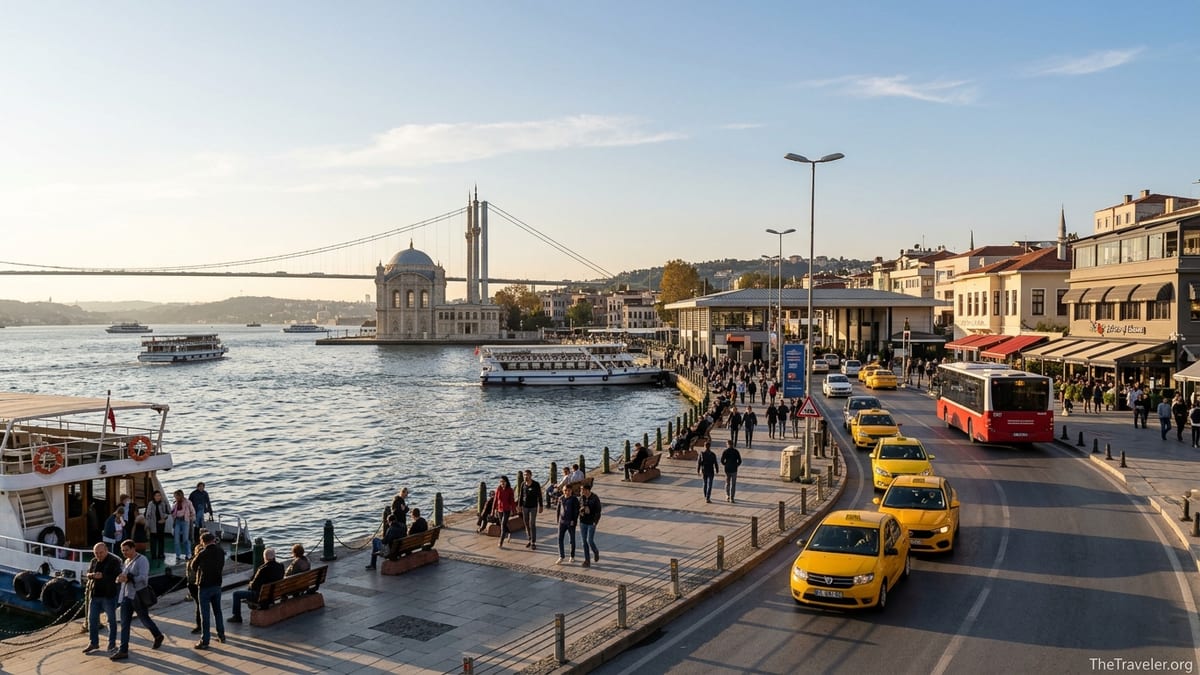
Ortaköy to Beşiktaş at a Glance
Ortaköy and Beşiktaş sit on the European shore of the Bosphorus, roughly 3 kilometers apart. Walking between them at a comfortable pace takes around 35 to 45 minutes, not counting photo stops or café breaks. For many visitors this is the most enjoyable way to move between the two neighborhoods, because the route passes landmarks such as Çırağan Palace and several waterfront parks.
Public transport is simple as well. Frequent city buses run along the coastal road between Ortaköy and Beşiktaş, typically taking 10 to 15 minutes depending on traffic. Taxis cover the same distance in roughly the same time, though afternoon congestion can add delays, especially in summer and on weekends. There are also useful ferry links from both Ortaköy and Beşiktaş to other parts of the city, which you can combine with the walk.
Most travelers can comfortably combine Ortaköy, Beşiktaş bazaar streets and an exterior visit or full tour of Dolmabahçe Palace in one afternoon. A realistic on-the-ground plan would be a late lunch and quick explore of Ortaköy, a waterfront walk or bus to Beşiktaş, coffee or snacks there, then a final 15 to 20 minute walk or short bus ride on to Dolmabahçe before closing time.
Because this is a busy urban corridor used by commuters as well as tourists, timing matters. Late mornings and early afternoons on weekdays are typically quieter, while Sunday afternoons and public holidays can feel very crowded around Ortaköy Mosque, the kumpir (stuffed baked potato) stands and Beşiktaş ferry terminal.
Walking the Waterfront: Ortaköy to Beşiktaş on Foot
The classic route starts at Ortaköy Square, in front of the Ortaköy Mosque and the Bosphorus Bridge. From the square, turn left with the water on your right and follow the main coastal road in the direction of Beşiktaş. The first 10 to 15 minutes are slightly chaotic: the sidewalk can narrow, you will pass bus stops, small parks and occasional roadworks, and you will share the space with locals commuting on foot.
After about 15 minutes you reach the area around Çırağan Palace and the luxury Çırağan Palace Kempinski hotel. Here the sidewalk widens and the walk becomes more pleasant, with better views across to the Asian side and more shade from roadside trees. Many visitors detour into one of the small waterfront parks to sit on the low walls, watch the ferries passing Ortaköy and listen to the hum of traffic on the Bosphorus Bridge overhead.
As you continue toward Beşiktaş, the walk becomes more urban. Expect to pass petrol stations, apartment blocks and a mix of casual eateries. The last 10 minutes approach Beşiktaş Square and the ferry piers, where the pedestrian flow intensifies again. You will likely see lines of people waiting for ferries to Kadıköy and Üsküdar, and fans in black and white shirts heading toward the Beşiktaş football stadium on match days.
There are no steep hills on this walk, but the pavement can be uneven and sometimes broken in places. Comfortable shoes are strongly recommended. If you are traveling with a stroller or wheeled suitcase, be prepared for a few curbs and short ramps. In summer, the sun can be strong on the exposed sections, so a hat, sunglasses and a bottle of water purchased from a kiosk in Ortaköy or Beşiktaş will make a noticeable difference.
Bus and Taxi Options Between Ortaköy and Beşiktaş
If your priority is to save time or energy, city buses along the coastal road are straightforward. Several IETT routes link Ortaköy and Beşiktaş; the exact line numbers change from time to time, but you can expect multiple buses per hour in daytime. The ride is short, usually 10 minutes, and you tap an Istanbulkart when boarding at the front door. Fares for a single ride are generally in the low tens of lira and cost roughly the same whether you ride one or three stops along this stretch.
In practice, most visitors simply check a mapping app for the next bus and walk to the nearest stop on the main road above Ortaköy Square. Buses can be crowded at commuter times, especially between 8:00 and 9:30 in the morning and from 17:00 to 19:00 in the evening. If you board at Ortaköy heading to Beşiktaş at those times, expect to stand and weave through a mix of students, office workers and shoppers carrying bags.
Taxis are widely available at both Ortaköy and Beşiktaş. The fare for the short hop between the two neighborhoods is modest, but traffic on the waterfront road can slow you down. As of mid 2026, visitors typically report paying the equivalent of a few euros for this trip, depending on traffic and any slow sections near the stadium or major hotels. Always insist that the driver switches on the meter, and be cautious if someone suggests a fixed price that feels disproportionately high for such a short distance.
In peak-season afternoons, a hybrid strategy often works best. You might walk from Ortaköy to somewhere near Çırağan Palace, then hail a taxi for the rest of the way to Dolmabahçe or Beşiktaş Square if the heat is tiring. Conversely, after visiting Dolmabahçe Palace you may decide to walk downhill to Beşiktaş and then call a taxi from a quieter side street, avoiding the most congested junctions near the main ferry pier.
Using Ferries and Dolmuş to Connect the Two
While there is a direct municipal ferry link between Ortaköy and Beşiktaş at certain times, the schedule is limited and varies by season. Many travelers instead rely on the frequent ferries from Beşiktaş to Kadıköy or Üsküdar, and pair those with a walk or short bus ride to or from Ortaköy. For example, you might spend an hour in Ortaköy, walk to Beşiktaş in the late afternoon, then take a sunset ferry to Kadıköy for dinner on the Asian side.
Ferry prices are generally similar to bus fares when using an Istanbulkart. You tap when entering the pier and again when transferring at some central hubs. For a realistic idea of costs, assume that a simple Beşiktaş to Kadıköy crossing will cost roughly the price of a bus journey, still in the low tens of lira, while longer Bosphorus routes involving more than three piers can be slightly more expensive. The benefit is the experience itself: open decks, strong sea breeze, tea served from a small onboard kiosk and wide views of Ortaköy Mosque, Dolmabahçe Palace and the modern skyline.
Shared taxis known as dolmuş used to be a key feature of this waterfront, but their role between Ortaköy and Beşiktaş has become less central as buses increased. Still, you may see yellow minibuses or smaller shared vehicles stopping frequently along the coastal road. If you do use one, confirm with the driver that he is heading to Beşiktaş, have small cash ready, and be prepared for a crowded, very local experience with quick stops and tight seating.
For most visitors on a one-afternoon outing, the most practical water-based combination is to enter or exit the area by ferry at Beşiktaş. Arrive in Beşiktaş from Kadıköy or Üsküdar by midmorning, walk or bus to Ortaköy for lunch under the bridge, then make your way back to Beşiktaş and onward by ferry again in the evening, when the light over the Bosphorus is at its best.
Adding Dolmabahçe Palace to Your Route
Dolmabahçe Palace sits between Beşiktaş and Kabataş, roughly a 15 to 20 minute walk from Beşiktaş Square along the waterfront. It is entirely feasible to include the palace in the same afternoon as Ortaköy and Beşiktaş, provided you pay attention to opening hours. In recent years, last entry has typically been in the mid to late afternoon, with the palace closed on certain Mondays or national holidays, so check the current schedule before setting out.
A common pattern is to start at Dolmabahçe late in the morning. Allow at least two hours for a reasonably thorough visit, including the main ceremonial hall, the harem section and the gardens. After leaving the palace gates, you walk or take a very short bus ride to Beşiktaş for a coffee break by the ferry piers, then continue on to Ortaköy for the late afternoon and early evening.
The reverse is also possible. Spend lunch and early afternoon in Ortaköy, then take a bus or taxi back toward Dolmabahçe, timing your arrival at least an hour and a half before last ticket sales. In this direction you will pass Çırağan Palace and high-end hotels, giving you a sense of the historic shoreline mansions that once lined the Bosphorus. Keep in mind that security checks and ticket queues can add 20 to 30 minutes on busy days, especially in school holidays.
From a practical standpoint, Dolmabahçe combines well with onward travel. The palace lies close to the Kabataş transport hub, where trams to Sultanahmet depart and funiculars run up to Taksim. This means that a late-afternoon visit to Dolmabahçe after Ortaköy and Beşiktaş can flow naturally into an evening in Beyoğlu or back in the Old City without complicated transfers.
Food, Coffee and Snack Stops Along the Way
Ortaköy is famous for its kumpir stands, where baked potatoes are split open and loaded with toppings like olives, pickles, sausage slices and corn. Prices change with inflation, but you can expect to pay the equivalent of a simple sit-down meal for a fully loaded kumpir, enough to serve as lunch. Many travelers choose a stall on the square behind the mosque, order a potato and then find a seat on the low steps facing the Bosphorus Bridge.
Beyond kumpir, Ortaköy has waffle stands, simple fish sandwiches and a cluster of waterfront cafés where a Turkish tea or small coffee will cost a few dozen lira, depending on the view and the level of polish. A classic combination is a simit bought from a street vendor plus a tea in a glass tulip-shaped cup, enjoyed on the stone seating around the waterfront promenade as ferries pass close by.
Beşiktaş offers a different food atmosphere. Around Beşiktaş Çarşı, the bazaar-like grid of streets behind the ferry terminal, you will find narrow alleys packed with lokantas serving home-style stews and rice, kebab houses, meze bars and modern third-wave coffee shops. A budget-friendly option is to choose a lokanta where food is displayed in metal trays behind glass; you point at dishes like green beans in olive oil, meatballs in tomato sauce or chickpeas over rice and pay at the counter, often for less than a midrange restaurant meal in more touristy districts.
Along the actual walking route between Ortaköy and Beşiktaş there are fewer destination restaurants but several neighborhood bakeries and corner cafés. These are perfect for a short break if the weather changes suddenly. On chilly days you might warm up with salep, a thick hot drink flavored with orchid root and cinnamon, while in summer an iced coffee or freshly squeezed orange juice from a small kiosk can be very welcome.
Crowds, Safety and Timing Your Visit
Both Ortaköy and Beşiktaş are busy local centers as well as tourist draws, so crowds are a feature rather than a bug. Ortaköy Square can be extremely busy on Sunday afternoons, with local families, wedding photo shoots in front of the mosque and a line for kumpir and waffles. If you prefer a quieter experience, aim for late morning on weekdays, when there is still atmosphere but more space to sit.
The waterfront road between Ortaköy and Beşiktaş is a major artery. Traffic noise and exhaust fumes are part of the reality, although the presence of the sea and open views helps. Crossing the road requires care, especially near bus stops and petrol stations where vehicles pull in and out. Use designated crossings where available and avoid stepping into the road to take photographs.
In terms of personal safety, the area is generally considered safe during daylight and early evening, with plenty of pedestrians around. As in any busy city, pickpocketing can occur in crowds, especially near ferry terminals, bus stops and inside packed buses. Carry bags zipped and in front of you, and avoid keeping your phone in a loose back pocket. At night, the main streets remain active, but if you are walking back late consider using a taxi for the final stretch rather than wandering through unfamiliar side streets.
Weather is another factor in timing. In summer, midday heat reflecting off the asphalt can make the walk feel longer than it is, so starting after 16:00, when the sun is lower and the Bosphorus breeze is stronger, is often more comfortable. In winter, daylight is short, and a late-afternoon walk from Ortaköy to Beşiktaş can coincide with rush hour and drizzle, so packing a compact umbrella and a light waterproof layer is wise.
Planning One Perfect Afternoon Linking Both Neighborhoods
One practical route for first-time visitors begins at Dolmabahçe Palace late in the morning. After exploring the palace and gardens until early afternoon, you walk or bus to Beşiktaş and have a casual lunch in a lokanta in Beşiktaş Çarşı. After coffee, you continue on foot along the waterfront toward Ortaköy, arriving there in the late afternoon when the light softens and the Bosphorus Bridge begins to glow with early evening lights.
In Ortaköy you might wander the craft stalls and side streets for 30 to 45 minutes, then choose a kumpir or waffle and sit on the low seawall with your back to the mosque. As the sun lowers over the Asian side, you can watch ferries turning across the water and traffic beginning to build on the bridge above. If you stayed long at the palace earlier, you might choose a simple tea instead of a second full meal, keeping this stop light and leisurely.
For the return, many travelers either bus back to Beşiktaş and then hop on a ferry to Kadıköy for dinner or take a taxi directly from Ortaköy to their hotel if they are staying in areas like Taksim, Şişli or Sultanahmet. The waterfront road will be busy from late afternoon until around 20:00, so allow for extra time if you have evening plans. Using a mapping app with live traffic can help you decide whether to walk, bus or get a taxi at any point along the route.
If you prefer to reverse the sequence, an equally good option is to start with a late lunch in Ortaköy, walk to Beşiktaş for coffee and a wander through the bazaar streets, then finish with an early evening tour of Dolmabahçe’s exterior and gardens if opening times allow, or simply admire the palace façade from the outside before catching a tram or ferry onward. Either way, balancing walking segments with short public transport hops allows you to keep the day full but not exhausting.
FAQ
Q1. How long does it take to walk from Ortaköy to Beşiktaş?
Most people take around 35 to 45 minutes at a relaxed pace, not including photo stops or café breaks, as the distance is roughly 3 kilometers along the waterfront.
Q2. Is the walk between Ortaköy and Beşiktaş safe in the evening?
The main route is generally considered safe into the evening, with many locals around, but you should stay on well lit main streets and consider a taxi if it gets very late.
Q3. Which direction is better, walking from Ortaköy to Beşiktaş or the reverse?
Both work well, but many visitors prefer starting in Beşiktaş and walking to Ortaköy so they arrive at Ortaköy Square and the Bosphorus Bridge views in time for late afternoon light.
Q4. Are there direct ferries between Ortaköy and Beşiktaş?
At times there are direct municipal ferries linking the two, but schedules are limited and can change, so most travelers rely on walking, buses or taxis between them and use ferries mainly from Beşiktaş to other districts.
Q5. Can I visit Dolmabahçe Palace and still have time for both neighborhoods?
Yes, if you allow at least two hours for Dolmabahçe and then plan a simple lunch plus a single long walk or short bus hop between Ortaköy and Beşiktaş, you can comfortably fit all three into one afternoon.
Q6. Do I need an Istanbulkart to travel between Ortaköy and Beşiktaş?
Having an Istanbulkart is highly recommended, as it makes paying for buses and ferries quick and gives access to standard public transport fares, though taxis can be paid in cash.
Q7. Are there good food options for vegetarians along this route?
Yes, both Ortaköy and Beşiktaş have vegetarian friendly choices, including kumpir with vegetable toppings, meze plates, soups and salads in lokantas, plus a growing number of modern cafés with vegetarian dishes.
Q8. How crowded does Ortaköy get on weekends?
On Saturday and especially Sunday afternoons, Ortaköy Square can be very crowded with locals and visitors, so expect lines for kumpir and waffles and a busy, festival like atmosphere.
Q9. Is the route suitable for strollers and people with limited mobility?
The walk is mostly flat, but pavements can be uneven and narrow in places, so while a stroller is manageable with some care, travelers with limited mobility may find a bus or taxi more comfortable for at least part of the way.
Q10. What is the best season to combine Ortaköy, Beşiktaş and Dolmabahçe in one day?
Spring and autumn are ideal, offering mild temperatures and longer daylight hours, while summer can be hot in the middle of the day and winter brings shorter, often wetter days.