


More news on this day
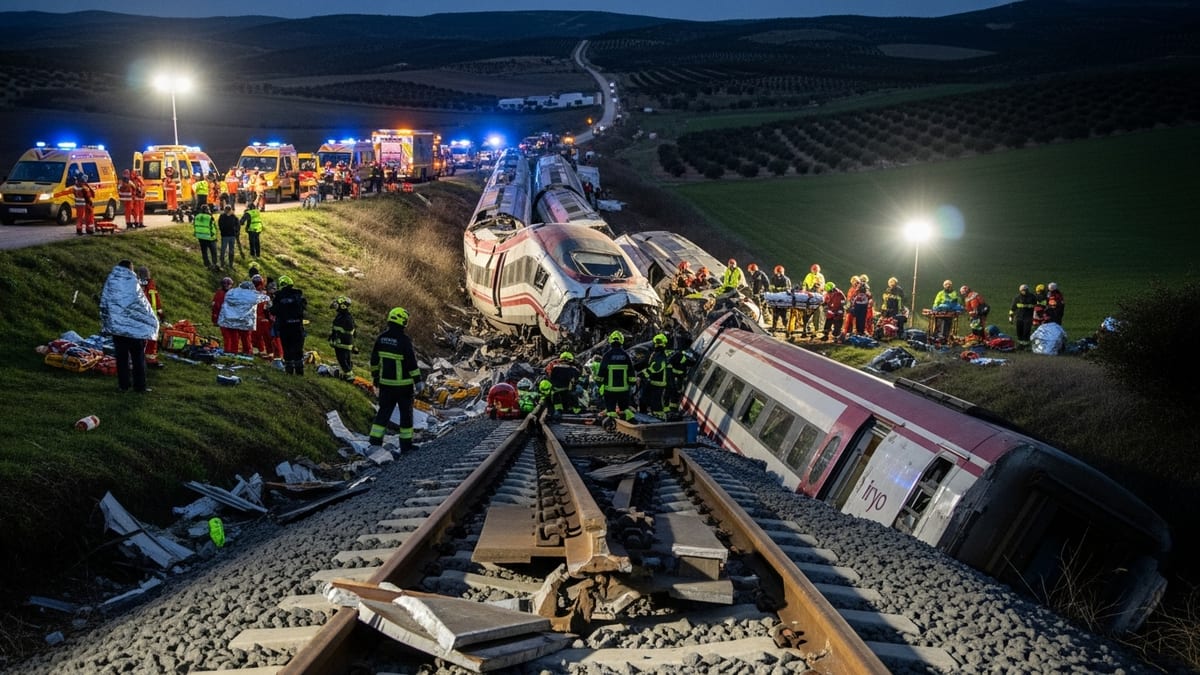
East Midlands Railway has expressed that it is "deeply sorry" following an initial update from the Rail Accident Investigation Branch into a fatal rear-end collision near Bedford that killed a driver and injured more than 100 passengers.
Get the latest news straight to your inbox!
Preliminary findings highlight red signal and sudden stop
According to the Rail Accident Investigation Branch (RAIB), the East Midlands Railway commuter service involved in the Bedford crash passed a red signal moments before it struck the rear of a stationary intercity train on the same line near Elstow, just south of Bedford. Early technical information indicates that the collision occurred on the afternoon of 19 June, when both trains were running toward London St Pancras.
Investigators report that the leading London-bound service, an intercity train, had come to an unexpected halt after its onboard Automatic Warning System is understood to have experienced a fault which triggered a brake application. Operational logs and public summaries suggest the train then remained stopped on the main line while procedures for dealing with the systems issue were followed.
The following commuter service, also operated by East Midlands Railway, continued along the same track section and passed a signal that was displaying red shortly before the impact. The RAIB’s initial chronology indicates that the brakes on the following train were applied only a few seconds before the collision, leaving insufficient distance to avoid striking the stationary service ahead.
RAIB’s early update stresses that its findings are preliminary and that a fuller technical report will follow after detailed analysis of data from onboard recorders, signalling systems, and maintenance and training records. The branch typically publishes a final report many months after a major incident, often with a series of safety recommendations for operators and infrastructure managers.
Rail operator issues apology and pledges cooperation
In a public statement released after the RAIB update, East Midlands Railway managing director Will Rogers said the company was deeply sorry that the collision occurred on its network. He extended condolences to the family and colleagues of the driver who died, 60-year-old Shaun Burton, and expressed sympathy for the many passengers who suffered injuries.
The operator has stated that it is cooperating fully with both the RAIB investigation and a parallel inquiry by the Office of Rail and Road. Publicly available information shows that EMR has committed to providing investigators with access to staff, training material, maintenance records and data from the trains’ onboard systems in order to assist in reconstructing the sequence of events leading up to the crash.
Company representatives have also highlighted the normally high safety record of Britain’s railways while acknowledging that the scale of the Bedford collision has caused profound shock across the industry and among regular passengers. EMR has said it is focused on supporting those affected, including arranging practical assistance and signposting to medical and psychological support services where needed.
Rail unions and passenger groups have welcomed the commitment to transparency, while stressing the importance of allowing the technical investigation to proceed without premature conclusions. Commentators across the sector are already pointing to the crash as a pivotal moment in the discussion about driver workload, in-cab warnings and the resilience of safety systems when a train ahead is unexpectedly stopped on a busy main line.
Impact on passengers and the Bedford rail corridor
The Bedford collision resulted in a high number of casualties for a modern UK rail accident. Public reports indicate that more than 100 passengers required hospital treatment, with several remaining in critical condition in the days after the crash. Many others sustained minor injuries or shock after the violent rear-end impact.
In the immediate aftermath, emergency services declared a major incident, and services on the busy corridor between Bedford and London were severely disrupted. Trains were suspended or diverted while damaged rolling stock was recovered and engineers assessed the condition of tracks, overhead lines and signalling equipment.
Travelers across the East Midlands and the wider region experienced extended journey times and cancellations across multiple days, underlining how a single failure on a congested main line can ripple through the broader timetable. Replacement buses and alternative routes via neighboring operators were arranged, but capacity constraints meant many passengers had to change long-planned journeys at short notice.
For many regular commuters, the event has raised renewed questions about safety and reliability on intercity and outer suburban services feeding into London. Industry observers note that while serious rail accidents in Britain remain rare by international standards, when they do occur they can have far-reaching human and operational consequences.
RAIB’s role and the wider safety context
The RAIB is an independent body tasked with investigating rail accidents in the United Kingdom in order to identify causes and recommend safety improvements. Its remit covers main line railways, light rail and heritage lines, and its reports focus on technical, operational and systemic factors rather than allocating legal blame.
Recent investigations, including the final report into the 2024 Talerddig collision in Wales, have examined how signalling design, train protection systems and railhead conditions interact with driver decision-making in the seconds before an accident. In that case, RAIB highlighted how low adhesion, braking performance and the use of emergency systems can determine whether a collision is avoided or its severity reduced.
Analysts point out that the Bedford crash comes amid broader efforts to modernise Britain’s intercity fleet and signalling infrastructure. The involvement of both a new bi-mode intercity train and a modern commuter unit in this incident is expected to focus particular attention on crashworthiness, the layout of crumple zones and the performance of cab structures in high-speed impacts.
RAIB’s eventual report on Bedford is widely expected to look at how the signalling system behaved as the first train stopped, whether additional train protection technology might have mitigated the consequences of a signal being passed at red, and what further defences could prevent a similar chain of events on intensively used main lines.
Next steps for the investigation and the railway
In the weeks ahead, investigators will continue downloading and analysing data from the trains’ onboard recorders, examining the physical evidence at the crash site and interviewing staff involved in the operation of both services. The RAIB is likely to publish further short updates if urgent safety issues are identified that require rapid action by operators or infrastructure managers.
For East Midlands Railway, the immediate focus remains on supporting those affected and maintaining services while cooperating with multiple inquiries. The company has indicated that it will also conduct its own internal review, which may lead to interim changes in training, operational rules or route risk assessments even before the official RAIB recommendations are finalised.
Across the wider rail industry, the Bedford crash is intensifying debate about whether existing layers of protection are sufficient on busy mixed-traffic lines into major cities. Questions are being raised about the spacing and configuration of train protection equipment near junctions, the clarity of in-cab warnings in complex signalling environments and the safeguards in place when a train ahead suffers a systems fault and stops unexpectedly.
For passengers, the investigation and the public apology from EMR are likely to be closely watched milestones on the path to restoring confidence. As the technical work continues, attention will focus on how quickly lessons are identified and translated into practical changes on trains and infrastructure, so that the circumstances that led to the fatal Bedford collision are not repeated.