


More news on this day
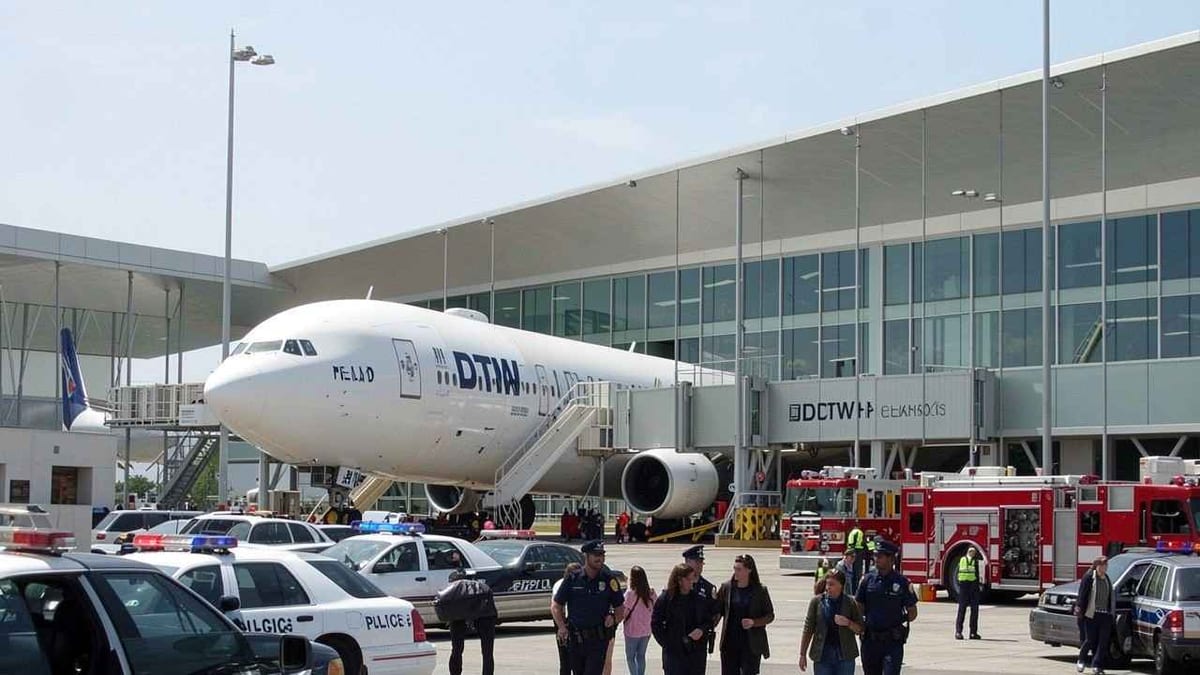
An Envoy Air flight operating between Dallas Fort Worth International Airport in Texas and Fort Smith Regional Airport in Arkansas diverted from its planned route in recent days, drawing renewed attention to how summer weather, heavy traffic linked to major events, and tight regional-airline schedules can rapidly disrupt short-haul operations.
Get the latest news straight to your inbox!
Short-Hop Regional Route Sees Midflight Disruption
The Dallas Fort Worth to Fort Smith corridor is a short regional sector, typically flown by Envoy Air under the American Eagle brand with Embraer regional jets. Publicly available schedule data shows around twenty weekly departures on this route in July 2026, reflecting its role as a key connector for northwest Arkansas travelers feeding into American Airlines’ largest hub.
Tracking information from multiple flight-status platforms indicates that one such Envoy-operated service between Dallas Fort Worth and Fort Smith recently left its planned routing and diverted before reaching its Arkansas destination. While specific operational details for the diversion have not been widely disclosed, data logs show the flight terminating at an alternate airport instead of continuing to Fort Smith, an outcome generally associated with weather, air traffic constraints, or technical issues.
Regional flights such as this one often operate under tight turnaround windows, meaning that even a single disruption can create knock-on effects for subsequent legs. When a short-hop flight diverts, crews may “time out” under duty rules, aircraft may be repositioned empty, and passengers can find themselves rebooked through other hubs or onto later departures.
The incident comes at a time when travelers across the American Airlines network have reported diversions, extended ground holds, and irregular operations into and out of Dallas Fort Worth, underscoring the fragility of schedules built around intense hub activity.
DFW Pressures: Weather, Events and Airspace Constraints
Dallas Fort Worth International Airport is one of the busiest hubs in the United States and the primary base for American Airlines and its regional affiliates, including Envoy Air. During the northern summer, the airport frequently contends with thunderstorms, low clouds, and convective weather systems that constrain arrivals and departures, making diversions more likely on shorter segments where holding options are limited.
Alongside seasonal weather, the broader North Texas airspace has been under additional strain in mid 2026 as the region hosts matches and fan events associated with the 2026 FIFA World Cup. Federal aviation notices describe special air traffic procedures and temporary restrictions around the Dallas Fort Worth metroplex through mid July, measures intended to enhance safety but which can also complicate routing and slot availability for commercial flights.
Operational advisories issued for the area in recent weeks refer to diversion-recovery tools activated for Dallas Fort Worth and nearby airports, signaling that planners anticipated a higher likelihood of aircraft diverting away from the hub during periods of congestion or rapidly deteriorating weather. Under such conditions, dispatchers may proactively file alternate airports along a route, increasing the chance that a short regional hop like Dallas to Fort Smith could be rerouted midflight if circumstances change.
Travelers have simultaneously shared accounts of extended delays, diversions to cities such as Tulsa and other nearby airports, and complex rebookings when Dallas traffic slows, suggesting the Envoy Air Dallas to Fort Smith diversion fits within a broader pattern of strain on the hub network this season.
Impact on Passengers and the Fort Smith Market
For passengers on the diverted Envoy Air flight, the immediate effect would likely have included an unplanned landing at an alternate airport and uncertainty over revised arrival times into Fort Smith. On shorter regional legs, where block times can be under an hour, even modest weather or flow-control delays may leave little margin to complete the flight as scheduled.
Fort Smith Regional Airport relies heavily on its Dallas Fort Worth connection for both business and leisure traffic, as the route links western Arkansas to hundreds of onward domestic and international destinations. When the link is disrupted, travelers can face missed connections, overnight stays, or longer surface journeys to reach their final destinations.
Because Envoy Air typically cycles the same aircraft through multiple short segments in a day, one diversion can ripple through later flights, potentially affecting passengers booked on subsequent Dallas Fort Worth and Fort Smith rotations. Publicly available performance metrics for the route generally show strong on-time statistics, but any day with diversions or extended delays can temporarily erode that record.
Local hospitality and ground-transport services in Fort Smith can also feel the effects when inbound traffic is reduced. Fewer arrivals mean fewer rental car pickups, hotel check-ins, and onward road journeys, a reminder of how dependent smaller regional markets are on the reliability of a single major hub connection.
Envoy Air’s Role in the American Eagle Network
Envoy Air operates as a key regional carrier for American Airlines, flying under the American Eagle brand and centering much of its activity around Dallas Fort Worth. The company uses a fleet of regional jets to serve shorter and lower-demand markets, with Fort Smith among the long-standing spokes connected to the hub.
Industry data and historical records show that regional affiliates like Envoy handle a large share of American’s domestic departures, especially from Dallas Fort Worth. These flights are crucial for feeding passengers from smaller cities into the mainline network, making operational resilience on routes such as Dallas to Fort Smith an important component of the airline’s overall reliability.
Past safety reports and event summaries involving Envoy Air have generally focused on isolated runway excursions, technical issues, or weather-related incidents rather than systemic concerns. The recent diversion on the Dallas Fort Worth to Fort Smith route appears consistent with the broader category of irregular operations that all carriers encounter, particularly during busy summer travel periods.
While diversions can be unsettling for passengers, they are often a sign that operational and safety margins are being maintained conservatively. When conditions on the planned route deteriorate or an onboard issue arises, landing at an alternate airport is a standard response designed to protect passengers and crew.
What Travelers Can Expect for the Remainder of Summer
The recent Envoy Air diversion highlights the importance for passengers on Dallas Fort Worth to Fort Smith flights of monitoring flight status closely, especially during periods of active weather or major regional events. Many carriers, including American Airlines, provide real-time updates through mobile applications and airport displays, giving travelers early notice of schedule changes or reroutings.
Travel analysts note that during congested summer periods, short regional sectors are among the most vulnerable to disruption, as they depend heavily on precise timing at busy hubs. Booking longer connection windows at Dallas Fort Worth, traveling earlier in the day, and building flexibility into itineraries are among the strategies passengers often use to minimize risks from diversions and missed connections.
Ongoing federal advisories related to air traffic management and temporary restrictions in the Dallas Fort Worth region are expected to remain in effect through mid July, overlapping with peak travel demand and the closing stages of major sporting events. As a result, operational complexity is likely to remain elevated for flights in and out of the hub, including Envoy Air’s Fort Smith services.
For travelers in western Arkansas, the Dallas Fort Worth connection remains a vital link despite these challenges. The recent diversion underscores that while regional flights are short, the planning behind them is intricate, and external pressures from weather and airspace limitations can still reshape even the most routine journeys.