


More news on this day
Across Europe’s railways, the European Rail Traffic Management System is increasingly described not as a product to be bought once and installed, but as a long term mindset that reshapes how infrastructure managers, train operators and suppliers plan, invest and collaborate.
Get the latest news straight to your inbox!
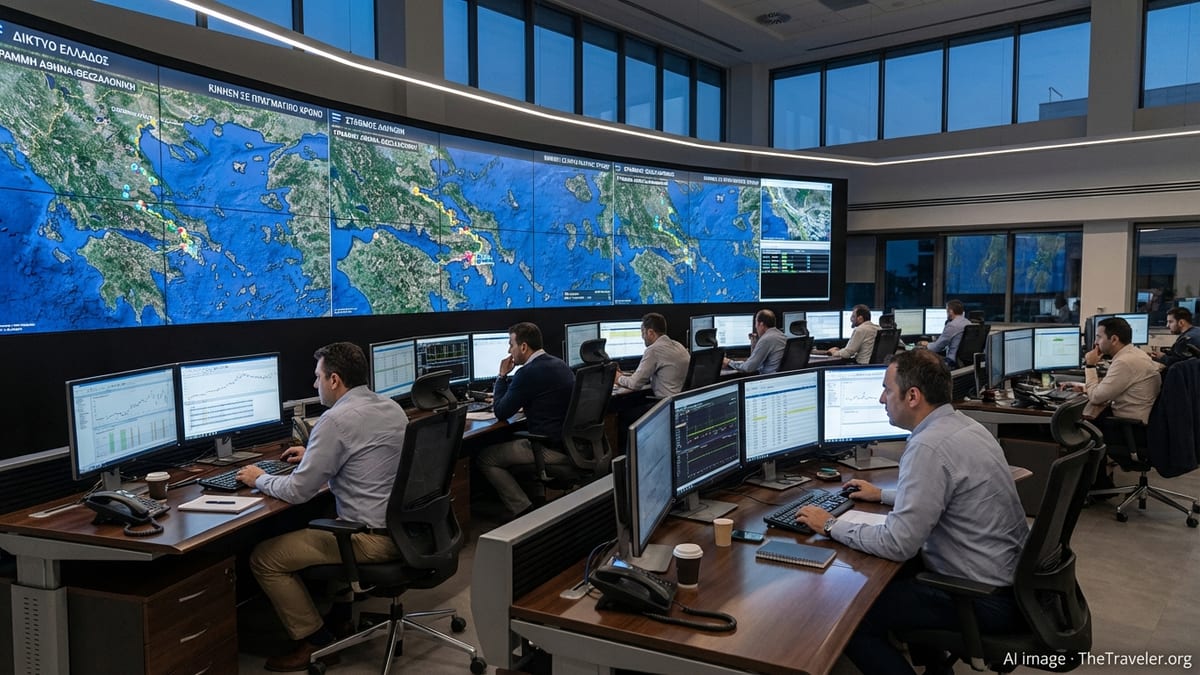
From hardware project to continuous digital platform
Publicly available information describes ERTMS as a common European standard that combines the European Train Control System with dedicated radio communications to deliver in cab signalling, real time speed supervision and cross border interoperability. The concept was originally treated as a major technology project, focused on fitting balises, radio block centres and on board units along priority corridors within fixed national deployment plans.
That project framing is now showing its limits. Technical specifications have continued to evolve while deployment is still incomplete, leaving some networks struggling to reconcile legacy trackside equipment with new ERTMS baselines and hybrid configurations. Sector position papers indicate that frequent specification updates can slow rollouts, increase lifecycle costs and risk undermining confidence among operators that need a stable platform for decades of safe operation.
Industry analyses increasingly portray ERTMS as a digital backbone rather than a one off signalling upgrade. In this view, the system provides a common language for train control, data exchange and safety functions, onto which new applications can be layered over time. Treating ERTMS as a platform encourages long term thinking about backwards compatibility, cybersecurity and the governance of updates, similar to how operating systems in other sectors are maintained over multiple generations.
For railways, this shift means less emphasis on individual contracts for hardware and more attention to how each investment decision contributes to a coherent, interoperable and upgradable network. It also underlines that skills, processes and organisational culture will be as important as equipment choices in determining whether ERTMS delivers its intended capacity, safety and efficiency benefits.
Interoperability and the mindset of shared standards
ERTMS was conceived to overcome the patchwork of national signalling and train protection systems that has historically hindered cross border rail services in Europe. Studies and policy documents highlight that only a relatively small share of the core network is currently equipped with ERTMS, and many freight and passenger fleets still rely on multiple national systems, which constrain operations and increase costs.
Technical standardisation alone cannot solve this. Industry groups argue that deployment strategies must move beyond purely national perspectives toward a corridor mindset, prioritising routes where cross border traffic is highest and ensuring consistent technical solutions on both sides of borders. This requires infrastructure managers and operators to plan collaboratively, align migration timelines and jointly manage the risks of switching off legacy systems.
A mindset built around interoperability also shapes how contracts are structured. Rather than bespoke national variants of ERTMS, experts increasingly point to the importance of using harmonised specifications, encouraging open interfaces and avoiding vendor specific lock in. This approach is intended to make it easier to certify vehicles across networks, reduce duplication of engineering work and support a more competitive supplier market.
In practice, this means that decisions about baselines, software releases and testing regimes are no longer purely technical questions for individual projects. They become shared commitments that influence the entire European rail ecosystem, requiring governance frameworks that can balance stability with measured innovation.
Integrating game changing technologies without losing stability
Work led by European agencies and industry partnerships indicates that several new technologies are poised to reshape ERTMS in the coming years. Concepts such as virtual balises based on satellite positioning, hybrid Level 3 with moving block functionality, and closer integration with automation and traffic management systems are being tested in pilot projects and technical studies.
At the same time, the introduction of the Future Railway Mobile Communication System, based on modern mobile network principles, is expected to progressively replace existing railway radio solutions. Public information highlights that this transition will underpin many of the so called game changing ERTMS functionalities, from higher capacity through shorter headways to richer data flows for real time supervision.
These developments reinforce the argument that ERTMS must be managed as an evolving system rather than as fixed trackside equipment. A mindset of controlled evolution is needed: one that welcomes innovation where it demonstrably improves safety, performance or cost, while preserving the stability that rail operators require for long term investment decisions. Incremental, well governed upgrades, supported by extensive simulation and field validation, are increasingly seen as preferable to disruptive, large scale specification changes.
Balancing evolution and stability also affects how training, maintenance and asset management are organised. As software and data play a larger role in train control and traffic management, railways need continuous learning programmes for drivers, dispatchers and technical staff, as well as robust configuration management to keep track of software versions across large fleets and networks.
Human factors and organisational change on the digital railway
Social impact assessments and research into ERTMS deployment underline that the technology changes work practices across the rail sector. In cab signalling alters how drivers receive and process information, while more centralised traffic management can redistribute responsibilities between local signal boxes and control centres. These shifts require careful attention to human factors, training and change management.
Reports indicate that drivers and signallers generally value the enhanced safety and clearer speed guidance provided by ERTMS, but also stress the importance of practical training, realistic simulators and opportunities to rehearse degraded modes of operation. Staff representatives have called for early involvement in deployment planning, transparent communication about timelines and roles, and structured pathways for acquiring new digital skills.
From an organisational perspective, the mindset approach frames ERTMS as part of a broader digitalisation journey. Railway companies are being encouraged to integrate signalling data with asset management, timetable planning and customer information systems, turning operational information into insights that can improve punctuality and capacity use. Achieving this requires cross functional teams, new data governance structures and closer collaboration between information technology and operations departments.
As responsibilities evolve, some infrastructure managers are emphasising the need to retain strong in house system knowledge, even when much of the equipment is supplied by external vendors. This is seen as essential for making informed decisions about upgrades, managing safety cases and ensuring that long term public interests remain at the centre of the ERTMS evolution.
Global diffusion and lessons for non European markets
Although ERTMS was developed for Europe, it has increasingly been adopted or considered in other regions, including parts of Asia, the Middle East and planned high speed projects in North America. Comparative academic research notes that ERTMS sits alongside other digital train control systems, such as positive train control in the United States, each shaped by distinct regulatory histories and operational needs.
For countries evaluating ERTMS, the notion of mindset is reflected in how decisions are framed. Rather than viewing ERTMS as a turnkey product, transport authorities are analysing how it will fit within national safety regimes, infrastructure strategies and industrial policies. This includes questions about domestic supplier capabilities, workforce training and how to phase introductions while keeping existing services running.
Observers suggest that one of the main lessons from Europe is the importance of clear, long term migration paths and institutional capacity to manage a complex, multi decade programme. Aligning regulatory frameworks, certification processes and funding mechanisms with the chosen signalling strategy becomes as important as the technical choice itself. In this sense, ERTMS functions as a test case for how rail systems worldwide can handle digital transformation while safeguarding safety and reliability.
As more networks explore ERTMS or similar concepts, discussions increasingly focus on how to share experience across borders, harmonise interfaces where beneficial and avoid unnecessary divergence in standards. The idea that ERTMS is not simply a product but a shared mindset underscores the broader challenge facing the rail sector: building a digital, interoperable and resilient backbone for sustainable mobility in the decades ahead.