


More news on this day
The European Commission has opened a fresh €1.1 billion funding round for transport infrastructure, inviting projects that strengthen key corridors, accelerate decarbonisation and improve connectivity across the European Union and its neighbouring partners.
Get the latest news straight to your inbox!
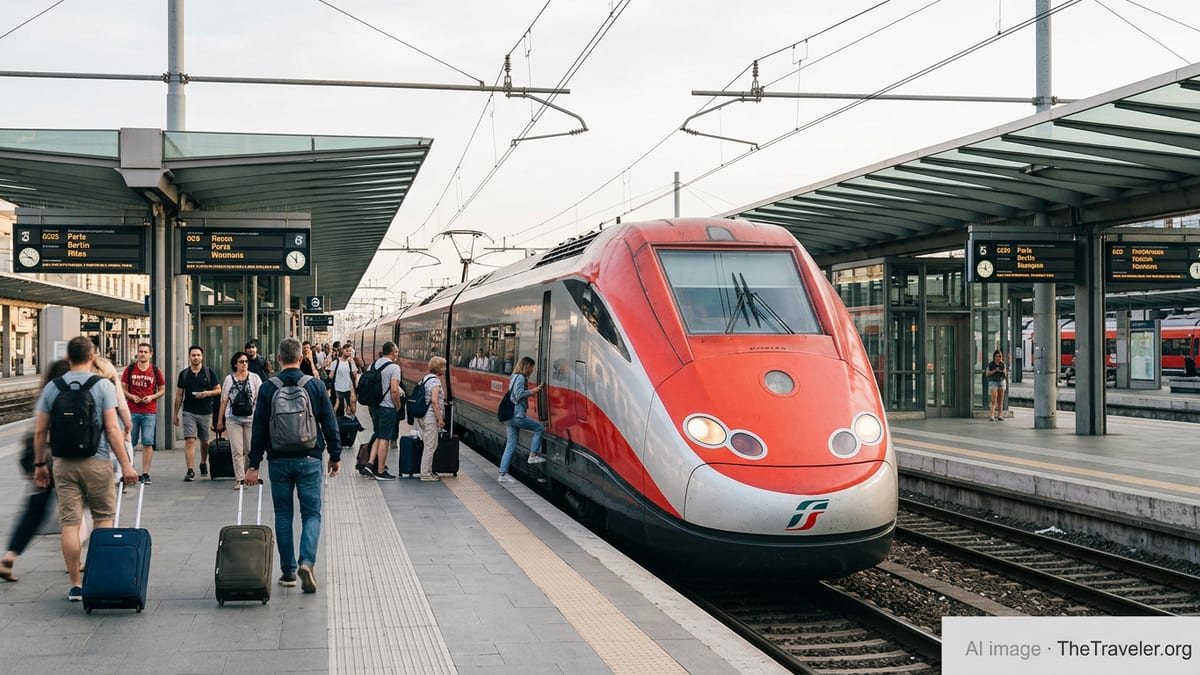
Final major call under current CEF transport budget
Publicly available information shows that the new allocation is being made through the Connecting Europe Facility for Transport, the European Union’s main programme for financing cross border and strategic infrastructure on the trans European transport network. The €1.1 billion pot represents reallocated money from earlier rounds and is described in recent coverage as the last major call under the current 2021 to 2027 EU budget cycle.
Reports indicate that the call opened in mid June 2026 and will remain available for proposals until early October, giving national authorities, infrastructure managers and private operators several months to prepare bids. Projects selected in this cycle are expected to enter into force from 2027, overlapping with preparations for the next multiannual financial framework and a renewed transport funding envelope.
Information published by specialist transport outlets highlights that the Connecting Europe Facility has already backed more than 1,900 transport initiatives since 2014, with over €47 billion of European Union money committed. The new tranche is therefore a relatively small but symbolically important addition that seeks to close remaining gaps on critical routes before the current budget period ends.
Analysts following European budget negotiations note that the fresh call comes as institutions are finalising plans for a larger Connecting Europe Facility from 2028 onward, which is expected to devote significantly higher sums to transport and military mobility. The current announcement is framed as a bridge between the existing and future funding cycles, ensuring momentum on project pipelines is not lost.
Focus on rail corridors, ports and inland waterways
According to recent coverage of the initiative, the largest share of the €1.1 billion package is aimed at rail infrastructure along the trans European transport network. Priority is being placed on high capacity cross border links that remove bottlenecks, upgrade signalling to modern standards and support the shift of freight from road to rail.
Funding is also being directed to maritime and inland ports that sit on core corridors. Publicly available documents describe eligible projects such as new rail and inland waterway access to terminals, dredging works that improve navigability and investments in onshore power supply so that vessels can plug into electricity while at berth instead of running engines.
Inland waterway corridors receive specific attention as part of the effort to decarbonise heavy freight. Reports from rail and logistics media note that candidate projects can include upgrades to locks and river sections, new intermodal hubs and facilities that make it easier to switch goods between barge, rail and truck.
Industry observers say this focus reflects a broader shift in European transport policy toward long distance modes that can move large volumes with lower emissions. By concentrating limited grant money on such projects, the European Union aims to maximise climate benefits while improving network resilience.
Support for green fuels, charging and airport operations
Beyond traditional infrastructure, the €1.1 billion call reserves funds for alternative fuel networks and electrification, in line with recent European regulations on charging and refuelling along core road corridors. Information published through funding portals shows that projects may include high power charging for heavy duty trucks, hydrogen refuelling stations and energy management systems at motorway service areas.
Airport ground operations are another target, with support available for electrified ground support equipment, charging infrastructure and connections to renewable power. By cutting emissions on the tarmac and at gates, these measures are intended to complement separate initiatives focused on cleaner aviation fuels.
Coverage of the programme notes that port and terminal operators can also apply for investment aid to deploy onshore power supply, battery storage and grid upgrades. Such projects are being promoted as a way to reduce air pollution in urban port areas while preparing for future regulatory requirements on emissions at berth.
Observers in the logistics sector point out that these green infrastructure measures have a direct impact on travel and freight patterns, as they determine where zero emission vehicles and vessels can operate effectively. The new allocation therefore plays a role in accelerating the roll out of cleaner fleets across Europe’s main travel and trade arteries.
Military mobility and resilience built into transport plans
In addition to civilian uses, part of the new funding is being made available for projects that adapt dual use infrastructure for both commercial and military needs. Publicly accessible call documents refer to works on rail lines, bridges, roads and ports that can accommodate heavier loads or specialised equipment required for defence movements.
This approach follows earlier agreements to integrate military requirements into the trans European transport network, particularly on corridors linking eastern member states and the wider neighbourhood. While the sums in this specific call are modest compared to planned future envelopes for military mobility, analysts say they are important for preparing key nodes and sections of the network.
Resilience is another theme running through the funding priorities. Reports emphasise that proposals will be assessed on their contribution to diversifying routes, improving redundancy and ensuring that traffic can be rerouted in the event of disruption. For travellers, this translates into more reliable services and fewer vulnerabilities when unforeseen events affect a particular line or port.
Specialist commentary underlines that this resilience dimension has gained prominence in recent years following natural disasters, pandemics and geopolitical tensions that have stressed existing infrastructure. The current €1.1 billion allocation is intended to embed that experience into concrete upgrades.
Opportunities for Ukraine, Moldova and cross border regions
Recent announcements connected to the call highlight that eligibility is not limited to European Union member states. Associated countries, including Ukraine and Moldova, can participate in specific strands that extend the reach of the trans European transport network beyond the bloc’s current borders.
For Ukraine, this can include projects to improve cross border rail and road links, enhance capacity at border crossing points and adapt infrastructure to European gauge and standards. Transport analysts view this as part of a wider effort to integrate the country’s infrastructure with that of the European Union, supporting both reconstruction and closer economic ties.
Cross border regions within the Union also stand to benefit, as many of the most competitive proposals are expected to involve cooperation between neighbouring states. Public information about previous Connecting Europe Facility rounds shows that joint applications have often been favoured when they close gaps on major corridors or create new multimodal hubs.
Observers note that the relatively short application window will encourage project promoters to build on plans that are already advanced, including schemes that may have missed out in earlier funding cycles. For travellers and businesses across Europe, the result of this €1.1 billion allocation is expected to be a new wave of works on rail lines, ports, roads and terminals that shape how people and goods move across the continent in the coming decade.