


More news on this day
Abu Dhabi’s global hub is drawing closer to Romania and Eastern Europe, as Etihad Airways and Romanian flag carrier TAROM roll out a new partnership designed to streamline journeys between the Gulf, the Balkans and beyond.
Get the latest news straight to your inbox!
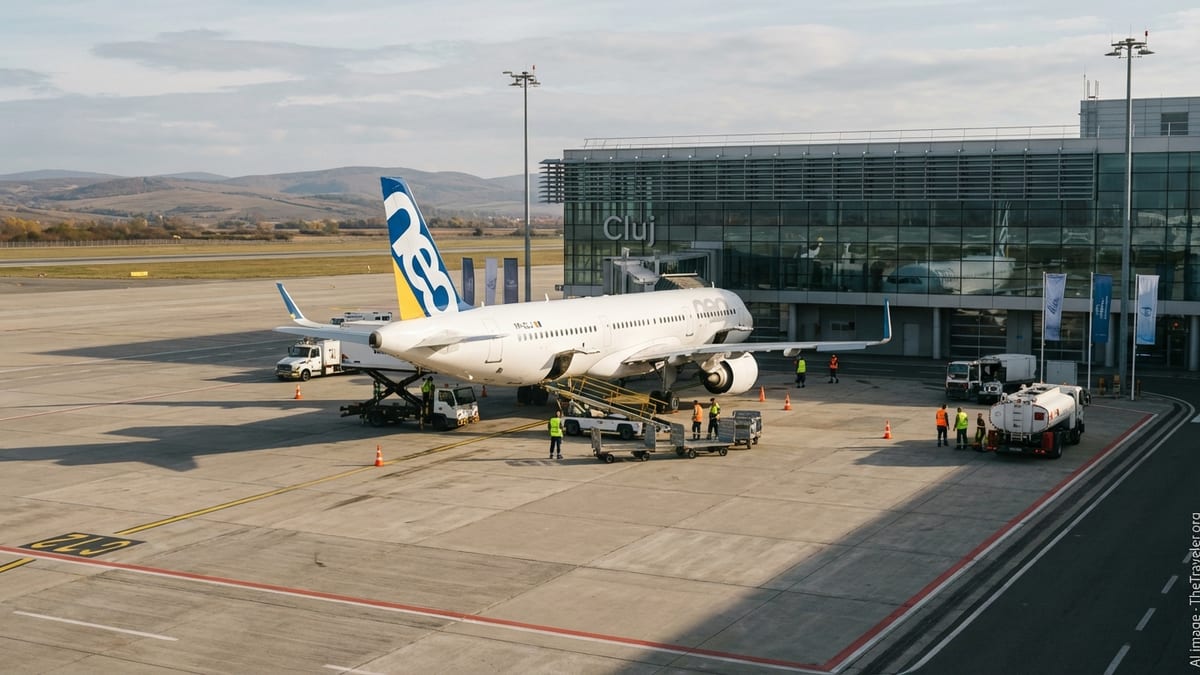
Codeshare Deal Anchors New Abu Dhabi–Bucharest Route
Publicly available information from both airlines shows that Etihad and TAROM have signed a fresh codeshare agreement that will support the launch of Etihad’s nonstop Abu Dhabi–Bucharest service on 17 December 2026. The move will restore direct connectivity between the United Arab Emirates capital and Romania’s largest city while also creating a platform for wider cooperation across their respective networks.
Under the arrangement, Etihad will place its EY code on select TAROM flights, enabling passengers from Abu Dhabi and beyond to travel on a single ticket to multiple destinations in Romania and neighboring states. In the other direction, TAROM will be able to market seats on Etihad services from Bucharest to Abu Dhabi and onward long haul destinations.
The timing of the partnership reflects Etihad’s broader strategy of using commercial collaborations to deepen its reach into high‑growth regional markets. Similar tie‑ups in recent years have targeted key gateways in Europe and Asia, using codeshares to extend connectivity without the need to deploy additional widebody capacity on every spoke.
For Romania, the agreement positions Bucharest as a new bridge between Eastern Europe and the Gulf at a moment when demand for both tourism and business travel is rebounding. Industry observers note that nonstop services between Romania and the United Arab Emirates have historically been limited or intermittent, making the scheduled 2026 launch particularly significant for the market.
Seamless Access to Romanian Cities and Eastern Europe
According to information released by the airlines and regional media coverage, Etihad customers will gain one‑ticket access from Abu Dhabi to a string of Romanian cities via Bucharest. These include Baia Mare, Cluj‑Napoca, Iasi, Oradea, Suceava and Timisoara, all important commercial or cultural centers that previously required more fragmented itineraries from the Gulf.
The codeshare is also expected to link Etihad’s network with TAROM operations to several neighboring capitals and regional hubs, such as Belgrade, Budapest, Chisinau and Sofia. This effectively turns Bucharest into a funnel for travelers heading from Abu Dhabi to the wider Balkans and parts of Eastern Europe, consolidating multiple connections into a single booking and coordinated schedule.
From a practical standpoint, the ability to check luggage through to the final destination and travel under one reservation is likely to appeal to both leisure and corporate passengers. Travel planners indicate that such cooperation can reduce connection times, simplify disruption handling and minimize the need for separate tickets that complicate rebooking if schedules change.
For Romania’s secondary cities, the tie‑up offers new exposure in long haul markets that may previously have focused on Western European gateways. Tourism boards in regions such as Transylvania and Moldavia are expected to see fresh opportunities to attract visitors arriving via Bucharest from the Middle East, Asia and Australia.
Abu Dhabi’s Hub Strengthens its Eastern Europe Footprint
The Etihad–TAROM agreement also reinforces Abu Dhabi’s position as a transfer hub connecting Europe with Asia, Africa and Australia. Zayed International Airport has been at the center of a broader strategy to grow the emirate’s aviation role through targeted partnerships and route launches, using the home carrier’s network as a key pillar.
By adding Bucharest to its route map and plugging into TAROM’s regional coverage, Etihad effectively fills a gap in its Eastern European offering while avoiding overlap with other Gulf carriers’ strongholds. Travel data and network maps show that Etihad has been gradually stitching together partnerships with national and regional airlines to offer more cities behind key European gateways.
For travelers starting their journey in Romania or neighboring countries, the new arrangement opens two‑way access via Abu Dhabi to long haul destinations across the Middle East, the Indian Ocean, South and Southeast Asia and Australia. Published reports highlight that itineraries to places such as the Maldives, Bangkok or Sydney can now be sold under TAROM’s code while operated by Etihad, offering more choice to passengers accustomed to routing via Western Europe.
The initiative may also carry strategic benefits for Abu Dhabi’s wider visitor economy. Tourism and investment bodies in the emirate have consistently framed aviation connectivity as a cornerstone of growth plans, with expanded links into Eastern Europe seen as a way to diversify source markets and attract new segments of leisure and business travelers.
What Travelers Can Expect from the New Partnership
While full schedules and fare details typically appear closer to the launch date, early indications suggest that the Abu Dhabi–Bucharest service will be timed to connect efficiently with banks of arrivals and departures at Zayed International Airport. Travel‑industry analysis points out that such coordination is central to making hub‑and‑spoke operations attractive to passengers who value short transfer windows and predictable onward connections.
On the Romanian side, TAROM’s existing timetable between Bucharest and its domestic and regional points is expected to provide multiple same‑day connection options from cities like Cluj‑Napoca, Timisoara and Iasi. That pattern should allow travelers to reach Abu Dhabi, and onward long haul destinations, with only one change of aircraft in most cases.
For passengers, one of the most visible benefits will be the ability to book entire journeys under a single reservation code through either airline’s sales channels or travel agencies. Industry observers note that this simplifies everything from earning frequent‑flyer miles to receiving assistance in the event of delays or missed connections, because responsibility for the journey is shared under the framework of the codeshare.
Travel analysts also point out that the tie‑up arrives at a time when many travelers are looking for fresh alternatives to crowded Western European hubs. By combining TAROM’s local knowledge and network with Etihad’s long haul reach, the partnership aims to offer a competitive option for journeys linking Eastern Europe with the Middle East and major destinations further afield.