


More news on this day
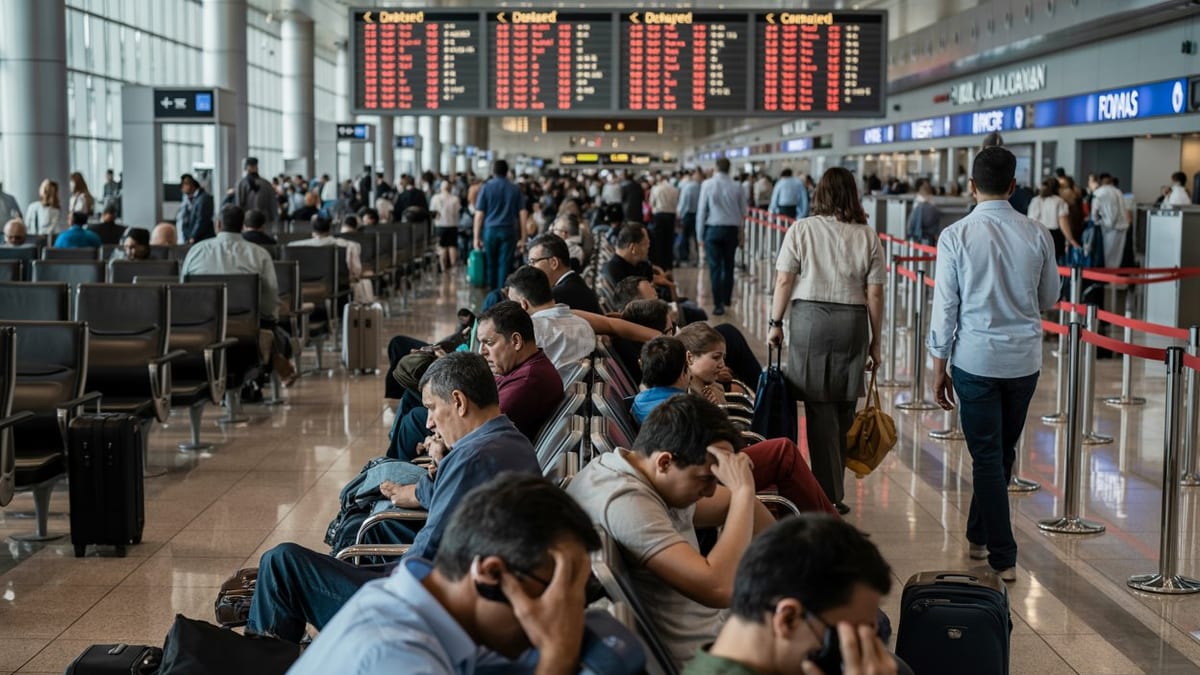
Hundreds of travelers across Europe faced severe disruption on Tuesday as tracking data showed 2,862 flights delayed and 104 cancelled, snarling operations in Spain, France, the United Kingdom and other countries and hitting major carriers including Ryanair, Lufthansa and Eurowings at hubs such as Amsterdam and London.
Get the latest news straight to your inbox!
Tracking Data Shows Ripple Effects Across Major Hubs
Operational data from flight tracking platforms for 9 June 2026 indicates an unusually heavy day of disruption across European airspace, with nearly three thousand flights arriving or departing behind schedule and more than one hundred removed from schedules altogether. The disruptions were most visible at large hubs including Amsterdam Schiphol, London Heathrow, London Gatwick and London Stansted, where late departures quickly cascaded into missed connections and overcrowded terminals.
Publicly available airport punctuality figures for early 2026 already show that several of these hubs entered the summer with limited buffer capacity, with Amsterdam and London airports recording some of the lowest on time performance metrics among Europe’s busiest gateways. Against that backdrop, a spike of same day disruption placed additional strain on check in, security and ground handling operations, leaving many passengers facing long queues and uncertain departure times.
Reports from passenger forums and social platforms on Tuesday described travellers stuck in aircraft waiting for take off slots, others held in terminal gate areas during rolling delay announcements and some forced to rebook for departures later in the week. While not every delay translated into extreme wait times, the sheer volume of affected flights significantly increased the likelihood of missed onward connections, particularly for those transiting through Amsterdam and London on multi leg itineraries.
Ryanair, Lufthansa and Eurowings Among Hardest Hit Airlines
The wave of disruption has been especially visible across the networks of Ryanair, Lufthansa and Eurowings, three carriers that collectively operate thousands of daily flights in Europe. Industry data for recent months highlights Ryanair as the continent’s largest airline by number of flights, with Lufthansa and its subsidiaries, including Eurowings, dominating the German market and serving numerous connections between Spain, France, the United Kingdom and northern Europe.
Because these airlines rely on tight turnarounds and high daily aircraft utilisation, even relatively short delays early in the day can reverberate across multiple rotations. Publicly available aviation statistics and previous disruption events show that crew duty limits, airport curfews and slot restrictions mean a single cancelled or heavily delayed sector can strand aircraft and crews in the wrong locations, reducing flexibility as the day progresses.
Travelers on affected services reported disrupted journeys at airports including Amsterdam, London, Frankfurt, Manchester and Barcelona, with knock on impacts on feeder flights to regional airports around Europe. Although full airline specific tallies for Tuesday’s delays were not immediately available, the combination of these carriers’ market share and their reliance on congested hubs placed them among the most exposed to the latest operational squeeze.
Weather, Air Traffic Control and Earlier Strikes Feed Into Chaos
While no single cause fully explains the 2,862 delays and 104 cancellations recorded on 9 June, recent patterns suggest a mix of factors. European aviation reports for 2026 underline that air traffic control capacity constraints remain a significant driver of delays across the continent, with staffing shortages and sector overloads regularly triggering flow restrictions, particularly over France and parts of central Europe.
In parallel, recent weeks have seen several disruptive events whose knock on effects are still echoing through airline networks. Industrial action by air traffic controllers in Belgium in early June, which temporarily closed portions of Belgian airspace at lower altitudes, prompted reroutings and cancellations that displaced aircraft and crews from their planned rotations. Separate strikes and operational constraints affecting Portuguese airports at the start of the month also led to substantial schedule disruption and lingering imbalances in aircraft positioning.
Weather continues to play a compounding role. European aviation analyses show that adverse conditions remain one of the most common triggers for delays, particularly at highly utilized hubs. Earlier episodes of winter weather this year forced extensive cancellations and delays at airports such as Amsterdam and London, and although Tuesday’s disruption was not confined to a single weather event, localised storms and reduced visibility at times put additional pressure on an already stretched system.
Travellers Face Overnight Stays and Complicated Rebooking
The immediate impact for passengers has been a difficult day of travel, particularly for those relying on tight connections or travelling to smaller regional airports with limited daily service. With some evening flights from cities such as London and Amsterdam cancelled outright, stranded travellers have been left searching for last minute hotel rooms or alternative routes via other hubs.
Accounts shared publicly on social media and travel forums describe passengers being rebooked on flights one or two days later, or being offered itineraries involving multiple connections through secondary airports. For those travelling on low cost carriers, options can be particularly constrained when the original airline’s next available seat is several days away and interline rebooking with other carriers is not standard practice.
Consumer advocates regularly note that European Union passenger rights rules provide for compensation and care in certain circumstances, but the practical experience can vary widely depending on the cause of disruption, the airline involved and local implementation at the airport. On days with widespread delays across many carriers, passengers often report difficulty in reaching customer service agents, securing written confirmation of disruption or obtaining hotel vouchers before nearby accommodation fills up.
Summer Outlook Raises Concerns Over Network Resilience
The latest spike in delayed and cancelled flights raises renewed questions about the resilience of Europe’s air transport system heading into the peak summer season. Statistical overviews published by European aviation bodies show that while overall traffic has grown steadily in 2026, average delays per flight remain above historical norms, suggesting that the network continues to operate close to its structural limits.
Analysts point to several structural challenges, including constrained runway and terminal capacity at key hubs, ongoing air traffic control staffing issues in multiple states and the cumulative effect of more frequent extreme weather episodes. Efforts to modernise European airspace management are underway, but changes to routing efficiency and capacity are gradual and may not deliver immediate relief for travellers facing disruption this summer.
For passengers planning trips in the coming weeks, publicly available guidance from airports, airlines and travel organisations continues to emphasise the value of allowing extra connection time, travelling with carry on luggage where possible and monitoring flight status closely from 24 hours before departure. As Tuesday’s widespread delays and cancellations demonstrate, even routine travel days can rapidly deteriorate into complex network disruptions when several operational pressure points align.