


More news on this day
Middle East airspace is under mounting strain as rerouted traffic, regional conflict and rapid growth in Gulf hubs converge, driving fresh waves of delays, cancellations and diversions across a region that has become a critical crossroads for global aviation.
Get the latest news straight to your inbox!
Rerouted Traffic Crowds Key Flight Corridors
Middle East airspace has absorbed a growing share of global traffic in 2026 as airlines continue to avoid large portions of Russian skies and adjust routings around Iranian territory following the outbreak of war between Iran and the United States. Publicly available analyses of global flight paths indicate that carriers have redirected long haul services over alternative corridors that concentrate flows through the Persian Gulf and eastern Mediterranean, adding pressure to already busy flight information regions.
Guidance from the European Union Aviation Safety Agency (EASA) highlights the complexity of the airspace picture in and around the Gulf, covering the flight information regions of Bahrain, Iran, Iraq, Israel, Jordan, Kuwait, Lebanon, Oman, Qatar, Saudi Arabia and the United Arab Emirates. The agency’s conflict zone information bulletins point to evolving risk assessments and route restrictions that can quickly alter preferred tracks and push more traffic into constrained corridors when parts of the region are deemed higher risk.
Industry data compiled this summer points to longer routings and extended block times on services linking Europe and Asia, with additional flying time accumulating as aircraft navigate around sensitive areas. For passengers, those incremental minutes often cascade into missed connections and tighter turnaround windows at the big hubs that dominate Middle East transfer traffic.
Airlines serving the region are also reporting higher fuel burn as a direct consequence of detours around conflict zones, a cost that adds to overall network strain. While not every rerouted flight ends in a delay, the thinner operating margins make schedules more vulnerable when thunderstorms, sandstorms or crew availability issues arise on the same day.
Gulf Mega Hubs Under Capacity Pressure
Dubai International, Hamad International in Doha and Abu Dhabi International remain central to long haul connections between Europe, Asia, Africa and Australasia, and have generally recovered passenger volumes faster than many Western airports. Summer 2026 has seen robust demand return to these hubs, with airport operators highlighting strong transfer traffic and renewed tourism flows in their public updates.
That recovery is running alongside tighter margins on runway and gate capacity at peak times. With more flights arriving on lengthened routings and narrower buffers between inbound waves, arrival banks at Gulf hubs are more susceptible to knock on disruption. When an earlier wave is delayed by congestion along crowded airways into the Gulf, late arriving aircraft can quickly back up on the approach and departure sequence.
Regional carriers have adjusted schedules and added aircraft to absorb some of the demand, but analysts note that ground infrastructure and air traffic management systems face a steeper challenge. Even a short disruption window caused by sudden weather changes or a temporary airspace restriction elsewhere in the region can propagate into extended queues on the ground and in the air, raising the risk that crews and aircraft rotate late for subsequent sectors.
Publicly accessible performance data for major hubs indicate that Dubai and Doha have both experienced waves of delays this summer during storm activity and peak travel days, particularly on connecting itineraries. While average daily punctuality remains relatively strong compared with some European and North American airports, the scale of operations and high dependence on tightly timed transfers mean that even modest schedule slippage can translate into missed onward flights for thousands of passengers.
Conflict, Safety Advisories and Dynamic Closures
The regional conflict landscape remains a central driver of operational uncertainty. EASA’s latest conflict zone information for the airspace over and around the Middle East and Persian Gulf sets out a mosaic of advisories and restrictions, including for the Baghdad, Tehran, Tel Aviv and Amman flight information regions. The guidance reflects risks related to military activity, the use of long range missiles and drones, and periods of heightened tension in key corridors.
These advisories influence how airlines design their schedules and day of operations. Carriers frequently file multiple routing options to account for potential short notice changes in risk assessments, and may alter tracks in response to new notices to air missions issued by regional authorities. When a commonly used route segment is avoided at short notice, traffic often shifts to a smaller set of remaining options, spiking congestion and contributing to airborne holding or departure restrictions.
Episodes of sudden escalation can also trigger capacity reductions at individual airports. Historical patterns from previous flare ups in the region show that when missiles or drones are launched in proximity to major cities, traffic flow rates into key hubs can be temporarily reduced, prompting diversions and extended ground delays. Analysts note that the current ceasefire between the United States and Iran, extended in June 2026 through a memorandum of understanding, has allowed some partial normalization of routings, but airlines continue to plan conservatively given the potential for rapid change.
For travelers, these dynamics often manifest as rolling disruptions rather than headline grabbing shutdowns. Flights may depart with significant delays, be rerouted in the air, or arrive to find that connecting services have already left, with airlines then needing to rebook passengers across complex global networks that are themselves near capacity.
Weather Extremes and Operational Constraints
Alongside geopolitical pressures, extreme weather is amplifying stress on airspace and airport capacity across the Middle East. Heat waves have raised runway and aircraft performance concerns at several regional airports during peak summer months, particularly at high ambient temperatures and with fully loaded long haul flights. Aviation experts point out that hotter, less dense air can limit takeoff performance, sometimes requiring payload restrictions or schedule adjustments to operate within safety margins.
At the same time, convective storms over the Gulf and dust storms in parts of the Arabian Peninsula periodically disrupt carefully planned arrival and departure sequences. When thunderstorms build near major hubs, air traffic managers may slow arrival rates or hold departures on the ground to maintain safe separation, quickly increasing taxi and airborne delay times. Given the heavy reliance on banked connections, these weather driven pauses can reverberate through multiple waves of flights in a single day.
Reports from airline operations teams suggest that weather contingencies are now being built into planning to a greater extent than before, with additional fuel uplift, flexible crew pairings and more conservative minimum connection times on selected routes through the region. Even so, the combination of tighter margins in airspace capacity, rerouted flows, and aggressive demand growth means that days with multiple weather events continue to produce elevated levels of disruption.
Longer term, airport operators in the region have outlined expansion plans and air navigation service providers are working with international partners on upgraded air traffic management systems. However, most of these capacity and technology projects will unfold over several years, leaving airlines and passengers to navigate a period in which volatility in schedules and on time performance is likely to remain elevated.
Rising Costs and Passenger Impact
Global coverage of the 2026 summer travel season points to a broad picture of higher fares and more frequent disruptions across many regions, and the Middle East hubs are woven into that story. Extended routings around conflict zones, higher jet fuel prices influenced by instability and the need for additional contingency planning all contribute to operating costs on routes that depend on Gulf connections.
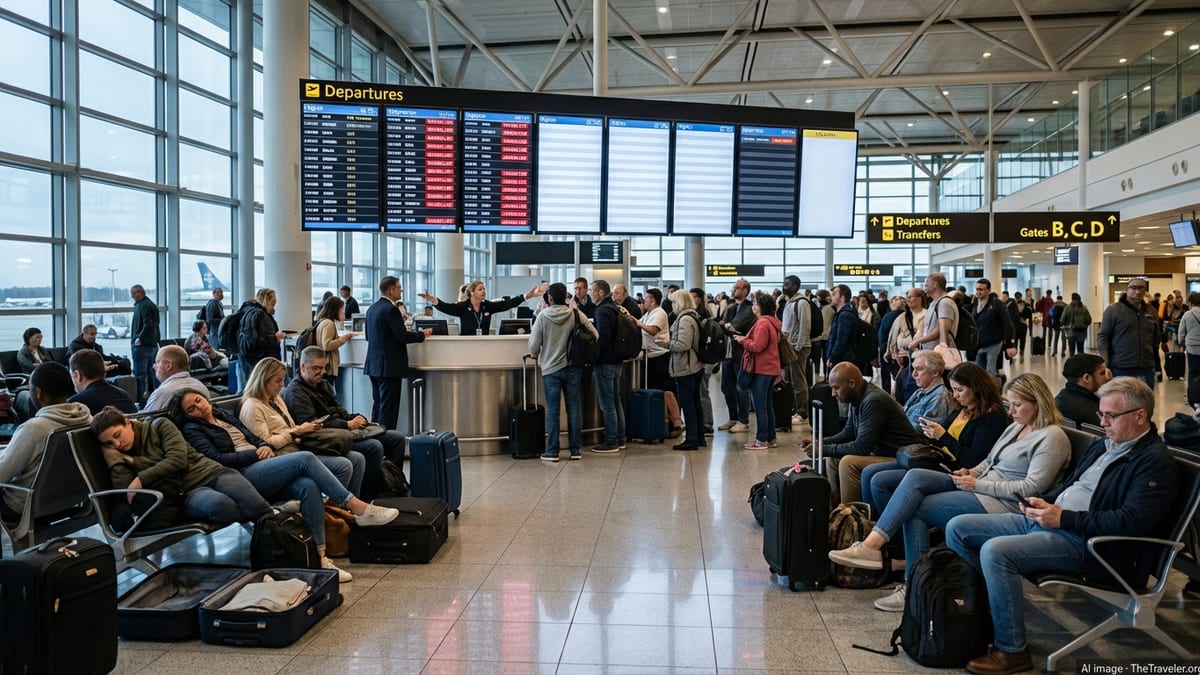
For passengers, the experience of disruption is often most visible in missed connections, overnight delays and crowded transfer halls at peak times. Middle East hubs have invested heavily in terminal infrastructure and service amenities, which can soften the impact of irregular operations, but lengthy rebooking queues and limited alternative flights on popular long haul routes remain persistent challenges during major disruption events.
Consumer advocates and travel industry analysts encourage travelers transiting the region to build more generous connection times into itineraries, monitor flight status closely and consider travel insurance that covers missed connections and delays. With no quick resolution in sight for the overlapping pressures on Middle East airspace, expectations are shifting toward a new normal in which schedules through the region are more prone to last minute change.
In this environment, airlines that operate large connecting hubs in the Gulf are increasingly focused on real time communication, proactive rebooking tools and flexible policies to maintain customer confidence. How effectively carriers and airports adapt their operations and investments to these airspace strains will shape the reliability of one of the world’s most important aviation crossroads in the years ahead.
EASA Conflict Zone Information Bulletin for Middle East and Persian Gulf
International Civil Aviation Organization regional air navigation updates