


More news on this day
Etihad Airways is accelerating the expansion of its widebody fleet and rebuilding network capacity, positioning the United Arab Emirates to regain ground in long-haul connectivity linking India, Europe and Australia after several disrupted seasons for global travel.
Get the latest news straight to your inbox!
Widebody Orders Signal a New Phase of UAE Growth
Publicly available fleet data and manufacturer announcements indicate that Etihad has entered a new phase of long-haul growth driven by significant orders from both Airbus and Boeing. In late 2025 the airline became a new customer for the Airbus A330neo while also adding more A350-1000 passenger jets and A350 freighters to its pipeline, alongside earlier commitments for additional Boeing 787 Dreamliners and 777X family aircraft. Together these deals lock in dozens of widebody deliveries stretching into the next decade, reversing the retrenchment that followed Etihad’s earlier equity-alliance strategy.
Industry databases show Etihad operating a mixed long-haul fleet that already includes A350-1000s, reactivated A380s, Boeing 777-300ERs and a growing number of 787-9 and 787-10 aircraft. New deliveries of 787-9s in recent weeks, on top of a resumed flow of 787-10s, underscore how quickly the carrier is rebuilding long-haul capacity after several years of more cautious growth. Analysts note that these types are particularly well suited to high-density trunk routes between Abu Dhabi and major hubs in India, Europe and Australia, where demand has rebounded faster than on some secondary markets.
The multi-type order strategy also gives Etihad flexibility to adapt aircraft size and range to specific city pairs. The A350-1000 and upcoming 777-9s are likely to be focused on ultra-long segments to Europe and North America or very high-volume Indian routes, while the 787-9 and A330neo can support both medium and long-haul missions. Observers say this mix is designed to protect Abu Dhabi’s position as a super-connector while also improving fleet economics after years of restructuring.
India–UAE Links Tighten Through Capacity and Partnerships
India is emerging as one of the principal beneficiaries of Etihad’s renewed widebody push. The airline already serves multiple Indian gateways and has highlighted the country as a core market in recent network updates, promoting connections from tier-one and tier-two cities through Abu Dhabi to Europe, North America and the Gulf. Expanded frequencies on key routes such as Mumbai and Delhi, together with restored services to other metros, are helping the carrier rebuild market share that shifted to competitors while Etihad’s network was thinner.
Beyond its own metal, Etihad is leaning on partnerships to deepen its reach into the Indian market. Recent announcements show new codeshare arrangements with fast-growing Indian carriers, including low-cost operators that are opening additional city pairs between India and Abu Dhabi. For travelers, these tie-ups translate into more one-stop options to Europe and North America via the UAE, often with through check-in and synchronized schedules that minimize connection times at Abu Dhabi’s new terminal.
For India’s aviation leaders and policymakers, Etihad’s trajectory matters because it can shift traffic flows away from rival hubs in Doha, Istanbul and Singapore. Increased widebody deployment on India–Abu Dhabi services means more seats for outbound tourism and business travel, but also for inbound visitors and diaspora traffic. Industry watchers are now monitoring how Indian carriers respond, particularly on lucrative Gulf and Europe-bound routes, where competition on fares and product is likely to intensify.
Europe and Australia See Restored Long-Haul Capacity
Europe remains central to Etihad’s strategy, and the airline’s broader fleet expansion is already translating into higher frequencies and seasonal boosts across the continent. Network updates for recent summer schedules show double-digit percentage increases in weekly flights, alongside new or reinstated destinations and upgauging of aircraft on high-demand routes. For travelers, that has meant more nonstops to Abu Dhabi and better onward connectivity to South Asia and Australia through coordinated banked departures.
Australia is also regaining prominence in Etihad’s network as long-haul aircraft become available. Market reports show the airline restoring or increasing capacity on core routes such as Sydney and Melbourne, where it competes directly with Gulf rivals and Asian transit hubs. Additional widebody deliveries give Etihad scope to add seats on these routes without sacrificing connectivity to Europe and India, reinforcing Abu Dhabi’s role as a southern hemisphere gateway.
Tourism boards in Europe and Australia are watching these changes closely, as improved connectivity via Abu Dhabi can influence visitor flows and airline partnerships. With widebody utilization rising, there is renewed potential for cooperative marketing campaigns, expanded codeshare arrangements with local carriers and the introduction of new leisure destinations linked to the UAE hub. Travelers are likely to see more competitive fares during shoulder seasons as capacity ramps up faster than demand in some markets.
Abu Dhabi Hub: From Disruptions to Resilience Test
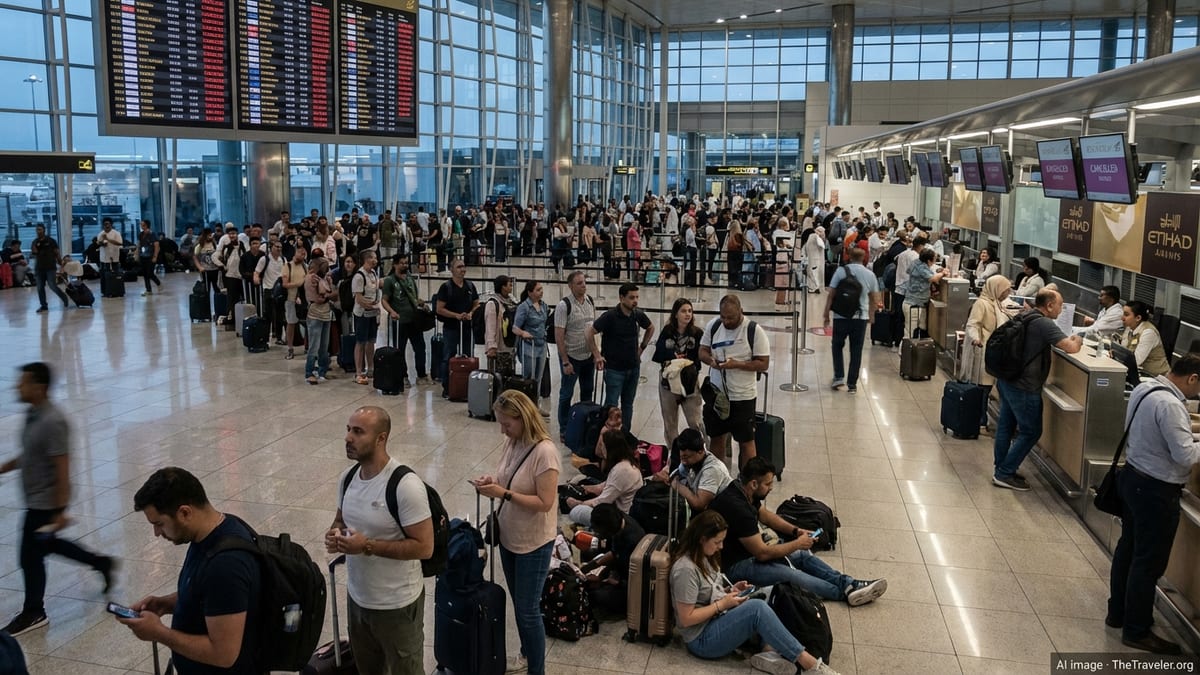
While Etihad’s fleet expansion is long term, the airline has also been navigating a period of operational volatility. Social media and passenger forums in early 2026 highlighted waves of cancellations, retimed departures and constrained connections at Abu Dhabi following regional security tensions. Some travelers reported truncated journeys where the Abu Dhabi leg operated but onward flights to destinations such as parts of South India were removed from the schedule or significantly reduced.
More recent posts suggest that outbound and inbound schedules through Abu Dhabi have begun to normalize, with a growing list of operating flights and network maps showing a gradual restoration of frequencies. However, the same user reports indicate that the network remains only partially restored in some directions, particularly for certain connecting markets. This mismatch between headline fleet growth and day-to-day operational reliability has become a central point of discussion among frequent flyers evaluating whether to route via Abu Dhabi or choose alternative hubs.
For aviation leaders, this period is being viewed as a real-time stress test of the UAE’s connectivity model. The combination of geopolitical risk, rapid capacity restoration and an ambitious fleet plan raises questions about network resilience, contingency planning and passenger communication. How quickly Etihad can harmonize its expanded long-haul capabilities with stable, predictable operations will help determine whether Abu Dhabi fully regains its pre-pandemic reputation as a seamless super-connector.
What Travelers and Industry Stakeholders Should Watch Next
For travelers, the key metrics to monitor in the coming months are schedule stability, connection times and choice of routings from India, Europe and Australia via Abu Dhabi. Increasing widebody capacity tends to bring sharper fare competition and more award-seat availability, but those benefits depend on consistent operations and reliable onward connections. Prospective passengers are likely to scrutinize recent on-time performance trends and cancellation patterns, especially on multi-leg itineraries where missed connections can strand travelers far from home.
Aviation analysts will be watching how quickly Etihad deploys its incoming widebody aircraft into new city pairs versus simply thickening existing routes. The balance between India, Europe, Australia and North America in the network will offer clues about where the airline sees the strongest yields and strategic value. Fleet mix decisions between A350-1000s, A330neos, 787-9s and 787-10s will also signal whether Etihad intends to prioritize ultra-long sectors or focus more on dense regional flows linking South Asia, the Gulf and Europe.
For policymakers in the UAE, India and partner markets, Etihad’s growth trajectory intersects with broader questions on traffic rights, airport capacity and tourism strategy. Additional widebody lift through Abu Dhabi could support ambitious visitor targets and cargo growth, but it may also spark renewed negotiations over bilateral air service agreements and competitive responses from other hub carriers. As the widebody expansion gathers pace, industry observers expect the UAE to reassert itself as one of the most closely watched players in the global connectivity race.