


More news on this day
Dozens of EasyJet passengers flying from Milan to Manchester have been left stranded for days after the European Union’s new biometric Entry Exit System triggered hours-long passport control queues and caused their flight to depart with more than 100 booked travelers still stuck in the terminal.
Get the latest news straight to your inbox!
Biometric Rollout Turns Routine Flight into Travel Ordeal
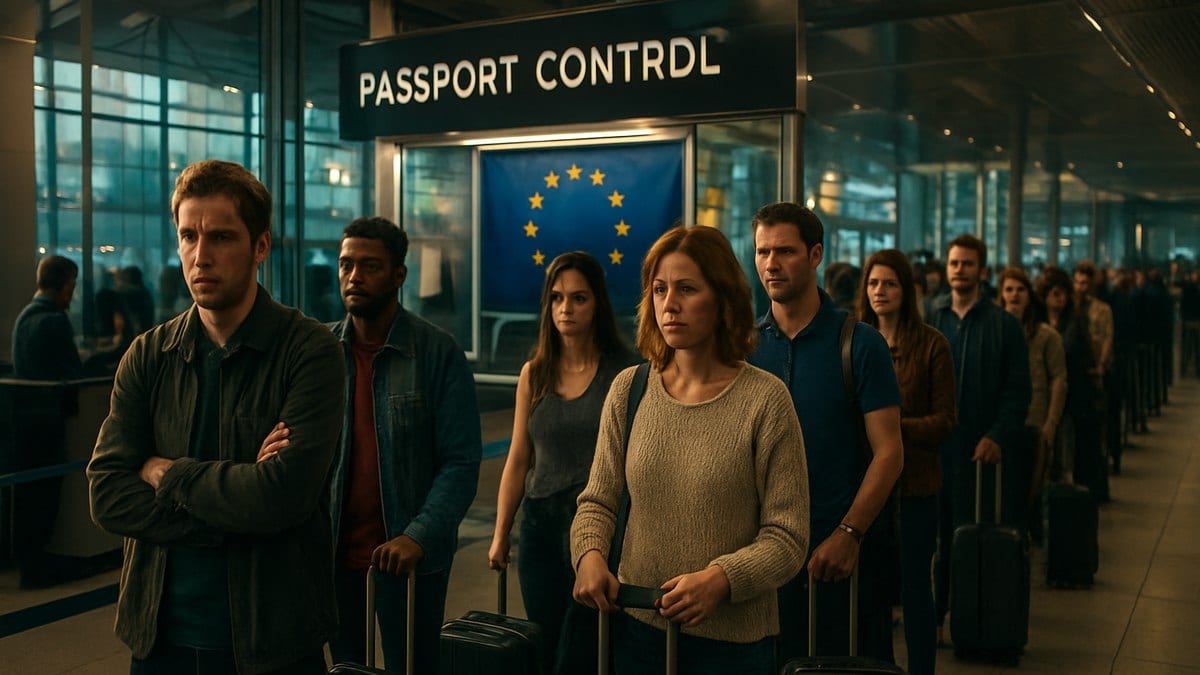
The disruption unfolded at Milan Linate Airport in mid April, shortly after the EU’s Entry Exit System became fully operational for non EU nationals, including British travellers. Reports indicate that on at least one Manchester bound service, more than 120 EasyJet passengers were unable to reach the departure gate in time, despite arriving at the airport several hours before takeoff.
According to published coverage, only a fraction of those booked on the flight managed to board, with the aircraft departing nearly empty compared with its manifest. Passengers described waiting in border control lines that snaked through the terminal as staff attempted to capture fingerprints, facial images and other data required by the new digital system.
The incident left many travellers suddenly grounded in Milan, facing additional accommodation, food and rebooking costs while they tried to find alternative routes back to the United Kingdom. Consumer focused outlets report that some passengers ultimately paid hundreds of pounds out of pocket to secure new flights home.
EasyJet has publicly acknowledged the disruption around Milan and linked the boarding problems to queues at passport control rather than to the airline’s own check in or boarding procedures. Statements reported in the British press indicate the carrier has described the wait times as unacceptable and has directed affected customers toward its usual compensation and complaint channels.
How the EU Entry Exit System Works at Airports
The EU’s Entry Exit System, often referred to as EES, is designed to replace manual passport stamping for non EU, non Schengen nationals crossing the bloc’s external borders. Instead of relying on ink stamps, the system records each traveller’s biometric and biographic details in a central database at their first entry after activation.
In practice at airports such as Milan Linate, this means that passengers from countries like the United Kingdom must present their passports, have them scanned and, in most cases, provide fingerprints and facial images before clearing border control. Reports from European media and airport associations indicate that these additional steps can extend processing times when passenger volumes are high or when facilities and staffing are limited.
Industry briefings suggest that once a traveller has been registered in EES, later crossings should be faster, but the first encounter with the system can be significantly longer than a traditional passport check. Early days of full implementation have coincided with the busy spring travel period, increasing the risk of bottlenecks at smaller and medium sized airports where space for queues and extra kiosks is limited.
Airports across the bloc have warned in recent months that, without additional flexibility, the new regime could generate exactly the kind of multi hour queues now being reported in Milan and other gateways. Airport groups have called for the ability to pause biometric registration at peak times, arguing that processing every eligible passenger immediately is not always compatible with real world capacity.
From Isolated Incident to Regional Warning Sign
The Milan EasyJet episode is being viewed by travel industry observers as an early, concrete example of the pressures created by EES on outbound as well as inbound journeys. While the system is intended primarily to track entries and exits for immigration control, the checks occur at the same border control points that travellers must clear before reaching departure gates.
In the Milan case, passengers heading from the Schengen zone back to the United Kingdom found themselves in lengthy lines at the non EU desks, with some reports describing queues of up to three hours. As boarding times approached and then passed, hundreds of people were still waiting to complete their biometric registration, effectively unable to reach the gate even though their aircraft and crew were ready.
Coverage in British and European outlets highlights that the Milan disruption is not an isolated complaint but part of a wider pattern of longer queues since the system went fully live in April. Airports council data cited in recent reports point to wait times stretching to two or three hours at several European hubs, particularly at peak weekend and holiday periods.
Travel commentators note that while the Milan incident has attracted particular attention because of the large number of EasyJet passengers left behind by a single flight, similar delays have already been recorded at airports in France, Spain, Portugal and Greece. The Milan case is therefore being treated less as an anomaly and more as a warning of what could become commonplace during the upcoming summer season if no adjustments are made.
Passenger Rights, Responsibility and Compensation Questions
The chaos in Milan has also revived debate over who is responsible when new border systems cause travellers to miss flights: the airline, the airport, or border authorities. Under EU Regulation 261 on air passenger rights, compensation is typically payable when cancellations or long delays are considered within the airline’s control, such as crew shortages or technical problems with an aircraft.
Legal commentators cited in consumer coverage suggest that cases linked to state run security or border checks are more complex. Airlines often argue that they cannot be held liable for decisions or delays created by government agencies or infrastructure that sit outside their direct control. Passengers caught up in the Milan queues now face the task of navigating these rules as they seek refunds, rerouting or reimbursement for extra expenses.
Some travellers have reported receiving hotel vouchers or assistance from EasyJet staff on the ground, while others say they were left to arrange their own accommodation and onward travel. Travel rights organisations are advising affected passengers to keep detailed records of boarding passes, receipts and any written communication from the airline or airport in order to strengthen later claims.
Observers also point out that the Milan incident may test how regulators interpret disruption linked to digital border systems that have been planned for years and widely flagged within the industry. Whether such events are ultimately deemed extraordinary circumstances or a foreseeable operational risk could influence compensation outcomes in similar cases across the EU.
What Travellers Need to Know Before Flying to and from Milan
For future visitors to Milan and other EU destinations, the events at Linate illustrate the importance of building in extra time at the airport while EES beds in. Travel advisories now commonly recommend arriving at least three hours before departure for flights to the United Kingdom and other non EU countries, particularly for the first trip taken on a new passport since the system went live.
Passenger reports from Milan and other European airports suggest that queuing times remain highly variable, with some travellers clearing the new checks quickly while others experience extended waits. The differences appear to depend on the time of day, staffing levels and whether several flights carrying large numbers of non EU passengers are scheduled within the same window.
Airlines and travel agents are encouraging customers to pay close attention to airport specific guidance about EES and to allow additional buffer time between connecting flights, especially when transfers involve a change of terminal or a fresh pass through border control. For itineraries that combine low cost point to point tickets, experts recommend building in generous margins or considering through bookings on a single ticket to reduce the risk of missed onward legs.
As Milan’s EasyJet passengers continue to share their experiences, the incident is likely to shape traveller behaviour in the coming months. Until the EU’s biometric border regime stabilises and airports adapt infrastructure and staffing to the new reality, many visitors are expected to trade leisure time for longer waits at the border in the hope of avoiding a repeat of the Milan scenario.