


More news on this day
Air passengers in the European Union have secured the most significant expansion of flight rights in more than two decades, as a new air passenger rights package clears its final political hurdles after 13 years of stop start negotiations in Brussels.
Get the latest news straight to your inbox!
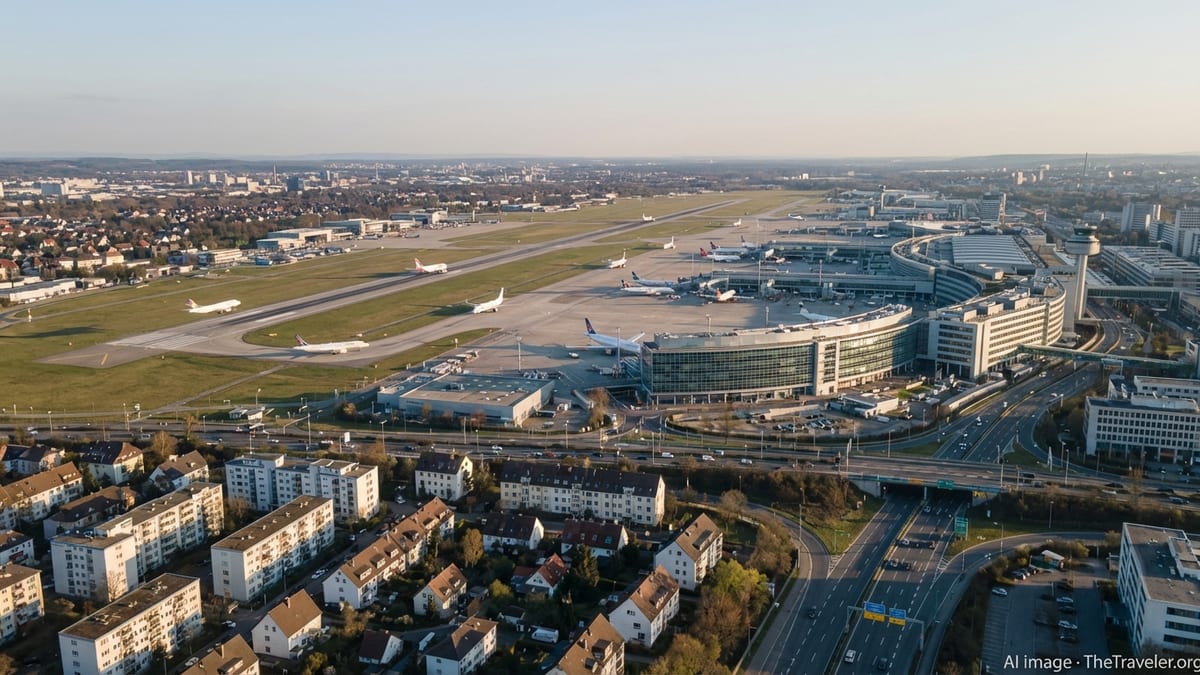
What just changed for flyers in Europe
The Council of the EU has now given final clearance to a revised regulation on air passenger rights, following a political deal with the European Parliament reached in mid June 2026. The updated rules modernise and clarify the landmark Regulation 261/2004, which sets out when passengers are entitled to care, rerouting and cash compensation after delays, cancellations or denied boarding.
According to publicly available information from EU institutions, the overhaul preserves the core compensation levels that many travellers already know from Regulation 261, but tightens definitions and procedures that had become mired in legal disputes over the years. Compensation for long delays and cancellations will continue to range from 250 to 600 euros depending on distance, with a three hour arrival delay threshold maintained as a key trigger in many cases.
New provisions also seek to strike a balance between strong consumer protection and the operational realities airlines face. Official documentation emphasises legal clarity around what counts as extraordinary circumstances beyond a carrier’s control, a key question in disputes about whether compensation is owed.
The package complements a separate agreement on better enforcement of passenger rights across all transport modes, which aims to make it easier for travellers to navigate complaints systems, obtain information and secure redress when trips go wrong.
A 13 year legislative saga finally ends
The reform has been a long time coming. The European Commission first tabled proposals to revise air passenger rights back in 2013, responding to a wave of court cases, consumer complaints and airline concerns about the scope of compensation rules. Those talks stalled for years amid disagreements between member states and industry stakeholders over costs and legal uncertainties.
Recent press material from the Council of the EU characterises the June 2026 agreement as the outcome of 13 years of intermittent negotiations on how to recalibrate this flagship consumer protection file. Over that period, courts across Europe issued a series of judgments that both strengthened passenger protections and exposed grey areas around issues such as missed connections and what qualifies as an extraordinary circumstance.
The political breakthrough this summer reflects a broader consumer protection agenda in the EU, where lawmakers have been updating rules on package travel, digital services and cross border enforcement. Air travel has remained a focal point for public debate, particularly following pandemic era disruption and repeated seasonal waves of delays and cancellations.
By locking in a compromise text, lawmakers aim to give both passengers and airlines a more predictable framework, reducing the need for test cases to clarify how the law should apply to complex, real world disruptions.
Key wins for passengers: no show ban and clearer payouts
Among the concrete changes, one of the most visible for ordinary travellers is a new ban on so called no show policies for return flights. Under the revised rules, airlines operating in the EU will no longer be allowed to cancel or reprice a return ticket solely because a passenger did not take the outbound leg, a practice that has long angered frequent flyers and consumer groups.
EU documentation on the agreement indicates that fare transparency will improve and that hand baggage rules are clarified, responding to complaints about opaque pricing structures and inconsistent cabin baggage policies. Carriers are expected to provide clearer information at booking and check in about what is included in the ticket and what counts as optional extras.
The updated regulation also codifies and refines compensation and care rights. The three hour delay threshold for compensation is explicitly safeguarded, while the text reiterates that airlines must offer meals, refreshments and accommodation when passengers are stranded for long periods, regardless of whether compensation is ultimately payable.
At the same time, the law confirms that extraordinary circumstances must be events beyond the airline’s control, directly linked to the flight and unavoidable even if all reasonable measures were taken. This aims to draw a sharper line between, for example, widespread air traffic control strikes or sudden security closures, and problems attributable to an airline’s own operational planning.
Faster, simpler claims and new protections for vulnerable travellers
One of the most persistent frustrations for passengers has been the complexity of filing claims and securing payments when disruptions occur. The new EU framework attempts to tackle this by standardising forms and improving coordination between enforcement bodies.
According to European Commission explainer material, travellers will gain access to common reimbursement and compensation claim forms that should be accepted across the Union. Airlines and intermediaries such as online travel agencies will have clearer deadlines to process refunds and pass money on to customers when flights are cancelled or not operated as planned.
There is also a stronger focus on passengers with reduced mobility or disabilities. Publicly available summaries of the agreement highlight provisions requiring carriers to better accommodate travellers who need assistance. Where an airline requires a passenger to travel with an accompanying person for safety reasons but cannot provide that assistance itself, the traveller will be entitled to bring a companion of their choice free of charge.
Authorities in member states are expected to receive additional tools to coordinate enforcement and share information, with the goal of reducing divergent interpretations of the rules and ensuring that travellers receive consistent treatment regardless of where in the EU they depart or arrive.
What non EU travellers should know
The revised legislation will matter not only for EU citizens but also for visitors flying into, out of or within the bloc. The core geographical scope of EU air passenger rights remains broadly unchanged. Passengers are covered when departing from an EU airport on any carrier, and when arriving in the EU from a non EU country on an EU airline.
For travellers based in North America or other regions, this means that itineraries touching the EU can trigger rights to care, rerouting and compensation that may be stronger than protections available under domestic regimes. Travel industry commentary already advises long haul passengers to familiarise themselves with EU rules, particularly when booking connecting itineraries through major European hubs.
Once the updated regulation enters into application, airlines will need to adapt customer communications and airport signage to reflect the new legal texts. Existing obligations to display information about passenger rights at check in and boarding areas are expected to continue, and digital channels such as mobile apps and booking confirmations will likely play a larger role in conveying standardised rights information.
For now, travellers planning autumn and winter trips to Europe should pay attention to airline notifications and to official EU information portals, which are beginning to publish plain language explanations of the new regime ahead of its formal start date.
Council of the EU: Council gives final clearance for stronger air passenger rights
Council of the EU: Landmark agreement on stronger EU air passenger rights
European Commission: Questions and answers on revised EU air passenger rights
European Commission: Know your EU passenger rights before you travel