


More news on this day
American tourists considering travel to Libya are being urged to take extraordinary precautions, with newly highlighted U.S. guidance recommending that prospective visitors prepare a will, leave DNA samples with a medical provider and make independent evacuation plans as crime, terrorism and kidnapping risks remain severe across the North African country.
Get the latest news straight to your inbox!
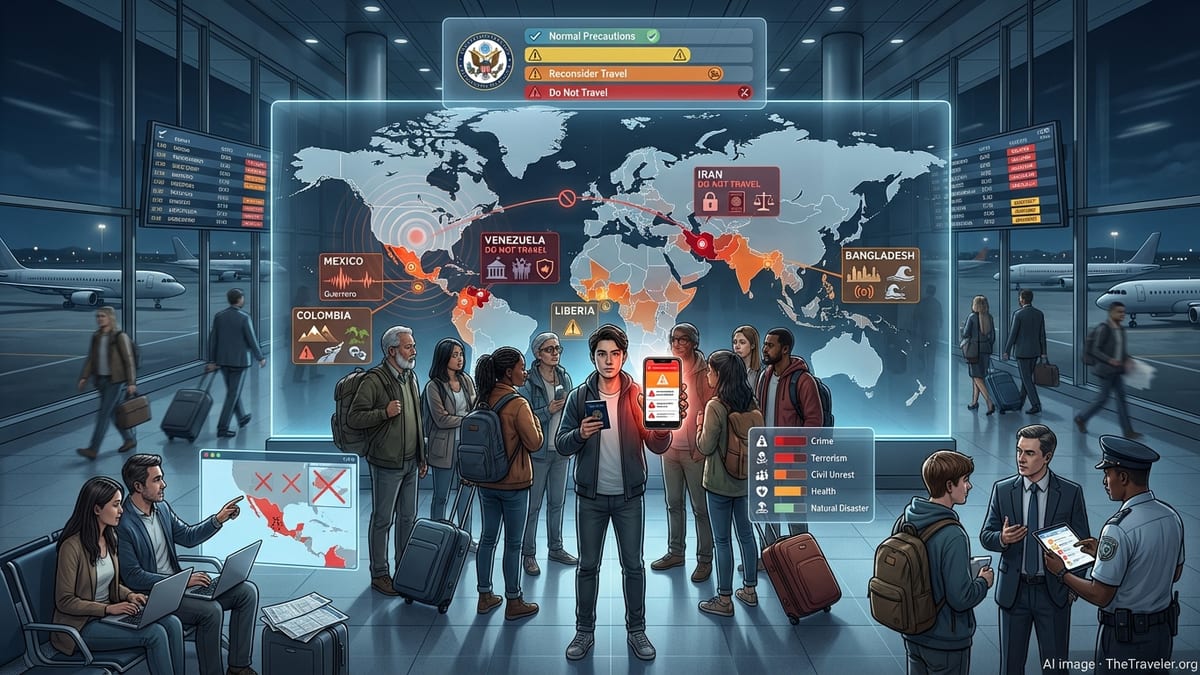
Level 4 “Do Not Travel” warning for Libya remains in place
Publicly available information from the U.S. government continues to list Libya under the highest Level 4 “Do Not Travel” category, advising Americans to avoid the country for any reason. The advisory cites a combination of threats, including violent crime, terrorism, kidnapping, armed conflict, civil unrest, health concerns, landmines and unexploded ordnance spread across parts of the country.
Travel guidance notes that the security situation in Libya is unpredictable, with clashes involving armed groups and government-aligned forces capable of erupting with little warning. Weapons are described as widespread, and the overall law-and-order environment remains fragile after years of conflict. Travelers who choose to go despite the warning are told not to expect the kind of consular support or emergency response that might be available in more stable destinations.
Reports indicate that the advisory has been updated in recent weeks, but its overall Level 4 status has not changed, underscoring that U.S. officials continue to consider Libya one of the most dangerous destinations for American travelers. Regional instability and unresolved political tensions add to the risk profile, particularly in areas far from major urban centers.
Guidance now includes wills, DNA samples and “proof of life” planning
Alongside the country-specific Libya advisory, a separate State Department webpage outlining best practices for travel in high-risk areas has drawn attention for its stark language. The guidance recommends that U.S. citizens headed into conflict zones or areas with extreme kidnapping and terrorism risks prepare a will and end-of-life instructions, designate insurance beneficiaries or a power of attorney, and consider leaving DNA samples with a medical provider so that family members can access them for identification purposes if needed.
The same high-risk guidance advises travelers to establish a “proof of life” protocol with loved ones before departure. Under this approach, families decide in advance on specific questions and answers that only the traveler would know, allowing relatives to confirm that a hostage-taker is actually in contact with the right person if a kidnapping occurs. It also encourages travelers to develop detailed communication plans and to stay alert in locations frequented by foreign visitors.
In Libya’s case, this general high-risk travel guidance is being publicly linked to the country advisory, effectively signaling that anyone entering the North African state should take these measures seriously. Coverage of the updated warnings notes that this level of personal contingency planning is unusual for tourism, reflecting the gravity of the security assessment.
Crime, kidnapping and terror threats reshape travel risk calculations
Published reports describe Libya as facing a convergence of dangers for foreign visitors. Crime levels are characterized as high, with risks of armed robbery, carjacking, home invasion and kidnapping for ransom present in various parts of the country. Analysts cite the presence of armed groups, limited central authority in some regions and a ready supply of weapons as factors that elevate the threat.
Terrorism also features prominently in the advisory language. Public information notes that terrorist networks and individuals inspired by extremist ideologies maintain a presence in Libya and the surrounding region, and that attacks could target government sites, transportation hubs, public venues or locations popular with foreigners. Although some of the most significant terror incidents date from earlier years, the risk is described as ongoing.
In addition, landmines and unexploded ordnance scattered across parts of Libya continue to pose a hazard, particularly outside major cities and in areas that experienced front-line fighting. Travel guidance warns that such devices may be unmarked or hard to recognize, complicating road travel or off-road exploration that might appeal to adventure-minded visitors.
Limited emergency support for Americans who travel anyway
For those who decide to travel to Libya despite the Level 4 warning, publicly available guidance stresses the need for robust self-reliance. Travelers are urged to put in place an emergency evacuation plan that does not depend on assistance from the U.S. government, in recognition of the severely constrained diplomatic and security footprint in the country.
Supporting information notes that consular services for Americans in Libya are extremely limited, and that rapid on-the-ground assistance in the event of a kidnapping, terror attack or sudden outbreak of violence may not be possible. Travelers are encouraged to secure comprehensive medical and evacuation insurance, given that local health facilities and resources may be inadequate in a major crisis.
Reports also emphasize that visitors are expected to register with local authorities shortly after arrival and to monitor local media and security developments on a constant basis. High-profile public events, crowded places and venues known to attract foreigners are highlighted as locations where heightened vigilance is advisable, as these sites have historically been targets in other conflict-affected environments.
Travel industry watches impact on regional tourism
The reinforced warnings around Libya arrive as North African tourism more broadly continues to recover unevenly from years of instability and the effects of the pandemic era. While several neighboring countries have invested heavily in promoting beaches, cultural sites and desert itineraries, Libya remains largely absent from mainstream holiday marketing because of its security profile and restricted air connectivity.
Analysts following travel risk trends note that advisories mentioning kidnapping, terrorism and the possibility of needing DNA samples to identify victims can shape perceptions for years, even if conditions improve on the ground. Once a destination is associated in the public mind with extreme danger, rebuilding confidence tends to be a long and fragile process.
For now, the combination of a Level 4 “Do Not Travel” warning, explicit references to crime and terrorism, and guidance that goes as far as urging travelers to prepare wills and leave DNA samples presents a clear barrier to any large-scale return of American leisure tourism to Libya. Travel observers suggest that only essential travel, specialized missions and limited business activity are likely to continue while such language remains in place.
Libya Travel Advisory – U.S. Department of State
High-Risk Area Travel Guidance – U.S. Department of State
Americans traveling abroad asked to leave DNA samples and wills