


More news on this day
British Airways flight BA94 from Montreal to London Heathrow experienced a lengthy delay on September 5, 2026, after an emergency evacuation slide accidentally inflated beside the aircraft during departure preparations at Montréal Trudeau International Airport.
Get the latest news straight to your inbox!
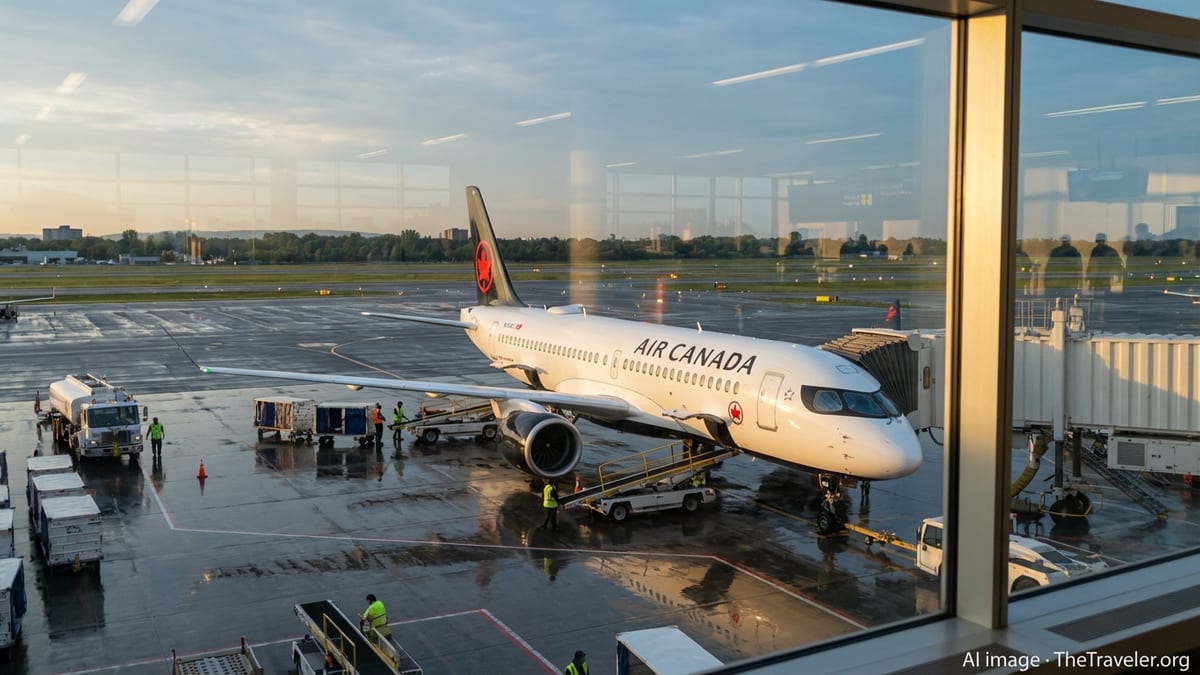
Incident at Montreal Trudeau Grounds London-Bound Dreamliner
Publicly available flight and aviation tracking data indicate that the affected aircraft was a British Airways Boeing 787-10 Dreamliner operating the carrier’s regular BA94 service from Montreal Trudeau (YUL) to London Heathrow (LHR). The jet, registered G-ZBLA, was parked at the gate with ground vehicles in position when the incident occurred. ([airlive.net](https://airlive.net/incident/2026/09/05/accidental-emergency-slide-deployment-delays-british-airways-boeing-787-10-to-heathrow/?utm_source=openai))
Reports from multiple aviation outlets describe how the left rear emergency evacuation slide suddenly deployed while a catering truck was positioned alongside the open cabin door. Video shared on social media appears to show the inflated slide draped over the side of the widebody aircraft and extending down onto the service vehicle on the ramp. ([sotwe.com](https://www.sotwe.com/fl360aero?lang=en&utm_source=openai))
The unexpected deployment immediately halted pre-departure procedures. Ground staff and maintenance personnel remained around the aircraft as the slide settled onto the tarmac, with airport operations temporarily focused on securing the area and assessing the situation. No injuries were reported among passengers or ground crew, and there are no indications of damage to the catering truck. ([aviationshop.com](https://www.aviationshop.com/blogs/news/british-airways-boeing-787-10-delayed-in-montreal-after-accidental-emergency-slide-deployment?utm_source=openai))
According to published coverage, the aircraft had not yet pushed back from the gate when the slide inflated, meaning passengers remained on board while technical teams considered options for dealing with the deployed equipment and evaluating the status of the exit door. ([aviationa2z.com](https://aviationa2z.com/index.php/2026/09/06/british-airways-flight-delayed-after-emergency-slide-deploys-in-montreal/?utm_source=openai))
Lengthy Delay but Flight Eventually Operates to Heathrow
Operational data and media reports indicate that the inadvertent slide deployment translated into a significant delay for BA94’s Montreal to London service. Several aviation news sites report that the departure was held for roughly three to three and a half hours while the slide was removed and the aircraft made airworthy again for the overnight crossing to Heathrow. ([aviationshop.com](https://www.aviationshop.com/blogs/news/british-airways-boeing-787-10-delayed-in-montreal-after-accidental-emergency-slide-deployment?utm_source=openai))
Tracking information shows the Montreal Heathrow rotation is scheduled as a late evening departure, arriving in London the following morning. Despite the extended ground time on September 5, BA94 ultimately departed Canada and reached the United Kingdom the same day, albeit well behind its planned timetable. ([flightstats.com](https://www.flightstats.com/v2/flight-tracker/BA/0094?utm_source=openai))
Specialist coverage notes that British Airways did not have a replacement slide unit immediately available in Montreal. Engineers therefore removed the deployed slide and placed the affected door out of service in accordance with safety requirements, allowing the aircraft to continue flying with one fewer usable exit, subject to passenger load and regulatory limits on evacuation capacity. ([aviationshop.com](https://www.aviationshop.com/blogs/news/british-airways-boeing-787-10-delayed-in-montreal-after-accidental-emergency-slide-deployment?utm_source=openai))
Downline scheduling was also affected. Reports suggest that a subsequent flight the aircraft was due to operate, including a planned service to Newark, required adjustments while further checks were completed, illustrating how a single ground incident can ripple through an airline’s wider network. ([aviationshop.com](https://www.aviationshop.com/blogs/news/british-airways-boeing-787-10-delayed-in-montreal-after-accidental-emergency-slide-deployment?utm_source=openai))
How an Emergency Slide Can Deploy on the Ground
While detailed technical findings have not been published, safety commentators point out that inadvertent slide deployments are a known risk during aircraft turnaround, particularly during boarding and catering when multiple doors may be opened and closed in quick succession. Modern commercial jet doors are designed so that a slide inflates automatically only when the door is both armed and opened in the emergency mode. ([paddleyourownkanoo.com](https://www.paddleyourownkanoo.com/2026/09/05/emergency-slides-blows-open-by-mistake-as-british-airways-flight-from-montreal-to-london-is-preparing-for-departure/?utm_source=openai))
According to industry-focused analysis of the Montreal event, the inadvertent activation likely occurred because the door was opened while still in the armed position, meaning the system correctly behaved as if an emergency evacuation were taking place. When operating from outside the aircraft, ground staff typically disarm the slide first, precisely to avoid this scenario. The Montreal case has been cited by aviation commentators as a reminder of how critical cross-checking door status remains during routine service operations. ([paddleyourownkanoo.com](https://www.paddleyourownkanoo.com/2026/09/05/emergency-slides-blows-open-by-mistake-as-british-airways-flight-from-montreal-to-london-is-preparing-for-departure/?utm_source=openai))
Once deployed, an emergency slide must be removed, carefully inspected, and repacked or replaced before the door can be returned to normal use. The process is time consuming and can rarely be completed within a short turnaround window at an outstation, which helps explain the extended delay facing BA94 and the need to dispatch the aircraft with that exit temporarily deactivated. ([aviationshop.com](https://www.aviationshop.com/blogs/news/british-airways-boeing-787-10-delayed-in-montreal-after-accidental-emergency-slide-deployment?utm_source=openai))
Emergency evacuation equipment is subject to strict certification standards, and each inadvertent deployment typically leads to both internal airline reviews and wider scrutiny from regulators or safety bodies, even if the occurrence is handled on the ground without injury. That framework is intended to ensure that human-factor issues in procedures and training are identified and addressed across fleets and operators. ([airpilots.org](https://www.airpilots.org/file/1fc93ebc03e0dad0648883b559fbb02b/emergency-evacuation-of-commercial-passange-aeroplanes-equals-mraes-and-hcap-2018.pdf?utm_source=openai))
Passenger Experience and Safety Context
For passengers, the immediate impact of the Montreal slide incident was a late-night delay on an already long transatlantic journey. While individual accounts have not been widely circulated, available reporting suggests that travelers remained on board the aircraft for part of the disruption and eventually departed several hours behind schedule, arriving into London well after the planned morning arrival time. ([aviationa2z.com](https://aviationa2z.com/index.php/2026/09/06/british-airways-flight-delayed-after-emergency-slide-deploys-in-montreal/?utm_source=openai))
In the broader context of commercial aviation safety, inadvertent slide deployments are disruptive but relatively contained events. They contrast with emergency evacuations triggered by smoke, fire, or hard landings, where slides are used to clear an aircraft rapidly. Safety studies from Canada and other jurisdictions highlight that properly functioning slides, correctly deployed in real emergencies, significantly reduce evacuation times and injury risk, which is why operators treat any malfunction or uncommanded activation as a serious maintenance occurrence. ([airpilots.org](https://www.airpilots.org/file/1fc93ebc03e0dad0648883b559fbb02b/emergency-evacuation-of-commercial-passange-aeroplanes-equals-mraes-and-hcap-2018.pdf?utm_source=openai))
Travelers on BA94 faced the inconvenience of missed connections and rescheduled plans in London, but the Montreal event is being presented in aviation media primarily as an operational and procedural issue rather than a near miss involving passenger injury. The lack of reported injuries or structural damage, combined with the eventual completion of the flight, suggests that existing safeguards on the ground functioned as intended once the slide inflated. ([aviationshop.com](https://www.aviationshop.com/blogs/news/british-airways-boeing-787-10-delayed-in-montreal-after-accidental-emergency-slide-deployment?utm_source=openai))
At the same time, the episode underscores how even a single momentary lapse in door-arming protocol can impact hundreds of travelers and the wider network of an international carrier. For frequent flyers and occasional travelers alike, the images of an inflated slide draped over a catering truck in Montreal offer a behind-the-scenes glimpse into the complex safety systems that support routine long-haul flights across the Atlantic. ([airlive.net](https://airlive.net/incident/2026/09/05/accidental-emergency-slide-deployment-delays-british-airways-boeing-787-10-to-heathrow/?utm_source=openai))