


More news on this day
Jakarta’s Soekarno-Hatta International Airport has extended its temporary closure into Monday evening as ash from the ongoing eruption of Mount Anak Krakatau continues to drift across western Indonesia, triggering widespread flight cancellations and leaving tens of thousands of passengers stranded.
Get the latest news straight to your inbox!
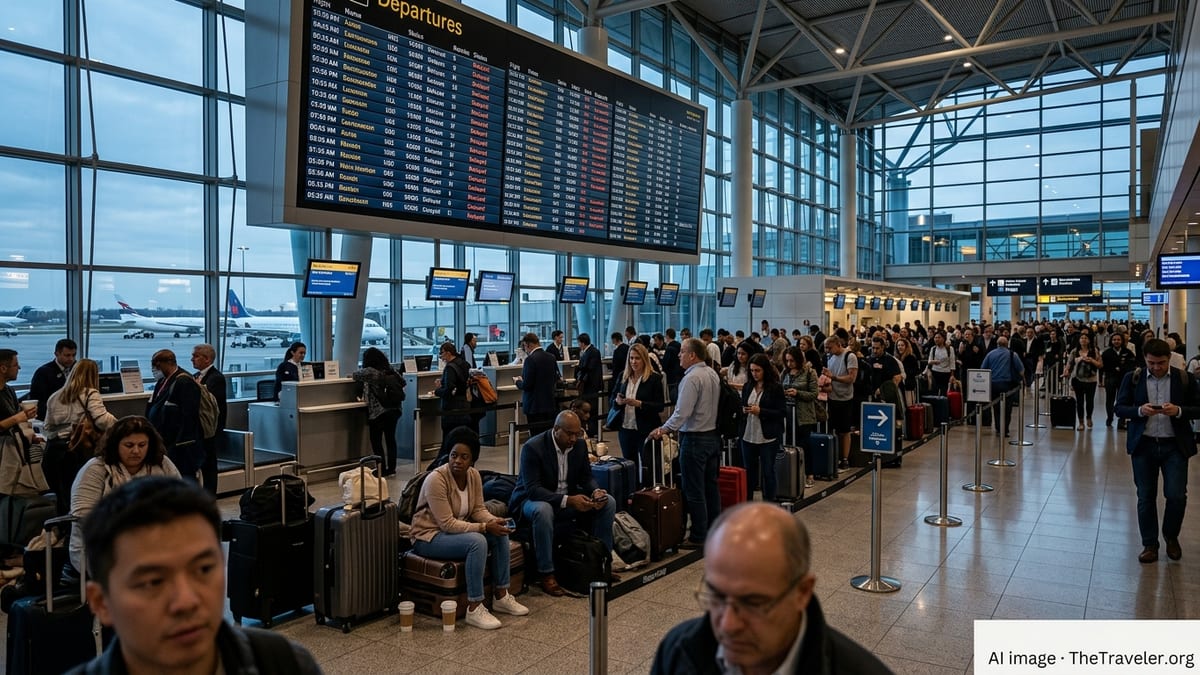
Closure extended as ash cloud lingers over Jakarta
Jakarta’s main gateway, Soekarno-Hatta International Airport, remains shut to regular operations after authorities extended a previous shutdown in response to volcanic ash from Mount Anak Krakatau. According to published coverage, the airport, together with several others on Sumatra and Java, has prolonged its closure to at least 6 pm local time on Monday, 7 September 2026, as monitoring shows ash still present in key flight corridors over western Java.
Information released by Indonesia’s transport ministry indicates that the extended closure follows successive notices to air missions (NOTAMs) issued over the weekend as paper tests and satellite analysis continued to detect ash in the vicinity of the airport. Earlier advisories initially halted operations in the early hours of Sunday, before the duration of the shutdown was lengthened several times as fresh eruptions and shifting winds pushed ash towards the capital region.
Reports from regional and international media describe partial or full suspensions at up to eight airports, including Jakarta’s Soekarno-Hatta and Halim Perdanakusuma, as well as facilities in West Java and Lampung. Civil aviation bulletins highlight ongoing volcanic ash advisories and significant meteorological information updates, which underpin decisions to keep runways closed and airspace restricted while conditions remain unsafe for jet operations.
Widespread disruption and stranded passengers
The extended shutdown has led to extensive disruption for domestic and international travelers. Figures shared in public statements by Indonesia’s Ministry of Transportation show that since 5 September, more than 1,500 flights across the affected airports have been cancelled, delayed, or diverted, with Soekarno-Hatta accounting for the bulk of the interruptions. Earlier tallies referenced in international news reports pointed to hundreds of individual flight cancellations at Jakarta alone and roughly 170,000 passengers impacted nationwide.
Images from local and international outlets show crowded terminals at Soekarno-Hatta and other airports as passengers wait for updates on rebooked flights. Airlines serving Jakarta, including major regional and long-haul carriers, have issued travel waivers, allowing date changes, rerouting, or refunds for itineraries scheduled during the current disruption window.
Travel hubs beyond Indonesia are also feeling the impact. Coverage from regional media notes that Singapore’s Changi Airport and other Southeast Asian gateways have reported knock-on delays and cancellations on services to and from Jakarta and other Indonesian cities, as carriers adjust schedules in response to closed airspace and changing ash forecasts.
Anak Krakatau’s renewed activity and ash trajectory
The disruption stems from intensified activity at Mount Anak Krakatau, the volcanic island that sits in the Sunda Strait between Java and Sumatra. According to information from Indonesia’s meteorological and geophysical agency, the eruption that began on Friday has generated multiple ash plumes, with satellite analysis identifying at least two distinct ash clouds reaching heights of several kilometres.
Publicly available briefings from the agency describe ash spreading across parts of Banten, Jakarta, West Java, Lampung and even as far as sections of South Sumatra and Bengkulu. Meteorological updates on Sunday and Monday show that changing wind patterns have carried ash across busy air routes serving the capital, prompting successive volcanic ash advisories and aviation weather warnings to keep aircraft clear of the contaminated airspace.
Specialised tests carried out at Soekarno-Hatta, including paper tests performed on airport surfaces, have repeatedly returned positive indications of ash contamination over the past 24 hours, according to information published by Indonesia’s civil aviation authorities. These findings, combined with satellite imagery and upper-air wind analyses, are cited as the basis for the extended closure periods specified in the latest NOTAMs affecting Jakarta’s main airport.
Impact on airlines, routes and regional connectivity
The prolonged shutdown at Jakarta is reverberating across airline networks in Southeast Asia and beyond. Coverage from regional broadcasters indicates that major carriers in the region, including flag carriers from neighbouring countries and Indonesia-based low-cost groups, have cancelled or rerouted services that normally link Jakarta with hubs such as Singapore, Kuala Lumpur, Doha, Sydney and Amsterdam.
Flight-tracking data referenced in international reports highlights a sharp reduction in movements at Soekarno-Hatta compared with normal early-September schedules, with many aircraft repositioned to alternative airports or held at origin. Some flights to Indonesia have been diverted to unaffected airports where feasible, but the combination of airspace restrictions, crew duty limits and limited spare capacity has constrained the number of viable workarounds.
Domestic connectivity has also been affected, particularly on routes linking Jakarta with Lampung, Bali, Surabaya and other major cities. Passenger accounts collated in local coverage describe a mix of same-day cancellations, rolling delays and rebookings over several days, as airlines attempt to rebuild schedules around the evolving closure times for the capital’s airspace.
What travelers should know right now
For travelers currently in Indonesia or planning imminent trips through Jakarta, publicly available advisories emphasize the importance of monitoring airline channels and official airport communication closely. Many carriers are updating their operational status several times a day as new ash forecasts are published and NOTAMs are revised, meaning previously cancelled flights may be reinstated or rerouted at relatively short notice once conditions improve.
Travel and aviation analysts quoted across regional coverage note that volcanic ash can pose serious risks to jet engines and aviation safety, which explains the cautious approach to reopening. Even when Anak Krakatau’s visible activity subsides, residual ash at cruising altitudes or near airports may continue to affect operations until atmospheric monitoring confirms that concentrations have fallen to safe levels along key flight paths.
Travelers with flexible plans are being encouraged, through airline notices and tourism board updates, to consider postponing non-essential journeys through Jakarta in the short term or to route via alternative Indonesian gateways that are not currently affected by ash clouds. For those already stranded, hotels near major airports and in city centers have become temporary waypoints as passengers wait for clearer timelines on when regular flying schedules can resume.
Industry observers suggest that, once Anak Krakatau’s activity eases and prevailing winds begin to disperse ash away from Jakarta’s airspace, a gradual reopening is likely, with priority given to stranded passengers and high-demand regional routes. However, given the unpredictable nature of volcanic activity, travelers are advised to remain prepared for further adjustments as Indonesia’s aviation authorities and meteorological services continue to monitor conditions in the days ahead.
Jakarta airport extends closure after volcano eruption – RTE
Penutupan delapan bandara imbas erupsi Anak Krakatau – Kemenhub
BMKG monitoring of Anak Krakatau eruption and aviation impact