


Ask any art lover to name their essential stops in Barcelona, and the Picasso Museum almost always appears near the top of the list. Tucked into a string of Gothic palaces in the historic El Born district, this museum holds one of the world’s most intimate and revealing collections of Pablo Picasso’s work. Many travelers do not just visit once. They return every few years, finding new reasons to be drawn back by fresh exhibitions, reimagined displays, and the shifting light of Barcelona itself. For anyone planning an art-focused trip to the city, understanding why the Museu Picasso inspires such loyalty is the first step to planning a genuinely memorable visit.
Get the latest updates straight to your inbox!
An Unmatched Window Into Picasso’s Early Years
Most major museums around the world showcase Picasso at the height of his fame, often through a handful of iconic paintings. Barcelona’s Picasso Museum does the opposite. Here, the focus is on the artist’s formative years from the mid-1890s to the early 1900s, when he was still a teenager and young adult walking the very streets that surround the museum. Visitors step into rooms filled with early academic studies, portraits of family and friends, and sketchbooks that feel almost like turning pages in a private diary. For art lovers, this is a rare chance to see not just finished masterpieces, but the evolution of a genius in real time.
One of the first rooms typically visited holds realist academic works like "Science and Charity," painted when Picasso was still a teenager. Standing just a few centimeters away from the canvas, travelers can study the confident brushwork and careful anatomy that reveal how technically accomplished he was long before Cubism. Many visitors say that this room alone changes how they think about Picasso. Instead of the stereotype of a spontaneous, rule-breaking modernist, they discover a disciplined student who first mastered the academic tradition before dismantling it.
Beyond the famous canvases, the museum’s thousands of works on paper are what keep serious art lovers coming back. Small ink drawings of Barcelona street scenes, charcoal portraits of café regulars, and quick sketches made in the city’s bars and studios tell a story you rarely see in big blockbuster museums. Because works on paper are fragile and sensitive to light, curators rotate them regularly. That means a traveler who visited in 2019 and returns in 2026 encounters new drawings and studies that were previously kept in storage, offering fresh insights each time.
For students and working artists, these rooms function almost like a masterclass in looking and learning. It is common to see visitors sitting quietly on the wooden benches with sketchbooks in hand, copying Picasso’s line or analyzing how he uses negative space. Many decide to return at different times of day, noticing how the changing natural light in the palaces subtly shifts their perception of the same drawings and paintings.
The Las Meninas Series and the Joy of Deep Looking
Another reason art lovers make repeat pilgrimages to the Picasso Museum is a single extraordinary body of work: the "Las Meninas" series, Picasso’s monumental reinterpretation of Velázquez’s royal masterpiece. Housed together in a dedicated room, these paintings invite a kind of slow, concentrated looking that is rare in busy European museums. Visitors can move from canvas to canvas, observing how Picasso breaks down the original composition, pushes it into abstraction, and reassembles its figures and spatial relationships across dozens of variations.
For many, this room becomes a touchstone they revisit each trip to Barcelona. A traveler might first encounter the series as an undergraduate art history student, then return years later with a deeper knowledge of Velázquez, and once more with children in tow, seeing how younger eyes react to the playful distortions. Each visit reveals new details: a figure that suddenly pops into focus, a color relationship that feels newly bold, or a compositional echo that was invisible on the first pass.
The museum’s layout encourages this kind of in-depth engagement. Unlike some mega-museums where masterpieces are barricaded behind thick ropes and heavy crowds, here the works are close enough to study carefully. On quieter afternoons, especially outside peak summer, visitors can stand almost alone before an individual canvas. Guides often recommend allowing at least half an hour in the "Las Meninas" room alone, and many serious art fans schedule their day around having time to linger here without rushing.
Audio guides, occasional themed tours, and bilingual wall texts also support repeat visits. An art lover might first walk the room with the standard audio commentary, then return later in the day simply to stand in silence and absorb the paintings. Over multiple trips to Barcelona, travelers often report that their memories of the museum are anchored to this room: a quiet afternoon in January, a stormy autumn day when the courtyard light was almost silver, or a summer evening ticket slot when the galleries felt unexpectedly calm.
Gothic Palaces, Hidden Courtyards, and the Spirit of El Born
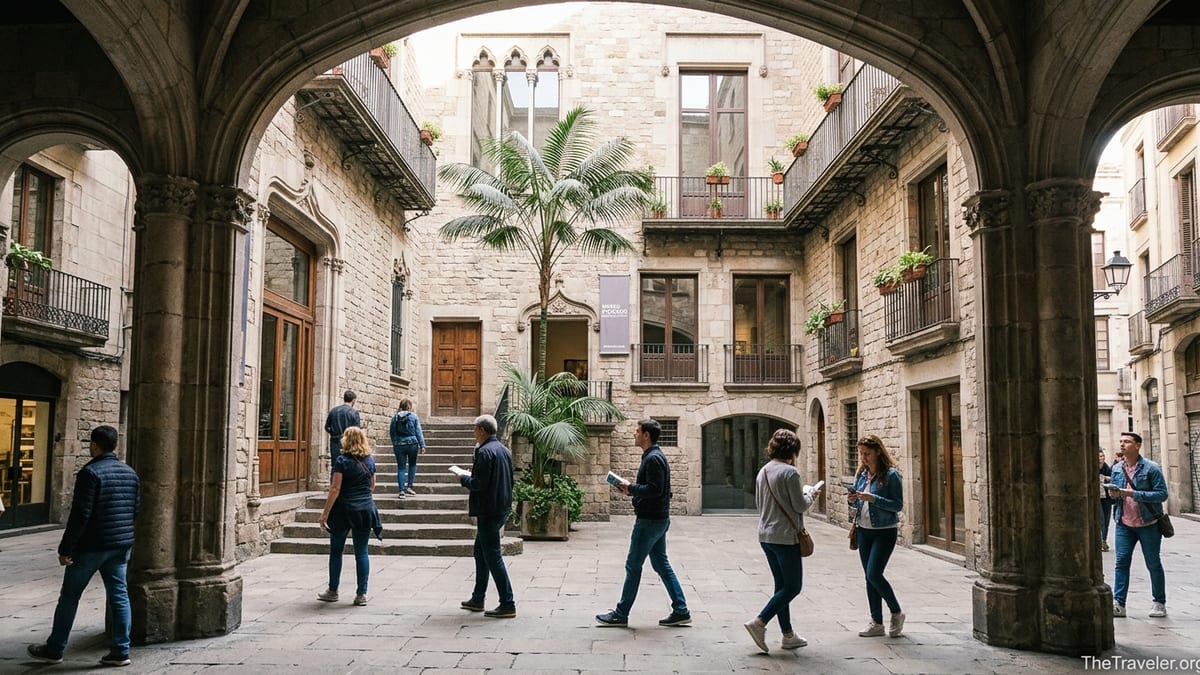
Part of the museum’s enduring appeal lies not only in the art it holds but in where it lives. The Picasso Museum occupies five connected medieval palaces along Carrer de Montcada, a narrow street in the La Ribera area, often referred to as El Born. Stepping through the stone archways feels like entering a small, self-contained world. Light filters down into inner courtyards where palm trees and potted plants soften the stone. Worn staircases lead up to galleries with vaulted ceilings and Gothic windows that frame glimpses of the neighborhood outside.
For art lovers, this architecture is not just a backdrop. It shapes the way they experience the works. A visitor might pause on an exterior staircase between rooms to listen to faint guitar music drifting up from a nearby plaza, or watch a delivery cyclist weave through the alley below, then re-enter a gallery filled with sketches of Barcelona street life from over a century ago. The continuity between the city outside and the images on the walls is palpable. Many travelers comment that the museum feels less like a neutral white cube and more like an extension of the neighborhood’s living history.
It also helps that El Born itself has become one of Barcelona’s most atmospheric quarters. Art travelers commonly pair a morning at the museum with a leisurely lunch on a shaded terrace nearby, followed by a stroll to the Basilica of Santa Maria del Mar or the archaeological ruins at the Born Cultural Center. Small contemporary galleries and design studios have sprung up in the side streets, so it is easy to turn a museum visit into a full day of art-focused wandering. Returning visitors often develop rituals: a coffee at the same corner café on Carrer de la Princesa before their timed entry slot, or a glass of vermut at a favorite bar after an afternoon among the paintings.
The physical approach to the museum also rewards repetition. On a first visit, most travelers follow the simplest route signposted from Via Laietana or the Jaume I metro stop. On future trips, they may deliberately arrive via different paths: cutting through Parc de la Ciutadella and entering from Passeig de Picasso, or getting lost on purpose in the medieval grid of streets and letting the stone palaces of Montcada appear almost by surprise. Each approach reveals a slightly different face of the neighborhood, deepening the sense that the museum and its surroundings are meant to be known slowly over time.
Changing Exhibitions That Reward Repeat Visits
While the permanent collection is the museum’s backbone, the temporary exhibitions give art lovers fresh reasons to return. Over the years, the museum has hosted shows that explore specific themes in Picasso’s work, such as his relationship with Barcelona’s bohemian circles, his printmaking techniques, or his dialogues with other artists. These exhibitions often include loans from major institutions and private collections, bringing to Barcelona works that are rarely seen together.
For example, a traveler might time a visit to coincide with an exhibition exploring Picasso’s connections to Catalan modernism, which could place his paintings alongside works by contemporaries who frequented the Els Quatre Gats café. Another season, the museum might focus on his ceramics or late drawings, inviting visitors to consider lesser-known aspects of his practice. Because these shows are temporary, art lovers who have visited in previous years often plan fresh trips when a new exhibition is announced, treating it as an opportunity to update their understanding of the artist.
The museum’s approach to display also evolves quietly over time. Curators periodically rehang sections of the permanent collection, swap out groups of works on paper for conservation reasons, or introduce new interpretive texts that highlight different aspects of the same painting. A pair of visitors who last walked through the galleries in 2022 and return in 2026 may recognize certain anchor pieces in their familiar positions, but notice that adjacent works have changed. A study previously tucked away in a side room might be given new prominence, or a sequence of drawings might be rearranged to tell a slightly different story.
For regulars, this living quality keeps the museum feeling fresh. It encourages guests to think of the Picasso Museum less as a static shrine and more as a working institution in dialogue with current scholarship, conservation research, and international loan programs. Travelers who subscribe to museum newsletters or follow Barcelona’s cultural calendar often build entire city breaks around these changing shows, pairing their visit with other exhibitions at nearby institutions such as the Moco Museum or the contemporary galleries around El Born.
Manageable Scale, Human Pace, and Practical Visiting Perks
Another reason art lovers keep coming back is pragmatic: the museum is large enough to be intellectually satisfying yet small enough to be digestible in a single visit. Where some European museums can leave travelers overwhelmed after hours of navigating vast wings, the Picasso Museum can generally be explored comfortably in 1.5 to 3 hours. This human scale makes it easy for visitors to return on each trip to Barcelona without feeling that they are sacrificing an entire day of sightseeing.
Practical details also encourage repeat visits. As of 2026, standard adult tickets are typically around 12 euros when purchased online, with a small surcharge at the door, and capacity is controlled through timed entry slots. Many experienced travelers now reserve in advance to avoid queues in the narrow streets outside. The museum participates in city passes and art cards that bundle entry with other institutions, which can be attractive to those planning several museum days across a week-long stay.
Regular free or reduced-entry periods further tempt both locals and long-stay visitors to drop in more often. On certain Sunday afternoons and the first Sunday of the month, pre-bookable free tickets open the doors to those who might not otherwise prioritize a paid visit. Art lovers living in or frequently returning to Barcelona often time short, focused visits to these slots, using them to revisit a specific room or follow a single thread, such as sketchbooks from 1900 or the Blue Period paintings.
The museum’s location also makes returning almost effortless. It sits within a short walk of metro stations, bus routes, and major walking routes through the old city. A traveler staying elsewhere in town might easily decide on a whim to spend a rainy weekday afternoon in the galleries or revisit the "Las Meninas" series before an evening concert. Because the museum is embedded in a lively quarter of cafés, boutiques, and other attractions, it folds naturally into a repeat visitor’s wider routines in the city.
Emotional Connections and Personal Pilgrimages
Beyond its curatorial strengths and architectural charm, the Picasso Museum holds a particular emotional charge for many visitors, especially those who have followed Picasso’s work over years. For some, the museum marks a first encounter with serious art, perhaps during a student trip or a long-awaited sabbatical. Others discover it later in life and connect Picasso’s early struggles and constant reinvention with their own stories of change. These personal narratives turn the museum into a kind of private landmark, one that travelers feel compelled to revisit as their lives and perspectives evolve.
It is not uncommon to meet guests who describe the museum as a ritual stop on every Barcelona trip. A couple might have first visited while backpacking in their twenties, then returned decades later with teenagers who are just beginning to recognize Picasso’s name from school. A painter from another country might recall seeing the academic works as a young art student and feeling suddenly less alone in the grind of learning technique. Coming back years later, they notice different details, perhaps paying more attention to late drawings, or to how the museum frames Picasso’s relationship with the city.
These repeat visits often weave together with the rhythms of Barcelona itself. A traveler might remember stepping into the cool, quiet stone halls during a humid August afternoon when the city felt loud and crowded outside, or warming up in the galleries on a crisp January morning when the winter light made the courtyards glow. Over time, the museum becomes a touchstone, a place to return to for an hour of reflection within the bustle of a city break.
Because much of the collection documents Picasso’s youth in Barcelona, visitors also feel a sense of narrative completion when they connect the museum’s works with other city sites. A morning tracing his haunts around Plaça de Catalunya, La Rambla, and the café Els Quatre Gats can lead naturally to an afternoon among the paintings that grew out of those experiences. Returning to both the city and the museum on different trips lets travelers see how their own relationship with the place deepens, mirroring Picasso’s complex bond with Barcelona across his life.
The Takeaway
For art lovers, the Picasso Museum in Barcelona is far more than a box to tick on a sightseeing list. Its deep focus on the artist’s early years, the extraordinary "Las Meninas" series, and the setting within Gothic palaces in El Born create an experience that invites slow, repeated looking. Evolving exhibitions and subtle changes to the displays reward those who return, while manageable scale and practical visiting options make it easy to fit into trips of any length.
Combine that with the emotional pull of walking the same streets that shaped a young Picasso, and it is no surprise that many travelers find themselves drawn back to the museum every time they pass through Barcelona. Whether you are planning a first visit or debating a return, setting aside unhurried time here can anchor your entire stay, reminding you that the most memorable travel experiences often come not from racing to see something new, but from deepening your relationship with places and artworks that continue to reveal themselves over time.
FAQ
Q1. How much time should I plan for a visit to the Picasso Museum in Barcelona?
Most art lovers find that 1.5 to 3 hours works well for a first visit, depending on how slowly you like to move through galleries. If you want to linger in the "Las Meninas" room, study drawings in detail, or use an audio guide, plan closer to three hours. Repeat visitors sometimes focus on just one section and spend a concentrated hour in the museum.
Q2. Do I need to book tickets for the Picasso Museum in advance?
Booking in advance is strongly recommended, especially in spring, summer, and during major holidays. The museum uses timed entry slots and can sell out at popular times of day. Purchasing online ahead of time usually costs about the same as the walk-up price and can save you from standing in a long queue in the narrow streets outside.
Q3. When is the best time of day to visit if I want to avoid crowds?
Quieter periods are often early time slots right after opening on weekdays or later in the afternoon outside peak season. Midday in high summer and free-entry windows tend to be busier. If your schedule is flexible, aim for a weekday morning or an early evening slot and arrive a little before your timed entry.
Q4. Are there any free or reduced-price times to visit the museum?
The museum usually offers free or reduced entry on certain Sunday afternoons and on the first Sunday of each month, but these slots must still be reserved in advance and book out quickly. There are also special free days linked to local festivals or museum days. Always check the current schedule shortly before your trip, as conditions and dates can change.
Q5. Is the Picasso Museum suitable for children and teens?
Yes, many families visit with school-age children and teenagers. While the museum is not specifically designed as a hands-on space, the progression from realistic early works to more experimental pieces can be engaging for young visitors. Audio guides and family-friendly explanations help, and combining the museum with time in nearby Parc de la Ciutadella can balance culture with play.
Q6. Can I take photos inside the Picasso Museum?
Photography rules can vary by gallery and over time, especially for temporary exhibitions that involve loans from other institutions. In general, flash and tripods are not allowed, and some rooms may prohibit photography altogether. Signs at the entrance and in each room will indicate what is permitted on the day of your visit, so it is best to check and follow staff instructions.
Q7. What should I not miss if I only have a short time at the museum?
If your time is limited, focus on the early academic works that show Picasso’s technical skill as a teenager, the Blue Period paintings, and the "Las Meninas" series. These sections give a strong sense of his development and the museum’s unique strengths. You can walk a condensed route through these galleries in about an hour if you move briskly.
Q8. Is the museum accessible for visitors with reduced mobility?
The museum has made significant efforts to improve accessibility in its historic buildings, including ramps, elevators, and adapted restrooms. However, the layout across several medieval palaces means there are still some narrow passages and uneven surfaces. Visitors with specific mobility needs should check current accessibility information in advance and may wish to contact the museum directly to confirm details for their situation.
Q9. Are there good places to eat or have a coffee near the Picasso Museum?
Yes, the surrounding El Born neighborhood is full of cafés, tapas bars, and small restaurants within a few minutes’ walk. Many visitors like to have a coffee on Carrer de la Princesa before their timed entry, then enjoy a relaxed lunch or early dinner on a nearby terrace after their visit. Options range from simple bakeries to contemporary Catalan bistros, so it is easy to find something that fits your budget and taste.
Q10. How does the Picasso Museum compare to seeing Picasso’s work in other cities like Paris or Madrid?
While major museums in Paris and Madrid often showcase Picasso’s later masterpieces and famous Cubist works, Barcelona’s Picasso Museum offers the most complete view of his early years and his connection to the city where he came of age. Many art lovers say that combining this museum with visits to larger collections elsewhere gives a fuller picture of his trajectory. If you are particularly interested in how a young Picasso learned, experimented, and responded to Barcelona, this museum is essential.