


More news on this day
Hundreds of passengers have been stranded across Europe after a fresh wave of air travel disruption saw 2,806 flights delayed and 111 services cancelled, with major hubs in the Netherlands, France, Switzerland and Spain reporting severe knock-on effects for carriers including easyJet, British Airways and KLM.
Get the latest news straight to your inbox!
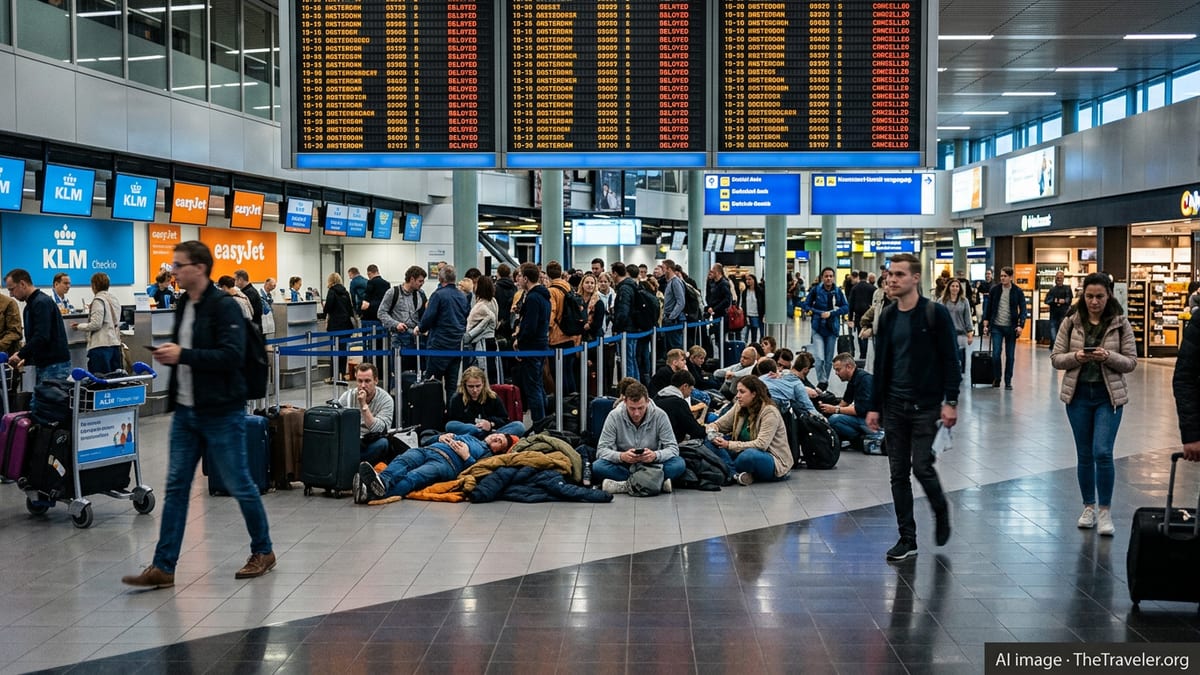
Disruption Hits Key European Hubs
Published data and media coverage indicate that the latest turmoil has rippled through some of Europe’s busiest airports, including Amsterdam Schiphol in the Netherlands, Paris Charles de Gaulle and Orly in France, Zurich and Geneva in Switzerland, and Barcelona El Prat in Spain. The combination of delays and cancellations has turned these hubs into bottlenecks, with passengers facing long queues at service desks and crowded departure halls as they wait for updates.
Operational information suggests that the scale of the disruption is significant, with 2,806 flights delayed and 111 cancelled over a short period. While those figures are spread across multiple countries and carriers, the impact is heavily concentrated at major transfer points where even a modest reduction in capacity can lead to extensive knock-on delays for connecting services.
According to publicly available tracking data, the disruption has primarily affected short and medium haul services within Europe, but long haul links to North America, the Middle East and Asia have also experienced punctuality issues. Airports such as Barcelona and Paris, which serve as key gateways for leisure traffic at the start of the summer season, have seen particularly visible crowding as travelers attempt to rebook or reroute.
Reports from passenger advocacy groups note that limited spare capacity on popular routes has made same day rebooking difficult. This has increased the number of people forced to overnight in airports or seek last minute hotel rooms near major hubs, especially where cancellations have taken out late evening departures.
Airlines From Low Cost to Legacy Affected
The disruption has not been confined to a single airline or business model. Low cost operators such as easyJet, network carriers including British Airways and KLM, and a range of regional and charter airlines have all been affected across Europe. Publicly available schedules and updates show that cancellations and extended delays have cropped up on both intra-European point to point services and hub and spoke connections.
For easyJet, the most visible problems have been reported on popular leisure routes linking the United Kingdom and continental Europe, particularly via Barcelona and other Mediterranean destinations at the height of the early summer getaway. British Airways services through London, with onward connections to Paris, Amsterdam and Zurich, have also faced delays that cascade when aircraft and crews arrive late from previously affected sectors.
KLM operations at Amsterdam Schiphol appear especially vulnerable when multiple factors combine, such as air traffic control restrictions, weather and tight turnarounds. Published coverage in recent months has already highlighted how relatively small schedule adjustments or staffing shortages can require cancellations at hub airports, forcing widespread rebookings for passengers en route to or from other European cities.
Flag carriers and regional subsidiaries serving Swiss airports have similarly had to trim schedules when confronted by bottlenecks. Earlier reports this year described Swiss International Air Lines scaling back flights due to crew and operational constraints, and the latest wave of delays and cancellations has added pressure during an already challenging season for the airline and its partners.
Multiple Causes Behind the Latest Wave of Delays
Air traffic data from European agencies and aviation analysts points to a combination of causes driving the current disruptions. These include staffing issues in some national air traffic control systems, lingering schedule fragility from earlier strikes, localized technical problems affecting navigation or communication systems, and weather-related capacity reductions at key airports.
Recent European coverage has described how unexpected staffing gaps and sector caps in parts of the network can trigger air traffic flow management restrictions. When these restrictions take effect, flights are held on the ground or rerouted, adding minutes or hours to individual journeys. With traffic volumes close to or above pre-pandemic levels in some regions, even modest delays per flight can accumulate into large numbers across the network.
In parallel, several European airlines and airports have acknowledged ongoing resource constraints, with some carriers operating at the edge of available crew rosters. When disruption hits early rotations in the day, aircraft and staff can end up out of position, leading to a rolling pattern of delays that extends into the evening and, in some cases, forces outright cancellations to reset schedules.
Weather remains a recurring factor as well. Earlier in the year, a severe cold snap brought snow and icy conditions to the Netherlands and parts of France, with Amsterdam Schiphol and French airports experiencing hundreds of weather-related cancellations and delays over several days. While the latest disruption is occurring in a different seasonal context, these prior episodes highlight how sensitive the European network can be to rapid changes in local conditions.
Stranded Travellers Face Long Waits and Limited Options
For passengers on the ground, the implications of 2,806 delays and 111 cancellations are immediate and personal. Media reports from recent disruption events in Europe have described travelers sleeping on terminal floors, queuing for hours to reach airline service counters and struggling to find replacement flights that fit their original itineraries.
At hubs such as Barcelona and Paris, travelers connecting between European and intercontinental flights are particularly exposed. When an inbound short haul service arrives late or is cancelled, passengers can miss long haul departures that may only run once per day. In these cases, rebooking may involve lengthy detours via alternative hubs or overnight stays arranged at short notice.
Hotel capacity near airports can quickly tighten during large scale disruption. Previous incidents in Belgium and Switzerland, for example, have seen local media report full occupancy in airport hotels as stranded passengers competed for available rooms. Similar patterns are likely whenever major hubs experience simultaneous cancellations and extended delays, as appears to be the case in the latest wave.
Social media posts and consumer advocacy commentary also highlight concerns about access to clear information. While airline apps and airport displays provide real time updates, travelers frequently report confusion over whether a flight is delayed, retimed or cancelled, and what options exist for refunds, vouchers or alternative transport.
Passenger Rights and Practical Steps for Affected Flyers
The disruption has renewed attention on European air passenger rights regulations, particularly the EU’s long standing framework that provides compensation and assistance in cases of significant delays and cancellations under defined conditions. Recent coverage of negotiations at European level suggests that policymakers are working on clarifications and adjustments intended to strengthen protections, especially for long haul travelers facing extensive delays.
Under existing rules, travelers on flights departing from or arriving in many European countries may be entitled to refreshments, hotel accommodation, rebooking or financial compensation, depending on the length of delay, distance of the flight and reason for disruption. However, whether an event is classified as within the airline’s control or as an extraordinary circumstance can influence what passengers ultimately receive.
Consumer organizations therefore advise passengers caught up in widespread delays and cancellations to carefully document their experience, including boarding passes, booking confirmations, receipts and any written notifications from airlines about the reasons for disruption. This documentation can later support claims made directly to carriers or, if necessary, escalated through national enforcement bodies or alternative dispute resolution schemes.
In the short term, practical steps for stranded travelers include checking flight status repeatedly through official airline channels, exploring alternative routings via other hubs, and considering rail or coach options for shorter cross-border journeys within Europe. With disruption of the scale currently reported, flexibility on routing and timing often becomes the key to reaching one’s destination, even if the journey takes considerably longer than originally planned.