


More news on this day
EUROFIMA, the European rail rolling stock financing institution based in Basel, is preparing a high profile conference this October that will gather public transport leaders to debate how new funding models can support greener, more resilient mobility networks across Europe.
Get the latest news straight to your inbox!
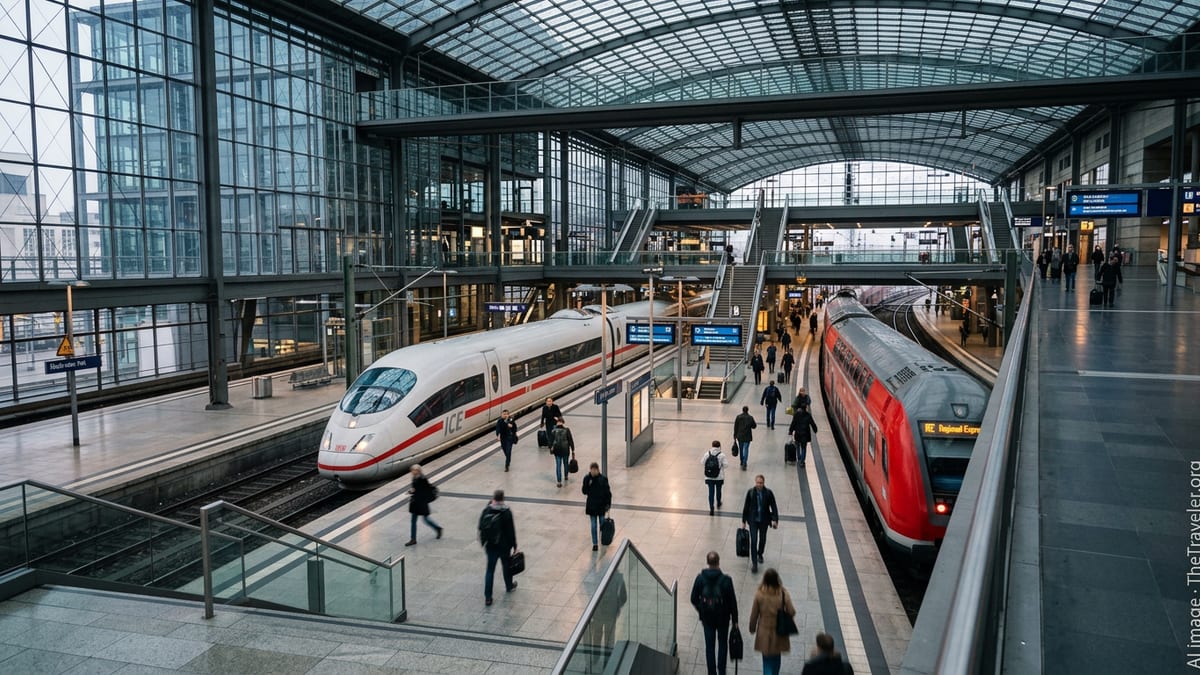
Basel and Olten Set to Host 70th Anniversary Gathering
According to publicly available information from the organizer, the EUROFIMA Conference "Public Transport in Transition" is scheduled for 20 and 21 October 2026 in Switzerland, with sessions planned in Basel and Olten. The event coincides with the 70th anniversary of EUROFIMA, which was founded in 1956 to help European states renew passenger rail equipment through joint financing structures.
EUROFIMA’s stated mission is to provide cost effective long term funding to public passenger rail operators and related public transport bodies. The conference is expected to reflect that mandate, positioning rolling stock finance as a lever for decarbonization and modernization rather than a niche technical topic. The timing comes as several European countries reassess investment priorities in light of climate goals, budget pressures and shifts in passenger demand.
Early announcements indicate that the conference will be in person and aimed at professional audiences rather than the general public, although details of registration and program logistics are still emerging. The choice of Basel, where EUROFIMA is headquartered, and Olten, a key Swiss rail junction, underlines the event’s focus on operational as well as financial aspects of public transport.
Who Is Expected Around the Table
Information released so far suggests a broad mix of participants. EUROFIMA highlights representatives of public transport operators, both publicly and privately owned, alongside private and public rolling stock leasing companies, often referred to as ROSCOs. These entities play a growing role in owning and managing train fleets that are then leased to operators, especially in liberalized markets.
Also targeted are public transport authorities and transport associations, which typically plan and procure regional and urban services, as well as rolling stock manufacturers. Their presence would bring vehicle design, production capacity and innovation in areas such as energy efficiency and passenger comfort into the discussion.
Publicly available descriptions of the event further indicate an invitation to decision makers in national ministries and regional governments. That mix could give the conference a policy oriented tone, linking financial engineering with regulatory frameworks, climate policy and national investment strategies. For city and regional leaders grappling with constrained budgets and ageing fleets, the sessions may offer case studies on how supranational financing can de risk large procurement programs.
Focus on Rolling Stock Finance and Green Bonds
The conference title, "Public Transport in Transition," appears closely aligned with EUROFIMA’s recent shift toward sustainable finance instruments. In the first half of 2026, the institution continued to position green bonds as its core funding tool for lending to railways, supported by a dedicated Green Bond Framework and external assessments of eligibility criteria.
Recent disclosures show that EUROFIMA has issued multiple euro denominated green bonds and used the proceeds to finance electric, bi mode and tri mode passenger trains across member states. Allocation and impact reporting for these bonds highlights estimated reductions in carbon emissions and energy use attributable to the financed rolling stock. The conference is expected to showcase these results and explore how similar instruments could be scaled or adapted to buses, metros and tramways, which fall under the company’s broadened definition of eligible equipment.
Industry observers note that the cost of new rolling stock has risen significantly in several markets, prompting interest in cooperative or not for profit financing structures. Against this backdrop, sessions on funding strategy, risk management and credit structures are likely to attract attention from both railway operators and treasury officials, particularly where national debt limits and state aid rules shape investment decisions.
Public Transport in Transition Across Europe
The event comes at a moment when public transport systems are navigating simultaneous pressures. Many European rail and urban transit operators are working to recover demand patterns that shifted during the pandemic while dealing with inflation in construction, energy and labor costs. At the same time, EU level climate objectives call for a significant modal shift from private cars and short haul flights to rail and collective transport.
Projects such as new high speed links, cross border freight corridors and urban rail expansions require substantial upfront capital. As several reports have noted, European institutions and national governments are under pressure to balance transport investment with other priorities, including defense and energy security. The EUROFIMA Conference is positioned as a venue to examine how targeted rolling stock finance can keep large scale network plans moving even when public budgets are tight.
For city regions, the transition also involves integrating rail with buses, cycling and on demand services, as well as managing digital ticketing and passenger information systems. Although the detailed agenda has not yet been released, the conference’s emphasis on public transport more broadly suggests that rolling stock will be addressed as part of a wider ecosystem rather than in isolation.
What the Conference Means for Travelers
While the EUROFIMA Conference is primarily aimed at professionals, the issues on the agenda have direct implications for travelers. Financing decisions taken today shape the trains and trams that will be in service for decades, influencing comfort, reliability, frequency and accessibility on routes across the continent.
Passenger facing benefits from recent rolling stock investments typically include quieter and more energy efficient trains, step free boarding, improved seating layouts and better onboard digital connectivity. Financing structures that spread costs over the long life of these assets can make such upgrades more feasible for operators, especially in regions where fare revenue alone cannot cover capital expenditures.
For international visitors planning rail based itineraries in Europe, including those attending the conference itself, the gathering underscores how central finance has become to achieving seamless, low carbon mobility. The discussions in Basel and Olten are expected to feed into future procurement cycles and policy frameworks that will shape Europe’s rail travel experience well beyond the conference dates.