


More news on this day
Africa’s rail network is entering one of its most active investment cycles in decades, with the Atlantic-facing Lobito Corridor and a series of standard gauge projects promising to redraw trade patterns and test how the continent moves people and critical minerals.
Get the latest news straight to your inbox!
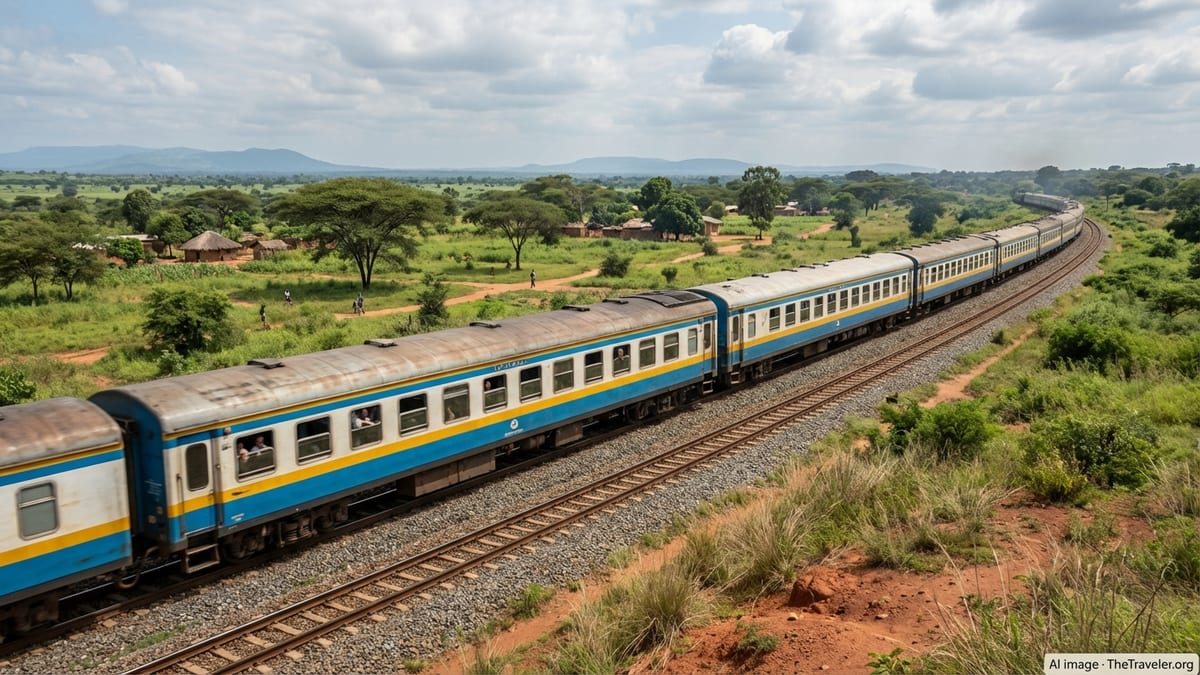
Lobito Corridor Emerges as Flagship of Africa Rail Revival
Recent developments on the Lobito Corridor between Angola, the Democratic Republic of Congo and Zambia have turned a long-discussed rail vision into one of Africa’s most closely watched infrastructure projects. Publicly available information shows that the 1,289 kilometer Benguela line from the Atlantic port of Lobito to the Angola–DRC border is now operating under a 30 year freight concession, with new copper and cobalt shipments moving along the route in early 2026.
According to published coverage, the concessionaire, Lobito Atlantic Railway, secured a financing package of roughly three quarters of a billion dollars from a combination of United States and South African development finance institutions in late 2025. That deal is being presented by analysts as a turning point, giving the operator capital to modernize track, rolling stock and terminals while expanding capacity for long-haul mineral freight.
The corridor’s significance goes beyond a single rail line. Research from multilateral and academic institutions describes Lobito as the spine of a broader west–east logistics system intended to connect Central Africa’s copperbelt to Atlantic markets. Plans call for new construction in Zambia and the DRC to tie mining hubs into the existing Benguela alignment, creating an alternative to export routes that currently run mainly to ports in South Africa, Tanzania and Mozambique.
That strategy has quickly acquired geopolitical weight. Reports from think tanks and business media frame Lobito as a centerpiece of Western-backed infrastructure on the continent, positioned in parallel to Chinese financed corridors such as the Tanzania–Zambia Railway Authority route. The result is a rail project that sits at the intersection of African industrial policy, global mineral supply chains and strategic competition.
Financing and Construction Plans Stretch from Angola to Zambia
Across Angola, the DRC and Zambia, the focus has shifted from basic rehabilitation toward corridor-wide expansion. Angolan authorities have outlined plans to extend the refurbished Benguela line deeper into Zambia’s copperbelt, seeking several billion dollars in additional funding to build hundreds of kilometers of new track linking the border town of Luau to mining centers in the country’s northwest.
Analysis by infrastructure specialists indicates that this extension would represent Zambia’s most ambitious greenfield rail construction since the 1970s. Procurement processes for an estimated 800 kilometer stretch are reported to be under way in 2026, with engineering, procurement and construction bids expected to set the framework for phased works starting later in the decade, subject to financing and political continuity.
On the DRC side, corridor studies highlight the need for extensive rehabilitation of existing track between key copper and cobalt hubs and the Angolan frontier. Sections of the network have seen repeated derailments attributed in public reporting to aging infrastructure, axle load limitations and deferred maintenance. International financing packages now being assembled are expected to prioritize these bottlenecks to stabilize export flows and improve safety on heavily loaded mineral trains.
Institutional investors and development banks are closely watching how project sponsors balance commercial and developmental objectives. Commentaries from African policy forums note that while mineral export volumes are driving the business case, surrounding provinces in all three countries are pressing for passenger services, agricultural freight and local industrial links so that the corridor does not become a purely extractive pipeline.
Shifting Mineral Flows Challenge Established Coastal Gateways
The ramp-up of rail traffic through Lobito is already prompting reassessments at other African ports. Trade and shipping publications report expectations that a growing share of copper and cobalt from the DRC and Zambia could divert from long-established export gateways in southern and eastern Africa to the shorter Atlantic route. That shift would have direct implications for port revenues, trucking companies and inland depots along existing corridors.
For mineral producers, the appeal of the Lobito route lies in reduced transit times to Atlantic markets and the possibility of more predictable rail schedules compared with historically congested lines. Logistics analysts argue that even modest gains in reliability can translate into significant savings for large-volume exporters, particularly when global prices for copper and battery metals are volatile.
At the same time, observers caution that the reorientation of traffic is far from guaranteed. Upgrades to competing corridors, including modernization efforts on the Tanzania–Zambia Railway and enhancements to South African and Namibian port infrastructure, are intended to retain or regain market share. Governments along those routes are using regulatory reforms and targeted investments to keep rail and port services competitive in terms of price, security and turnaround times.
Several regional studies underline that the outcome will depend on coordination as much as construction. Tariff structures, customs processes, open access policies and cross border operating rules will shape shippers’ choices. If interoperability and scheduling issues persist, traders may continue to split volumes among multiple corridors, muting the Lobito line’s potential to dominate mineral exports.
Continental Rail Vision Extends Beyond Mineral Corridors
While the Lobito project has captured much of the current attention, it sits within a broader push to upgrade Africa’s rail backbone. The African Union’s flagship Integrated High Speed Train Network sets out a long term vision of linking major capitals and commercial centers through new and modernized lines, combining standard gauge routes with rehabilitated legacy systems.
In East Africa, that vision is taking shape through a patchwork of standard gauge railway projects in Kenya, Tanzania, Uganda and neighboring states. National transport agencies describe partially operational sections and ongoing construction aimed at connecting inland cities to Indian Ocean ports, though funding gaps and shifting financing sources have slowed some timelines and forced project rephasing.
Travel and trade analysts note that if these networks are eventually joined, the continent could see the emergence of continuous rail corridors from the Atlantic to the Indian Ocean, and from the copperbelt to coastal tourism hubs. Such connectivity would have direct consequences for long-haul passenger travel, pilgrimage routes, regional tourism circuits and the movement of manufactured goods.
For now, most of the high speed ambitions remain on the drawing board, and much of the traffic growth is occurring on conventional freight lines. Nonetheless, the presence of an agreed continental blueprint is influencing how individual countries design their new links, with more attention to interoperability, shared standards and long-term integration into cross-border corridors like Lobito.
Opportunities and Risks for Communities Along the Tracks
As Africa’s rail build-out accelerates, communities along existing and planned lines are navigating a complex mix of opportunity and risk. Development organizations emphasize that new corridors can open markets for small-scale farmers, support local suppliers to mining operations and reduce transport costs for everyday goods if stations, sidings and feeder roads are designed with local use in mind.
However, recent research on corridor development also points to concerns over land acquisition, resettlement, environmental impacts and the concentration of benefits around export terminals and large industrial sites. Observers warn that without transparent governance, clear revenue-sharing arrangements and robust safety oversight, major rail investments may deepen inequalities or expose residents to increased accident and pollution risks.
The March 2026 derailment of a freight train on a Congolese section of the Lobito-linked network, widely discussed in open-source reporting, has sharpened those debates. Commentators argue that the incident highlights the importance of pairing new financing with strict maintenance regimes, modern signaling and realistic axle-load limits, especially as mineral trains become heavier and more frequent.
Across the continent, policymakers are being urged by civil society groups and research institutions to treat rail corridors as development spaces rather than just transit routes. How they respond in the coming years, from the copperbelt to coastal capitals, will help determine whether Africa’s rail resurgence translates into broader gains for travelers, traders and the communities that live alongside the tracks.