


More news on this day
Summer travel plans across the Middle East are being upended as ongoing airspace restrictions, route suspensions and rolling operational bottlenecks around Dubai and other Gulf hubs trigger fresh waves of delays and cancellations across the United Arab Emirates, Qatar, Kuwait and Bahrain.
Get the latest news straight to your inbox!
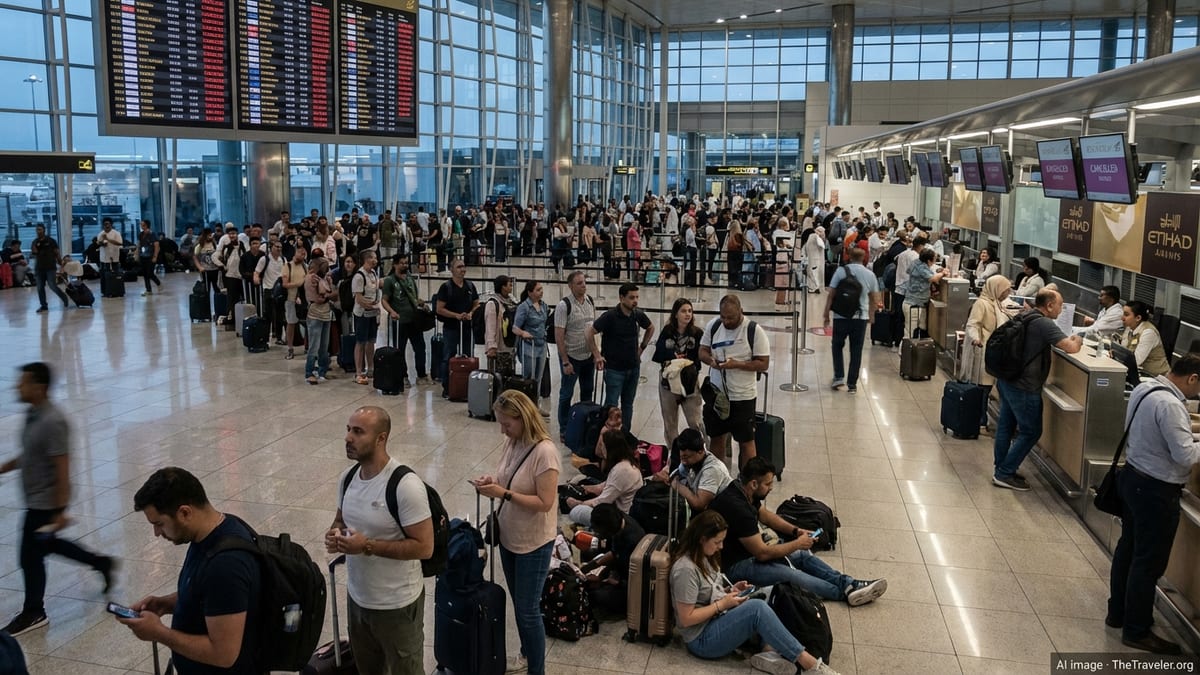
Regional Airspace Crunch Fuels a Prolonged Summer Squeeze
Air travel through the Gulf has been under sustained pressure since late February 2026, when regional airspace closures sharply reduced capacity on some of the world’s busiest long haul corridors. Dubai, Abu Dhabi, Doha, Kuwait City and Manama, which collectively handle tens of millions of transfer passengers each quarter, have all seen schedules trimmed and routings altered as airlines adapt to a patchwork of operating restrictions.
Publicly available aviation data and industry advisories indicate that while airports in the United Arab Emirates and Qatar are largely open, overflight options remain constrained, pushing traffic onto longer detours and reducing the number of feasible frequencies. Freight operators and passenger carriers alike report that restrictions across parts of the Gulf, including segments of airspace covering the UAE, Qatar, Kuwait and Bahrain, continue to disrupt established corridors between Europe, Asia and Africa.
Analysts tracking flights through Dubai International and Hamad International highlight that these hubs sit at the heart of global east west transit, meaning relatively small cuts in usable airspace can ripple outward quickly. Aircraft rotations, crew duty times and slot availability have all become more difficult to manage, contributing to a pattern of last minute schedule changes that has persisted into the peak northern hemisphere summer period.
Industry commentary suggests that even as some closures have eased since the height of the crisis in March, the broader system has not fully recovered. Airlines remain cautious about adding back capacity at pace while security advisories, corridor availability and insurance considerations are reassessed week by week.
Dubai and UAE Hubs Struggle With Rolling Delays
Within the United Arab Emirates, Dubai International Airport, Al Maktoum International and Abu Dhabi’s Zayed International have all faced waves of disruption in recent months. Reports focused on early June 2026 describe a particularly acute operational crunch, with more than 200 flight delays and a cluster of cancellations across the country’s main gateways in a single day, affecting carriers such as Emirates, flydubai, Etihad Airways and Air Arabia.
Operational updates from Dubai’s airport operator show that while Dubai International has returned to high levels of activity, it is still rebuilding from the shock of earlier airspace constraints. Passenger totals through the first quarter of 2026 came in notably below the previous year, reflecting reduced schedules and rerouted traffic during the most intense phase of regional disruption in March and April.
Travel advisories issued by Gulf based airlines throughout the spring have repeatedly urged passengers transiting Dubai or Abu Dhabi to monitor their bookings closely and to avoid heading to the airport until flights are reconfirmed. In many cases, services have been retimed, consolidated or rerouted via alternative cities with little notice as operators work around congested airways and adjust crew patterns to stay within legal duty limits.
Local media coverage in June also points to lingering timetable volatility around Dubai, with some international airlines extending suspensions of select routes into the autumn season. This has added a structural element to what began as an acute shock, leaving some long haul markets with fewer nonstop options and pushing more passengers onto multi stop itineraries.
Knock on Effects for Qatar, Kuwait and Bahrain
Beyond the UAE, other Gulf hubs have been drawn into the same pattern of instability. Flight tracking snapshots and logistics bulletins indicate that Doha, Kuwait International and Bahrain International have each operated under fluctuating levels of restriction through the first half of 2026, with periodic capacity cuts and corridor closures limiting their ability to function as fully reliable transfer points.
Customer and freight advisories issued in March noted that Bahrain’s airspace was formally closed for an extended period, curtailing both passenger and cargo movements and forcing airlines that typically route through Manama to reconfigure their networks. Services into Kuwait and Doha have similarly been described as subject to rapid change, with airlines in some cases canceling flights on short notice or shifting long haul services to alternate hubs in Oman or the UAE.
These constraints have had a pronounced impact on Qatar Airways, Kuwait Airways and Gulf based low cost carriers that depend heavily on dense regional connectivity to feed intercontinental routes. With traditional north south and east west corridors disrupted, carriers have had to lengthen routings, swap aircraft types and trim frequencies, in some cases reducing summer schedules or extending earlier suspensions as they seek a more predictable operating environment.
Travel discussion forums and on the ground accounts from passengers transiting the region describe a landscape in which diversions between Gulf airports, protracted layovers and last minute rebookings have become more common. The result has been mounting pressure on customer service channels and a spike in demand for seats on alternative routings that bypass the most affected hubs.
Global Airlines Cut or Reroute Middle East Services
The knock on impact of Gulf disruptions has extended far beyond regional carriers. Coverage in international travel and aviation media shows that by early summer 2026, a growing list of European and North American airlines had either suspended services to key Middle Eastern hubs or significantly reduced their frequencies, citing regional security assessments and airspace complexity.
Reports indicate that major brands from Europe and Canada have joined earlier suspensions by other network carriers, collectively scaling back flights to Dubai, Abu Dhabi, Doha, Riyadh, Tel Aviv and neighboring airports through at least the end of the summer schedule. Industry analysis notes that detours needed to avoid restricted corridors add flying time and cost, making some routes commercially difficult to sustain at previous levels.
In parallel, several low cost and leisure focused airlines that had expanded aggressively into Gulf markets over recent years have pulled back or paused select routes touching the UAE, Qatar and Jordan. Public updates from some of these operators highlight partial or temporary airspace closures and the volatility of onward connections as key reasons for adjusting their networks.
Network planners note that reduced access to major Gulf hubs also carries implications for connecting traffic to South Asia, East Africa and Australasia, where many passengers historically relied on one stop itineraries via Dubai or Doha. As capacity is withdrawn, travelers are being pushed onto alternative flows through Europe, Turkey or Southeast Asia, contributing to higher load factors and fare pressure on those corridors.
What Summer Travelers Through the Gulf Can Expect
For passengers looking ahead to journeys in July and August, publicly available schedules show that the Gulf’s principal airports are operating, but with a thinner and more fragile network than in previous years. Aviation consultancies and airline advisories broadly characterize the environment as one of constrained capacity, heightened risk of disruption and limited slack to absorb further shocks.
Travel industry guidance emerging from the current situation emphasizes the importance of flexibility. Passengers booking itineraries that rely on single stop connections through Dubai, Abu Dhabi, Doha, Kuwait City or Manama are being advised by many consumer advocates to build in longer connection times, consider fully flexible or refundable fares where possible, and ensure they have access to airline apps or other real time communication channels.
Specialists tracking the region warn that even if no new airspace closures occur, the process of restoring pre crisis frequencies through the Gulf will likely extend beyond the current summer season. Aircraft and crew are already heavily committed, and airlines must weigh the commercial appeal of reactivating Middle Eastern capacity against operational risks and evolving security evaluations.
For now, the cumulative effect of earlier airspace shutdowns, ongoing route suspensions and intermittent weather and operational disruptions has created a summer travel landscape in which the Gulf’s role as a seamless global bridge is under strain. While core connectivity remains in place, travelers transiting the UAE, Qatar, Kuwait and Bahrain can expect a more complex, and at times slower, journey than in recent years.