


More news on this day
Passengers across Europe faced another difficult travel day as 2,022 flights were delayed and 98 were cancelled, with disruptions concentrated in Spain, the United Kingdom, Italy, Switzerland, Denmark and Ireland and affecting services operated by British Airways, Vueling, Ryanair, easyJet and other major carriers.
Get the latest news straight to your inbox!
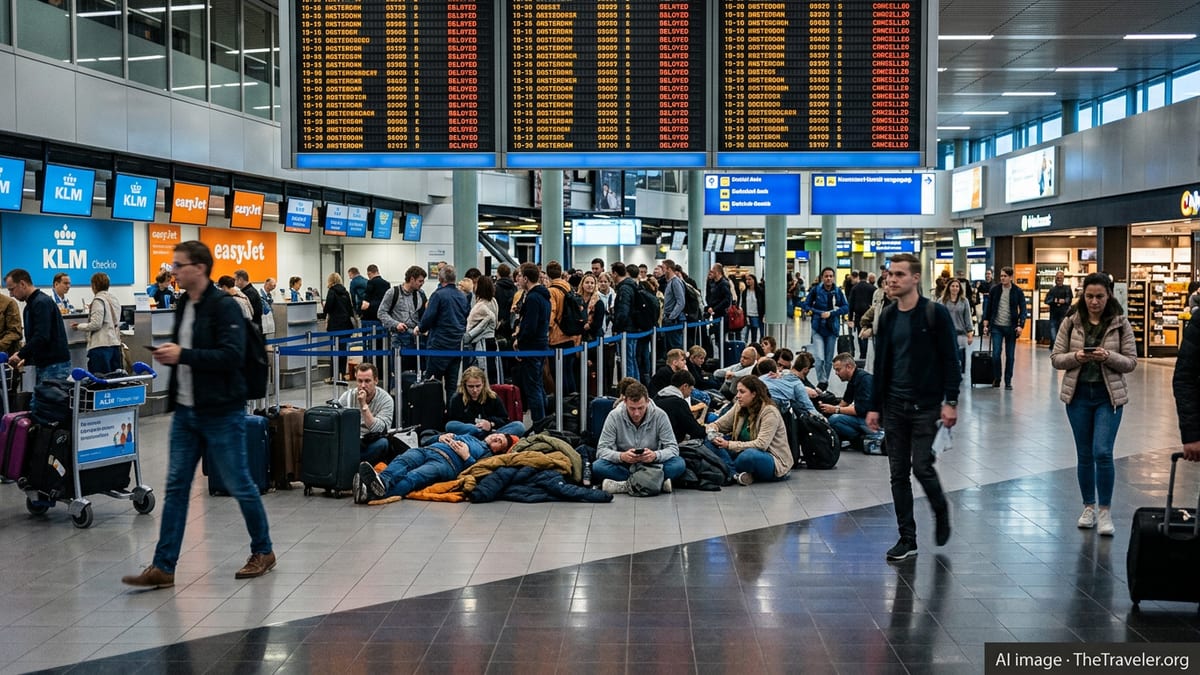
Major Hubs From London to Barcelona Hit by Rolling Disruptions
Publicly available aviation data shows that the latest wave of disruption has rippled through some of Europe’s busiest hubs, including London airports, Barcelona, Zurich and Naples. Knock-on effects have also been reported at airports across Denmark and Ireland, where tight schedules and high summer demand make networks particularly sensitive to delays.
In London, British Airways, Ryanair, easyJet and other carriers saw their operations constrained as delays built up through the day, affecting both domestic and European services. At Barcelona El Prat, reports indicate that congestion from earlier disruptions and ongoing weather and capacity issues contributed to further late departures and missed connections.
Zurich and Naples also featured among the hardest-hit airports, with delays compounded by recent severe weather in Switzerland and a highly stretched summer timetable in Italy. With aircraft and crews already out of position from earlier bouts of disruption in late June, even relatively minor operational issues translated into longer queues and extended wait times at gates and security checkpoints.
The pattern mirrors wider pressure seen across the European network in recent weeks, where delays and cancellations at one or two large hubs have rapidly propagated across multiple countries. Data from recent disruption days points to particularly strong impacts on Spain, the United Kingdom, Italy and Switzerland, with further spillovers reaching airports in Denmark and Ireland.
Weather, Capacity Strains and System Changes Behind the Numbers
Travel-industry monitoring services attribute the latest spike in delays and cancellations to a mix of factors, including adverse weather, air traffic flow restrictions and the lingering effects of a busy early-summer travel period. Thunderstorms and unsettled conditions in parts of central Europe have recently forced airports such as Zurich to cancel and divert dozens of flights, and similar patterns continue to weigh on schedules.
At the same time, capacity constraints in crowded airspace corridors over France, the United Kingdom and the western Mediterranean have limited the ability of airlines to recover from earlier disruptions. When traffic levels are high, small bottlenecks can quickly cascade into long queues for takeoff and landing slots, creating the sort of network-wide impact now being recorded in the form of more than two thousand delayed flights in a single day.
Operational data and recent coverage also point to structural changes, such as the rollout of new border and security procedures for non-EU and non-Schengen passengers, as an additional source of pressure at peak times. Longer processing times at key entry points into the Schengen area can increase connection risks for travelers changing planes within Europe, particularly when inbound flights are already running late.
Airlines face the added challenge of managing aircraft and crew that have been repeatedly displaced by earlier disruptions in June, including those linked to heatwaves in southern Europe and localized strikes or staffing issues at individual airports and air traffic control centers. With limited spare capacity, a fresh wave of delays or a localized storm can push schedules beyond their tipping point, resulting in cancellations.
Impact on Airlines: British Airways, Vueling, Ryanair and easyJet
The latest statistics show that a broad mix of full-service and low-cost carriers has been caught up in the disruption, including British Airways, Vueling, Ryanair and easyJet. These airlines operate dense networks linking the United Kingdom, Spain, Italy, Switzerland, Denmark and Ireland, which makes them particularly exposed when several hubs experience problems at once.
British Airways and other UK-based carriers have seen their services from London Heathrow and Gatwick affected by both local congestion and overseas constraints in European airspace. Delays on heavily trafficked routes to Spain and Italy, for example, can quickly lead to aircraft arriving late back into London, forcing knock-on delays for subsequent departures.
Vueling’s strong presence in Spain, especially in Barcelona, means that any congestion there cascades across its short-haul network to Italy, Switzerland and beyond. For Ryanair and easyJet, which rely on rapid turnarounds and high aircraft utilization, weather- or capacity-related slowdowns at a handful of key airports can be enough to disrupt schedules for an entire day.
Industry data indicates that no single airline group is responsible for the current pattern of delays and cancellations. Instead, the disruption reflects a stressed system, in which multiple carriers operating at or near full capacity struggle to absorb shocks arising from weather, infrastructure limits and regulatory changes.
Passenger Experience: Long Queues, Missed Connections and Overnight Stays
For passengers, the statistics translate into very tangible problems: long queues at check-in and security, crowded departure lounges, missed connections and, in some cases, overnight stays far from home. Travelers passing through major hubs such as London, Barcelona and Zurich report significant waits for rebooking as airline staff work through backlogs created by earlier waves of disruption.
Those with tight connections, particularly on itineraries linking non-European long-haul flights with intra-European legs, have been especially vulnerable. A relatively short delay on arrival into a hub can be enough to miss a connecting flight to smaller cities in Italy, Denmark or Ireland, and with many services already heavily booked for the summer season, finding alternative seats on the same day can be difficult.
Families and leisure travelers heading to Mediterranean destinations have also been affected, with some reports describing late-night arrivals, truncated holidays and the need to rearrange accommodation or car-hire bookings at short notice. The cumulative effect of repeated disruption days in June and early July has added to a sense of uncertainty among those planning travel across Europe.
Airports themselves are under strain as they work to manage crowding, provide up-to-date information on departure boards and coordinate with airlines and ground handlers. When delays stretch into the evening, facilities ranging from food outlets to hotel shuttles can struggle to cope with the sudden influx of passengers staying in or near the terminals longer than expected.
What Travelers Can Do If Their Flight Is Affected
Consumer-rights organizations and travel experts point out that passengers flying within Europe have defined protections under EU and UK air passenger regulations. These rules generally require airlines to offer a choice between rebooking and a refund when flights are cancelled, and to provide assistance such as meals, refreshments and, if necessary, hotel accommodation during long delays, depending on the circumstances and flight distance.
Public guidance emphasizes that those affected should keep boarding passes, booking confirmations and any written notices about delays or cancellations, as these documents may be needed later when requesting refunds, reimbursements or compensation. It is also advisable to keep receipts for reasonable out-of-pocket expenses such as meals or transport, in case these can be reclaimed.
Travel specialists consistently recommend that passengers monitor their flight status closely on the day of travel using official airline apps and airport information services. With conditions changing rapidly when networks are under stress, flights can move from “on time” to “delayed” or “cancelled” in a short space of time, and early awareness gives travelers more options for rebooking or adjusting their plans.
Given the elevated risk of disruption across Europe at the height of the summer season, some advisors suggest building in longer connection times, avoiding the very last flight of the day where possible, and ensuring that travel insurance policies are up to date and clearly understood. While these steps cannot eliminate the risk of being caught up in widespread delays and cancellations, they can provide additional flexibility and financial protection when problems arise.