


More news on this day
Anyone booking flights in or out of Stockholm in summer 2026 is being urged to factor in tougher border checks, new biometric registration and the risk of long queues as Sweden tightens controls at Stockholm Arlanda and across its Schengen frontiers.
Get the latest news straight to your inbox!
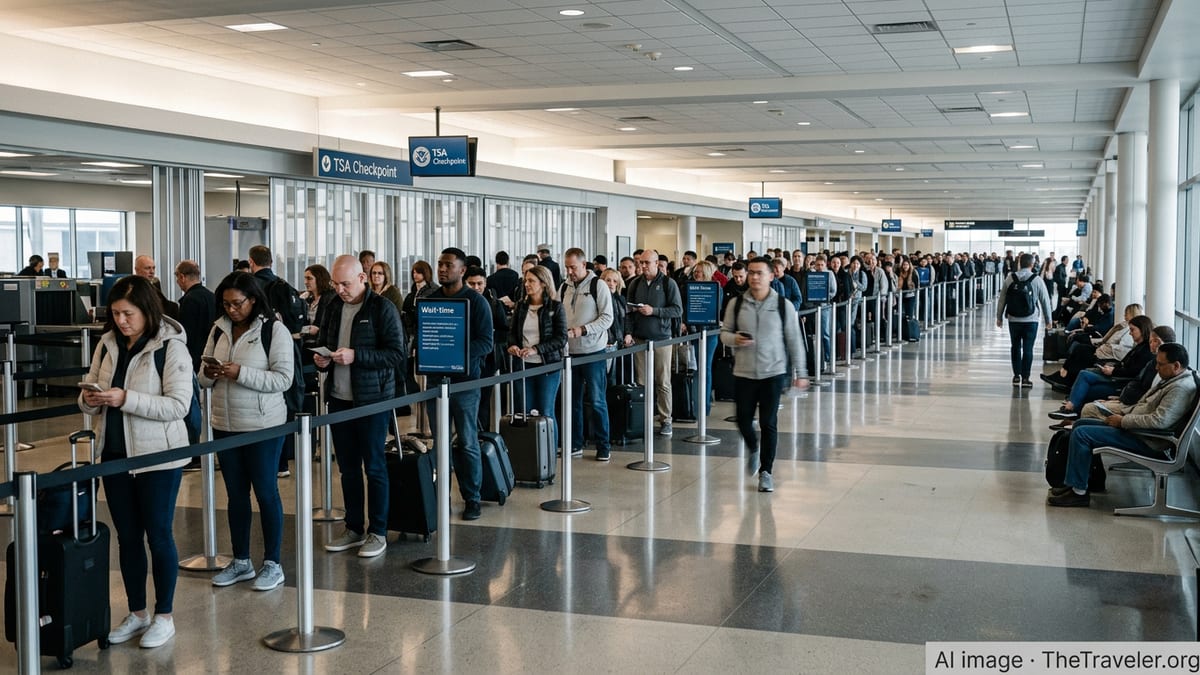
A Perfect Storm of Stricter Checks and Summer Crowds
Stockholm sits at the intersection of two major shifts in European border management: the full rollout of the European Union’s Entry/Exit System and Sweden’s renewed use of internal Schengen border controls. Together, these changes are transforming what used to be a relatively quick passport check into a more complex, time-consuming process for many travelers.
The Entry/Exit System, a bloc wide biometric scheme that tracks the movements of non EU nationals at external borders, became fully operational at all Schengen checkpoints in April 2026. Publicly available information from European institutions describes a system that replaces manual passport stamps with fingerprint and facial scans, building a digital record of each entry, exit and any refused admission. For third country visitors, including travelers from the United States, United Kingdom, Canada and Australia, Stockholm is now part of that stricter digital perimeter.
Airport and airline groups in Europe have repeatedly warned that the new system increases border processing times, particularly while staff and passengers get used to the technology. Industry statements summarized in recent coverage refer to waiting times of two to three hours at some airports during peak periods and note that even modest extra seconds per passenger can quickly multiply when several wide body flights land at once.
At the same time, Sweden has prolonged temporary internal border checks within the Schengen Area. Government notices state that controls at certain land and sea crossings will continue through 2026, citing security and migration concerns and noting that several neighboring states, including Denmark and Germany, have taken similar steps. While these checks do not affect every traveler on every route, they contribute to an overall environment of tighter screening that can ripple through Stockholm’s main international gateway.
What Is Changing for Travelers at Stockholm Arlanda
For many passengers, the most visible change at Stockholm Arlanda Airport is the way border control now operates for arrivals from outside the Schengen Area. Instead of a simple passport stamp, non EU nationals are registered in the Entry/Exit System at the first point of entry. This involves scanning the passport, capturing fingerprints and taking a live photograph, plus confirming travel history to enforce the 90 days in any 180 day stay limit.
First time registration is typically the slowest step, and reports from across Europe indicate that queues can build quickly when large numbers of travelers need to be enrolled at once. Subsequent trips should move faster, because data is already in the system, but Stockholm bound passengers cannot assume border control will resemble pre 2025 conditions, especially at busy summer times or during staffing shortages.
Arlanda has also undergone terminal consolidation, with most international traffic now funneled through Terminal 5. Aviation data and airport profiles show that former Terminal 4 facilities for check in, security and passport control have been absorbed into Terminal 5, concentrating both passengers and control points. That hub like structure can be efficient when everything runs smoothly, but it also means a single bottleneck at border control has greater potential to delay connecting flights.
Sweden’s continued internal checks can add another, less predictable layer. Travelers coming from other Schengen states into Stockholm may encounter sporadic ID inspections on arrival, at ferry ports or on certain cross border routes. The legal framework still recognizes free movement, but practical experience for passengers now includes the possibility of extra stops and document checks that require additional buffer time in travel plans.
Evidence of Longer Queues and Missed Flights
Although daily wait times vary, recent travel industry assessments and passenger reports across Europe paint a consistent picture: the new border regime is straining capacity at busy airports. Airport associations in Brussels have highlighted that biometric checks have pushed processing times higher and called for more flexibility to avoid what they describe as systemic disruption for passengers during peak traffic.
Survey data cited in recent travel news coverage suggests that travelers from countries such as the United Kingdom and United States are already experiencing lengthy queues, with some cases of waits stretching toward several hours at major holiday hubs. Airlines have responded by advising passengers on routes involving Schengen external borders to arrive significantly earlier than before, with some carriers publicly recommending a minimum of three hours at the departure airport.
In Sweden, regional media have reported periods of heavy congestion at Arlanda’s passport control, particularly at the start of the summer travel season when demand spikes and when several long haul flights arrive in close succession. While authorities stress that many days pass without major disruption, the uneven pattern means that a smooth journey one week does not guarantee similar conditions the next.
The introduction of the Entry/Exit System has also prompted concerns about missed connections. When inbound passengers from long haul flights spend longer than expected in border queues, they have less time to reach onward flights within Europe. Travel organizations warn that tight itineraries with short connection windows through Stockholm or other Schengen hubs carry higher risk until the system stabilizes and border posts are fully resourced.
The New Rules Behind the Stockholm Warning
Behind the headline warnings about Stockholm’s border lies a dense web of European regulations. The Entry/Exit System is designed to ensure that each non EU national entering the Schengen Area has their movements recorded, making overstays easier to detect and refusals of entry visible across member states. Official documents describe it as one of the most advanced border management systems in the world, powered by a shared EU database operated by the agency eu LISA.
Instead of manual passport stamps, the system logs the date, time and place of each crossing, along with biometric identifiers. If a traveler is refused entry at one external border, that decision appears in the system if they later attempt to enter at another point, such as Stockholm. The goal, according to policy papers, is a more consistent application of existing rules rather than the introduction of new visa obligations for eligible visitors.
Complementing EES, the European Union is preparing a separate travel authorization scheme for visa exempt nationals, known as ETIAS, which is expected to launch later in 2026. Once in effect, many travelers who currently enter Schengen using only a passport will also have to secure advance permission online before departure. Swedish border operations, including Arlanda, will then sit within a multilayered system that combines pre travel screening, biometric registration and targeted internal checks.
Sweden’s decision to maintain internal border controls fits within provisions of the Schengen Borders Code that allow states to reintroduce checks temporarily in response to perceived security or migration pressures. Government communications emphasize that these measures are time limited and subject to periodic review, but acknowledge that several neighboring countries have followed a similar path, which cumulatively reshapes the experience of crossing borders in the region.
How to Book and Fly Smarter Through Stockholm Now
For travelers, the practical message is clear: flying to or through Stockholm in 2026 requires more preparation than in previous years. Travel advisories from airlines and airport groups encourage passengers to arrive early, pay close attention to passport validity and stay informed about evolving entry rules for the Schengen Area. Leaving arrival or transfer times as tight as before the Entry/Exit System era is increasingly viewed as a gamble.
Passengers booking connecting itineraries through Stockholm Arlanda are advised to build in generous layovers, particularly if their journey begins outside Europe or if members of their party hold non EU passports. Families traveling with children, older passengers and anyone needing assistance may find that extra time at border control is essential to move at a comfortable pace without risking missed flights.
Travel planners also recommend carrying printed confirmations of accommodation, return or onward tickets and evidence of sufficient funds, even when not explicitly requested in airline guidance. While such documents have long been part of Schengen entry rules, the new digital systems make it more likely that inconsistencies or uncertainty about a traveler’s plans are flagged and examined more closely at the border.
For those still deciding whether to book, the current Stockholm border warning does not mean avoiding Sweden altogether. Instead, it points to a new reality in which successful trips depend on realistic timing, careful documentation and an understanding that border checks across Europe, and particularly at major hubs like Arlanda, are now more structured and less forgiving of last minute plans than they were just a few seasons ago.