


More news on this day
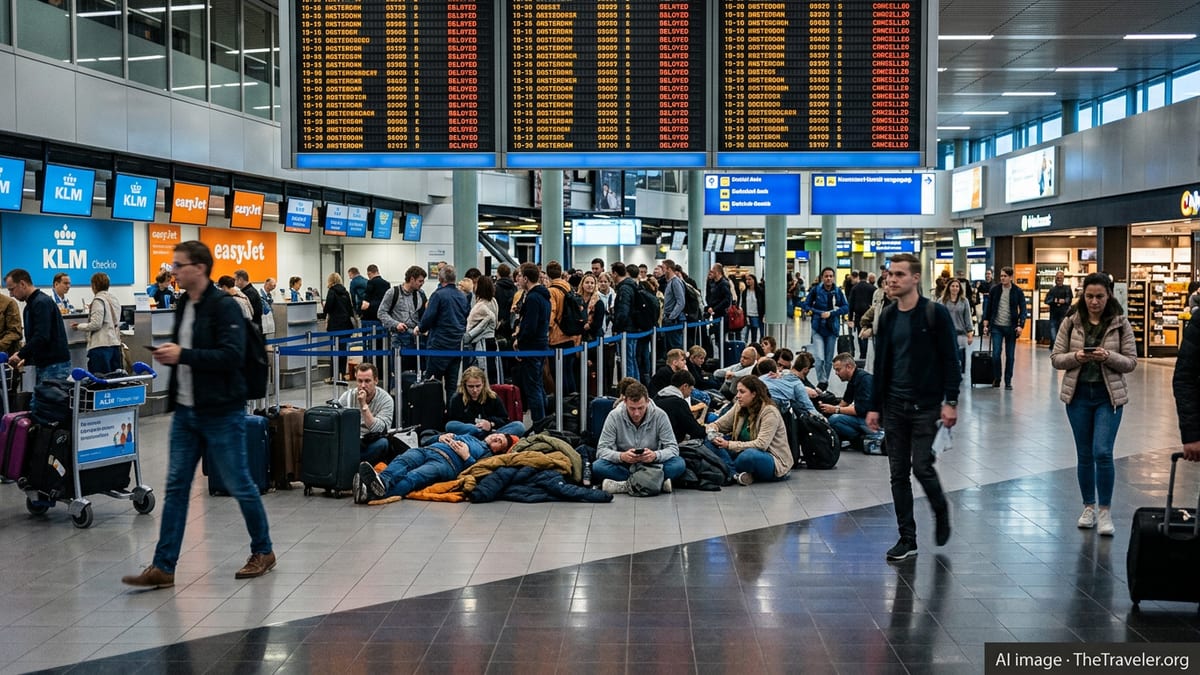
Summer travel across Europe is again under pressure as Madrid Barajas and a cluster of more than a dozen major airports report significant disruption, with fresh data pointing to Spain as a key source of delays and recent security incidents adding to the strain on already busy flight schedules.
Get the latest news straight to your inbox!
Madrid at the Center of Widening European Delays
Recent disruption alerts place Madrid Barajas among the European hubs currently experiencing some of the most severe scheduling problems, with ripple effects now visible across the continent. An airport disruption overview compiled on August 26 highlights Madrid alongside several other major hubs as facing elevated levels of delays and operational constraints, following weeks in which Spain has contributed a disproportionately high share of air traffic flow management hold-ups in Europe.
Network performance data from Eurocontrol for August indicates that airport-related delays have inched up during the peak holiday period, even as overall flight numbers continue to break seasonal records. The agency’s latest summer flash briefing for the week of August 17 to 23 reports an average of 3.44 minutes of air-traffic-flow-management delay per flight, with airport bottlenecks forming a measurable part of that total. The same reporting series identifies Spain as one of the main delay hot spots in 2026, alongside France and Greece, with Spanish airspace and airports accounting for a sizable share of network-wide disruption minutes.
According to a disruption radar collating official alerts, Madrid’s challenges are not purely local but tied to broader network stresses in southern Europe. High traffic, weather-related restrictions and the cumulative impact of earlier outages and strikes in nearby hubs have combined to leave airlines with tighter margins on aircraft and crew rotations, making schedules more vulnerable to even minor incidents.
Barcelona Power Failure and Strikes Feed Knock-on Cancellations
Pressure on Madrid has increased since a serious breakdown at Barcelona El Prat earlier in August triggered days of irregular operations across Spain and beyond. On August 12, an electrical failure in the Barcelona air-traffic-control tower forced a temporary halt to all takeoffs and landings around midday, during one of the busiest weeks of the summer season. Published disruption analyses describe several hours of suspended operations, followed by extended recovery as aircraft and crews ended up out of position.
The outage landed on top of an open-ended ground-handling strike at Barcelona that began on August 4, affecting check-in, baggage, boarding and turnaround services. Publicly available assessments state that cancellation and delay rates remained elevated for days, while the strike continued to limit the airport’s ability to absorb surges in demand. For passengers, this translated into longer queues, missed connections and a greater risk of last-minute rebookings.
Tracking from air passenger rights organizations shows that disruption radiated outward from Barcelona to other major hubs. Amsterdam Schiphol, Milan Malpensa, Catania, Palermo, Naples and Madrid all recorded increased cancellations and delays linked to the Barcelona outage and subsequent schedule reshuffles. In practical terms, aircraft that were meant to rotate through Barcelona and then on to other European cities arrived late or not at all, creating gaps in timetables and forcing airlines to consolidate or cancel services.
For travelers heading to or from Madrid this week, these earlier issues mean that some services remain more susceptible to rolling delays, particularly on routes that depend on aircraft coming in from Barcelona or other affected Mediterranean hubs.
Drone Incidents Heighten Security Concerns at European Airports
Operational strain has been compounded by a series of security alerts involving drones near European airports, contributing to temporary closures and diversions at a time when networks are already stretched. In Spain, Malaga Costa del Sol airport temporarily halted operations on the evening of August 23 after multiple flight crews reported a drone in the final approach area to runway 12. Reports in the Spanish press note that arriving traffic was briefly suspended and several flights diverted to alternative airports while air navigation services activated safety protocols.
Additional accounts from Spanish and European media describe how Eurocontrol’s operations portal recorded Malaga as unavailable during the incident window, with arriving flights held or rerouted. Although the suspension lasted less than an hour, controllers and airport staff warned that it would take additional time to clear the backlog and reposition aircraft. The event followed earlier IT and operational issues at Malaga in July, underscoring how even short-lived intrusions into controlled airspace can have outsized effects during peak season.
Similar concerns have surfaced further north. In Germany, investigators are examining a suspected explosive drone discovered this month near a Ukrainian cargo aircraft parked at Leipzig/Halle, one of Europe’s key freight hubs. Coverage from European outlets and international newspapers indicates that earlier, a security-related incident at the airport led to the temporary suspension of flights and diversions of both passenger and cargo aircraft. Subsequent statements by European security specialists suggest the episode may be part of a broader pattern of hybrid activities targeting critical infrastructure.
These incidents add to a growing list of drone-related disruptions at or near European airports over the past year, including previous interruptions at Berlin Brandenburg and repeated drone incursions along NATO’s eastern flank. While most events are resolved without physical damage, they require immediate airspace restrictions, creating further delays and diversions that cascade through already busy networks.
Network Data Show Spain and Greece Driving a Large Share of Delays
The current disruption picture around Madrid and other hubs cannot be separated from the broader pattern of summer congestion in southern Europe. Eurocontrol’s network operations reporting for August highlights France, Spain and Greece as the main contributors to en-route and airport delays this year. An earlier monthly overview put Spain’s share of total European en-route delay minutes at around 17 percent, with a significant portion attributed to Barcelona’s area control center.
Although overall punctuality has been described as stable compared with last year, the same briefings show that adverse weather, dense traffic and localized capacity constraints are keeping average delays per flight elevated during peak weeks. For the week ending August 23, arrival punctuality across Europe stood at roughly 72 percent, several percentage points below both the previous week and the equivalent week in 2025, according to Eurocontrol’s latest flash summary.
Travel risk platforms aggregating official notices list around 15 active airport disruption alerts across Europe as of August 26, with Madrid featuring among the most serious. The mix ranges from weather-related constraints and infrastructure issues to industrial action and security events such as drone sightings. While many alerts concern limited time windows or specific parts of the airport operation, together they paint a picture of a system operating close to its capacity limits.
For airline planners, this environment leaves less flexibility to absorb unexpected shocks. When an ATC outage, strike escalation or security lockdown occurs at one hub, there is a higher likelihood that passengers several countries away will feel the effects in the form of missed connections or last-minute rebookings.
What Travelers Should Expect in the Coming Days
Publicly available travel advisories suggest that further disruption is possible in the short term as airports and airlines work through residual backlogs from recent incidents. In Spain, the combination of strikes, infrastructure constraints and lingering knock-on effects from Barcelona’s mid-August shutdown continues to shape schedules into late August. Madrid’s role as a major hub for connections to Latin America and other long-haul destinations means that even modest additional delays can have a wide reach across the network.
Across Europe more broadly, Eurocontrol’s latest summer update emphasizes that traffic levels remain at or near record highs, increasing the risk that minor localized issues can grow into regional challenges. With airports in southern Europe and around the Mediterranean still handling heavy holiday flows, travelers face an environment in which last-minute gate changes, rolling delays and scattered cancellations are more likely than in a typical shoulder season week.
Passenger rights organizations advise that travelers monitor their flight status closely on the day of departure, build extra buffers into itineraries involving tight connections, and keep records of any disruption in case rebooking, care or refunds are needed under European air passenger regulations. Given the recent wave of drone-related security incidents, some airports may also enforce temporary ground stops or diversions with little warning when unidentified objects are detected in controlled airspace.
For now, network statistics show that Europe’s aviation system is still functioning, but with thinner margins and higher average delays than many travelers might expect. As Madrid and at least a dozen other key airports manage a combination of operational, labor and security pressures, passengers planning late-summer trips are being urged by travel analysts to prepare for possible snags even when the weather appears calm and flights are technically scheduled to operate.
Eurocontrol Summer 2026 Flash Briefing, Week 34
Barcelona El Prat power outage and strike disruption analysis