


More news on this day
Thunderstorms across the Northeast briefly pushed Boston Logan International Airport to the top of the U.S. delay rankings on Tuesday, underscoring how quickly summer storms can upend flight schedules for thousands of travelers.
Get the latest news straight to your inbox!
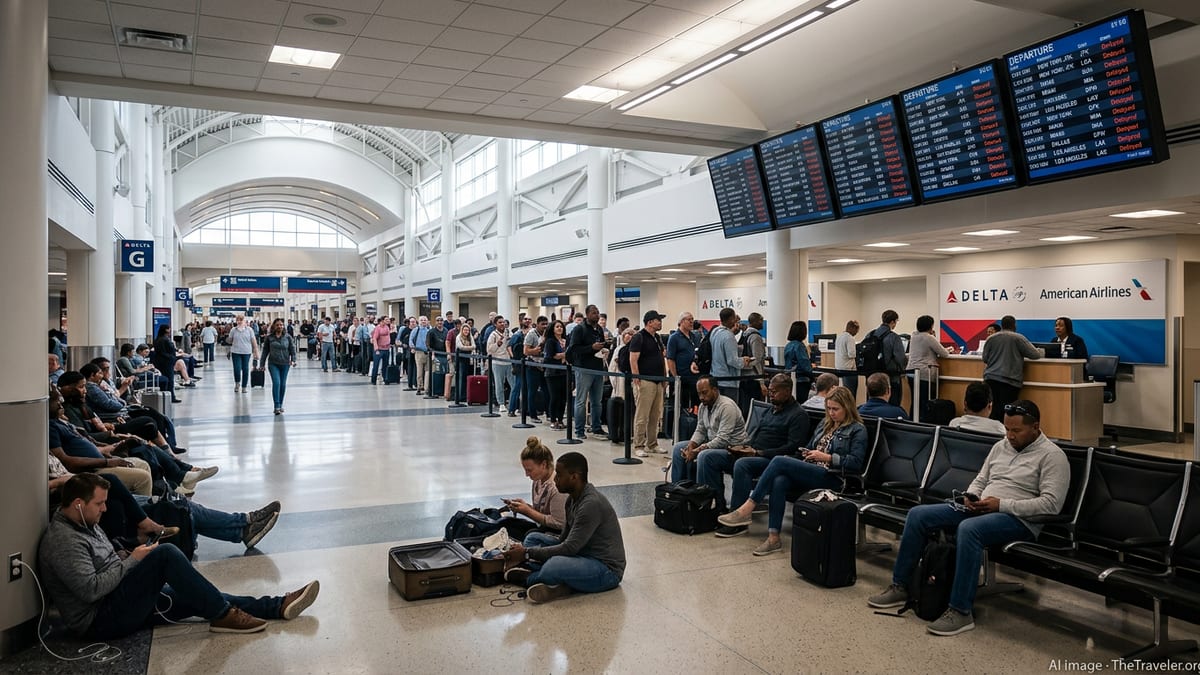
Storms Push Boston to the Top of National Delay Tables
Publicly available tracking data from FlightAware and other aviation dashboards showed Boston Logan recording the highest number of delays among U.S. airports at one point on Tuesday, with 19 flights held up as convective storms moved through key East Coast corridors. The disruption placed Boston ahead of other busy hubs that typically dominate national delay statistics.
Nationally, more than 775 flights were delayed and over 50 were canceled across the United States, as thunderstorms in multiple regions combined with low clouds and air traffic constraints to slow operations. According to published coverage summarizing the data, Boston logged the most individual delays, while Nantucket Memorial Airport reported the most cancellations, with 11 flights scrubbed in a single day.
The pattern fits a broader late-August trend in which scattered but intense storm cells have forced crews to pause departures, adjust arrival sequences, and reroute aircraft around active weather. Even when storms do not sit directly over Logan, restrictions along the busy Northeast corridor can ripple back to Boston, forcing airlines to hold flights on the ground or reduce traffic volume into affected airspace.
While the raw totals at Logan remained modest relative to the airport’s daily schedule, the concentration of delays during peak travel windows led to crowded gate areas and longer-than-usual waits for passengers attempting to connect through Boston or depart on evening services.
Regional Weather and System Strain Compound the Backups
Meteorological outlooks from the Federal Aviation Administration’s traffic management advisories in recent weeks have highlighted recurring thunderstorms over the Mid-Atlantic and New England, along with convective activity in the Southeast. Advisories describing thunderstorm clusters across multiple air route traffic control centers, including those that govern Northeast traffic flows, point to a pattern of constrained airspace where relatively small systems can have outsized operational effects.
Storms along the corridor from Washington and New York up to Boston often trigger ground delay programs at one or more major airports. When departure rates are reduced at large hubs such as New York’s LaGuardia or John F. Kennedy International, flights to and from Boston face knock-on schedule changes. Public data and traveler accounts this month describe multi-hour air traffic control holds on short-haul routes between Boston and New York when convective weather limits usable arrival paths.
These weather-driven constraints are colliding with a national aviation system that remains sensitive to surges in demand and staffing gaps. Recent reporting on U.S. travel disruptions points to ongoing air traffic control staffing shortages, with some regions operating on thin margins during high-volume periods. On days when storms crop up, the combination of reduced runway capacity and limited staffing leaves airlines with few options beyond lengthy delays and selective cancellations.
Reports from travel industry outlets indicate that carriers have responded with rolling schedule adjustments, trimming frequencies on some routes and padding block times on others to absorb anticipated slowdowns. Even so, passengers flying through Boston on stormy days continue to see last-minute gate changes and departure pushes as airlines react to rapidly evolving constraints in the broader network.
Logan’s Recent Track Record: From Heavy Rain to Runway Work
Boston Logan has already experienced several notable disruption days this summer. In late July, torrential rain across eastern Massachusetts led to hundreds of delays and dozens of cancellations in and out of Boston, according to local coverage that cited live FlightAware statistics. For inbound flights alone, nearly 300 arrivals were delayed and more than 30 were canceled over the course of a single day.
Airline-level data from that episode showed certain carriers disproportionately affected, with regional operators and Boston-focused airlines logging the highest number of delayed flights. JetBlue and regional partner Republic Airways, for example, recorded more than 200 combined delays on Boston flights during the heavy-rain event, highlighting how hub carriers absorb the brunt of schedule volatility when weather narrows usable routes and runway configurations.
Operational pressures are also intersecting with ongoing infrastructure projects at Logan. The Massachusetts Port Authority has outlined a multi-phase runway safety program that includes installing an engineered materials arresting system at one of the airport’s key runways. According to Massport updates and local reporting, the next phase of that work will bring a roughly 75-day runway closure this fall, potentially shifting more traffic to remaining runways and tightening margins during busy periods.
Local analyses note that similar runway work in the past has led to more concentrated arrival and departure streams over certain neighborhoods and less flexibility for controllers during peak times. While the safety enhancements are designed to reduce the risk and severity of runway incidents, the temporary capacity constraints may amplify the impact of even routine summer and autumn storms on flight schedules.
Passengers Face Longer Waits and Tougher Rebooking Choices
For travelers caught in the latest round of disruptions, the statistics translate into crowded terminals and difficult itinerary decisions. Social media posts and online forums in recent weeks have described long ground delays on aircraft waiting for departure slots at Logan, rolling pushbacks where a flight’s departure time is moved repeatedly in short increments, and late-night cancellations that leave passengers scrambling for hotel rooms or stand-by options.
In some cases, rebooking options have been limited. Anecdotal accounts shared on public forums reference instances where passengers whose flights were canceled out of Boston could not be reaccommodated for several days during peak demand periods, prompting some to purchase last-minute tickets on other airlines or shift to rail travel for shorter routes along the Northeast Corridor.
Recent federal policy changes around refunds and schedule changes add another layer of complexity. Coverage of new U.S. Department of Transportation rules notes that airlines are facing clearer obligations to provide refunds for significant delays or cancellations, while a related enforcement-discretion policy allows carriers through mid-2027 to rebook travelers on renumbered flights without automatically triggering refund requirements, as long as the trip is ultimately completed without substantial delay. For passengers, this evolving framework can make it harder to determine when they are entitled to a cash refund versus travel credit.
Consumer advocates and travel experts quoted in national reporting consistently recommend that flyers monitor their bookings closely, keep airline apps handy for real-time updates, and proactively explore alternative routings when storms are forecast to affect the Northeast. At Boston Logan, where even a few dozen delayed flights can reverberate through an already tight schedule, being ready to adjust on short notice has become an increasingly important part of summer travel planning.
Over 775 flights delayed, 52 canceled amid widespread U.S. travel disruptions
Report on nationwide delays and Boston Logan’s leading delay count