


More news on this day
Europe’s peak summer travel season has been hit by another day of heavy disruption, with monitoring data showing 2,911 flights delayed and 83 cancellations across 16 major hubs in a single 24-hour period, stranding passengers, stretching airline operations and prompting renewed scrutiny of the continent’s fragile aviation resilience.
Get the latest news straight to your inbox!
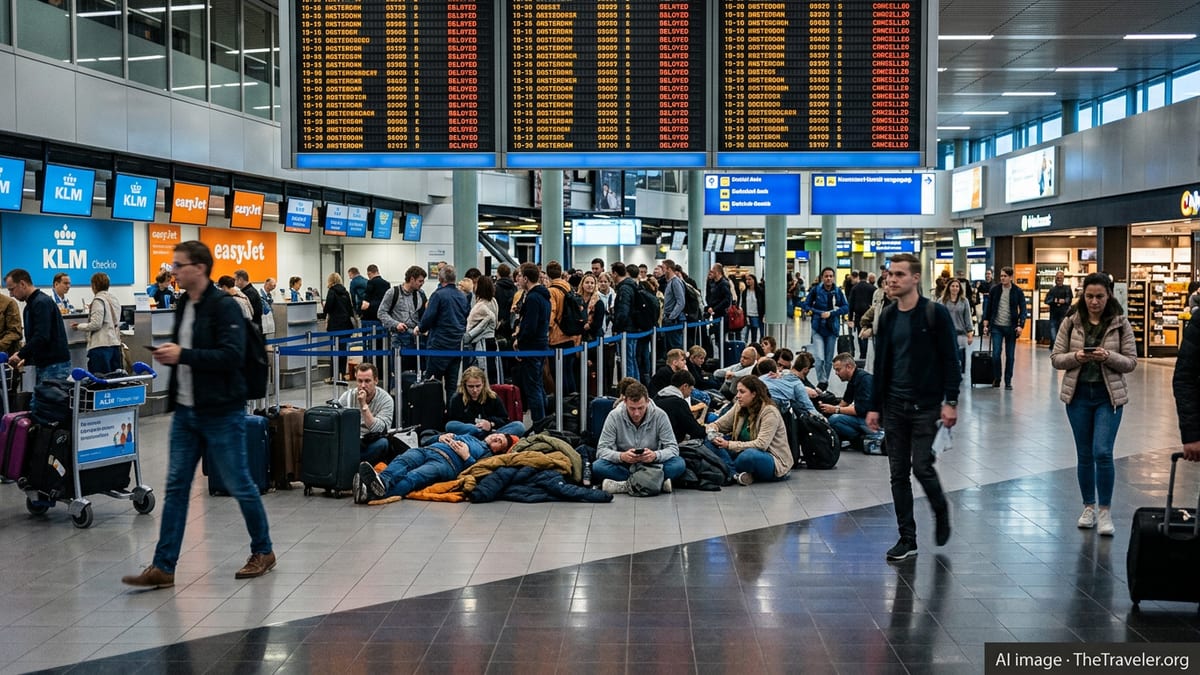
One Chaotic Day Across 16 Key European Hubs
Publicly available disruption trackers and aviation news coverage indicate that the 2,911 delays and 83 cancellations were concentrated across 16 of Europe’s busiest airports, including London Gatwick, Amsterdam Schiphol, Frankfurt, Paris Charles de Gaulle, Madrid Barajas and Rome Fiumicino. While the figures fall short of a full network shutdown, they represent one of the most severe single-day disruption spikes reported in Europe so far this summer.
Reports highlight London Gatwick among the hardest hit, logging more than 260 delayed departures and close to 20 cancellations as tight runway scheduling and knock-on congestion amplified relatively minor timetable slippages into multi-hour disruptions. Other hubs reported large volumes of delayed departures, with late-arriving aircraft and air traffic control restrictions compounding ground-handling bottlenecks.
Analyses from specialist travel sites note that the impact rippled beyond the 16 main hubs, as delayed and cancelled rotations cascaded through regional airports later in the day and into the overnight schedule. Airlines were forced to cut or consolidate some late-evening and early-morning services in order to reposition aircraft and crew, extending the operational hangover into subsequent days.
Comparisons with previous disruption events earlier this summer, when weather and congestion delayed between 600 and 2,200 flights on peak days, suggest that the latest figures mark an escalation in strain on Europe’s aviation system. The nearly 3,000 delayed flights in a single day underline how quickly the network can tip from busy to overloaded when several operational pressures coincide.
What Pushed Europe’s Aviation Network Over the Edge
Coverage from aviation data platforms and travel industry outlets points to a combination of factors behind the latest wave of disruption, rather than one dramatic trigger such as a major strike or IT outage. Traffic volumes remain close to or slightly above pre-pandemic levels on many intra-European and holiday routes, leaving limited slack in schedules when irregular operations occur.
EUROCONTROL reporting for the current summer period shows that average air traffic flow management delay per flight in Europe has been edging higher, driven by a mixture of sector congestion, capacity constraints in certain airspace blocks and occasional weather-related rerouting. On days of particularly heavy traffic, these structural pressures can quickly translate into departure backlogs and missed slot times at busy hubs.
Airline network structures also play a role. Many European carriers continue to run complex hub-and-spoke operations with tight aircraft and crew rotations. Once a morning rotation is delayed by ground handling issues, minor technical checks or slow boarding at a major hub, subsequent legs are more likely to depart late. Industry analyses of recent events note that a substantial share of the 2,911 delayed flights were operating with aircraft that had already accumulated earlier delays elsewhere in the network.
Operational staffing remains another pressure point. Publicly available commentary from airport and airline briefings over recent months has emphasized that while headline job numbers have largely recovered from the pandemic, training pipelines for critical roles such as air traffic controllers, licensed engineers and experienced supervisors lag demand. On intense summer days, that can translate into slower recovery from relatively minor incidents.
How the Disruption Affected Travelers on the Ground
For passengers, the numbers translated into long queues, missed connections and a scramble for alternative routes. Travel reports from the affected day describe departure boards at several major hubs dominated by orange and red delay markings, with rolling estimated departure times pushing into late evening for some short-haul services.
Passenger accounts collected by travel publications and social media monitoring point to particular frustration among travelers whose flights shifted from moderate delays to outright cancellation late in the day, once crew duty limits or night curfews were reached. In those cases, hotel rooms near airports quickly filled up, and rebooked itineraries often routed passengers through secondary hubs or required overnight stops.
The disruption also hit connecting traffic. At Europe’s larger transfer hubs, long-haul passengers arriving broadly on time from other regions found themselves misconnecting onto late-running intra-European legs. Airlines responded by issuing same-day rebookings where possible, but anecdotal reports describe long lines at transfer desks and customer service counters as capacity to reroute everyone immediately proved limited.
Despite the operational difficulties, travel advisories published around the event emphasize that the overwhelming majority of scheduled flights still operated, albeit often with delays. For many passengers, the main consequence was a late arrival at holiday destinations or business meetings rather than a complete collapse of travel plans, although those caught up in the 83 cancellations faced more significant disruption.
Passenger Rights Under EC 261 and Practical Next Steps
The latest wave of disruption has renewed attention on passenger protections under European Regulation EC 261, which sets out when travelers may be entitled to compensation in addition to care and assistance. Guidance from consumer-rights organizations notes that compensation is generally available when delays or cancellations are within an airline’s control, such as technical or operational issues, but not when they are caused solely by extraordinary circumstances such as severe weather or air traffic control strikes.
Recent explainers from passenger advocacy groups emphasize that, regardless of whether compensation is payable, airlines operating from or within the European Union and associated countries must still provide certain forms of care during severe disruption. That typically includes meals and refreshments after longer waits, access to communication, hotel accommodation and transport if an overnight stay becomes necessary, and a choice between rerouting or a refund when a flight is cancelled.
Advisories published in connection with this and earlier disruption days recommend that affected travelers keep boarding passes, delay notifications and any receipts for out-of-pocket expenses. These documents can be important when submitting claims either directly to airlines or through third-party services that specialize in EC 261 enforcement, particularly when delays span multiple segments or carriers.
Travel experts also stress the importance of requesting a written explanation of the cause of a significant delay or cancellation at the time it occurs, where possible. Having a contemporaneous record of the stated reason can make it easier to determine whether an event is likely to qualify for compensation and can help resolve disputes that may arise weeks later.
What This Means for Upcoming Summer Travel in Europe
The scale of the 2,911 delays and 83 cancellations has fueled concerns that Europe may see more days of acute disruption as the late-summer peak continues. EUROCONTROL’s traffic outlook shows sustained high demand on core routes, while previous weeks have already produced several days with more than 2,000 disruption events attributed to a mix of weather, congestion and infrastructure constraints.
Industry analyses suggest that, absent major new capacity or staffing measures, the network is likely to remain vulnerable to similar spikes when thunderstorms, airspace restrictions or localized technical failures coincide with peak travel days. Monitoring reports underscore that even a modest increase in average delay minutes per flight can significantly affect on-time performance statistics once multiplied across tens of thousands of daily movements.
For travelers planning European trips in the coming weeks, practical guidance from travel and passenger-rights platforms remains consistent. Recommendations include checking flight status repeatedly in the 24 to 48 hours before departure, allowing longer connection times where possible, traveling with essentials in carry-on bags in case of overnight disruptions and familiarizing oneself with EC 261 provisions before travel.
While the latest disruption figures paint a challenging picture, aviation data also show that Europe’s network has repeatedly demonstrated an ability to recover from intense single-day shocks within several operating cycles, provided no new large-scale disruption is introduced. The key question for the rest of the season is whether that resilience will be sufficient to absorb further days on the scale of nearly 3,000 delayed flights without eroding traveler confidence.
SkylineWire: Europe Flight Chaos: 2,911 Delays and 83 Cancellations Logged
Nomad Lawyer: Europe Flight Chaos 2026, 2,911 Flights Delayed and 83 Cancelled
EUROCONTROL: European Aviation Overview, Summer 2026
AirHelp: Europe Flight Disruption Updates and Passenger Rights