


More news on this day
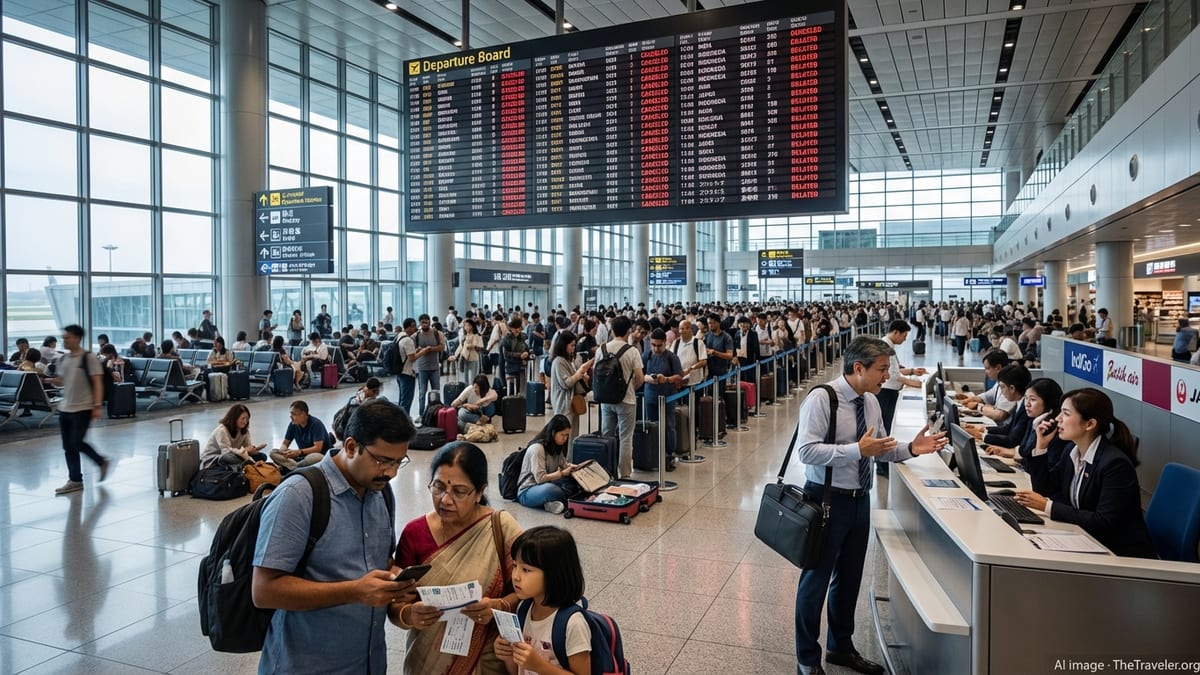
Asia’s aviation network is facing renewed turbulence as heavy monsoon rains and overlapping storm systems trigger 212 flight cancellations and 6,639 delays in a single day, straining already busy hubs from Jakarta and Bangkok to major airports across East and Southeast Asia.
Get the latest news straight to your inbox!
Weather Systems Drive a New Wave of Disruptions
Publicly available tracking data and operational summaries for August 2026 indicate that the latest spike in disruption is closely tied to an active southwest monsoon and a sequence of tropical systems moving across the region. Heavy, persistent rainfall, low cloud ceilings and crosswinds have repeatedly forced aircraft into holding patterns, slowed runway operations and temporarily suspended takeoffs and landings at several key gateways.
Coverage of August performance at major Asian airports highlights one peak day in mid August when 212 cancellations and 6,639 delays were recorded across the region, illustrating how quickly adverse weather can cascade through tightly scheduled networks. Reports link these numbers to a period when monsoon conditions coincided with lingering storm impacts in parts of East Asia, including weather associated with Typhoon Dolphin, increasing the likelihood of simultaneous disruption at multiple hubs.
Operational data and meteorological analyses suggest that the pattern is not limited to a single event but reflects a broader month of unstable conditions. In addition to the headline day with 212 cancellations and 6,639 delays, regional trackers document several other days with unusually high volumes of late departures, particularly when storm bands passed over coastal and low-lying airports.
Jakarta and Bangkok at the Center of the Strain
Jakarta Soekarno Hatta International Airport and Bangkok’s dual-airport system have emerged as focal points of the current disruption. Airport performance figures for Jakarta over August show daily cancellation tallies repeatedly exceeding 150 flights during the most heavily affected stretch, with one mid August day reaching 212 cancellations as intense storms moved over western Indonesia and surrounding approaches.
Bangkok’s Suvarnabhumi Airport has seen its own sustained pressure. Monthly overviews for the Thai capital’s main international hub point to thousands of cancelled departures during August, with several days in the final week of the month approaching 200 cancellations. These interruptions at Suvarnabhumi have spilled over to Don Mueang, Bangkok’s secondary airport, where knock-on delays have built as aircraft and crews struggled to regain their scheduled rotations once weather windows briefly reopened.
Analyses compiled by aviation-focused outlets describe Jakarta and Bangkok as critical chokepoints for Southeast Asian connectivity, meaning operational problems there quickly reverberate throughout the region. When outbound aircraft are held for weather or diverted to alternates, arrival banks at connecting airports lose key feeder flights, limiting options for rebooking and extending disruption beyond the original storm zone.
Ripple Effects Across East Asia and Gulf Connectors
While Southeast Asia has borne the brunt of the reported 212 cancellations and 6,639 delays on the worst single day, the impact has stretched widely across East Asia and into Gulf hubs that depend on Asian feed. Airport performance summaries and disruption trackers show elevated delay metrics at major Chinese gateways, key Japanese airports and select Middle Eastern connections during the same mid August period.
Earlier in the northern summer, severe thunderstorms and heavy rain in China had already disrupted thousands of flights at Guangzhou, Shanghai Pudong and Beijing Capital over a multi day stretch in July, underscoring the sensitivity of these mega hubs to convective weather patterns. More recently, tropical systems such as Typhoon Dolphin and other regional storms have brought intermittent runway closures and route adjustments at airports in Japan, South Korea and coastal China, contributing to a backdrop of instability for airline schedules.
Reports assessing August’s regional performance also note that Gulf connectors, which rely heavily on traffic flows from South and East Asia, have experienced their own pockets of disruption when inbound flights from storm affected cities arrived late or were cancelled outright. This has created isolated bouts of missed connections and extended ground times for long haul passengers traveling onward to Europe, North America and Africa.
Passengers Face Longer Journeys and Uncertain Itineraries
For travelers, the combination of monsoon rain, tropical storms and congested hubs has translated into longer travel days and less predictable itineraries. On the mid August peak disruption day highlighted by trackers, a total of 6,639 delayed flights meant that many passengers faced missed connections, late night arrivals and unplanned overnight stops, even when their original departure airports were not directly under severe weather.
Travel industry guidance circulating in recent days emphasizes the importance of monitoring flight status closely and building additional time into itineraries that pass through Jakarta, Bangkok or other weather sensitive Asian hubs over the remainder of the monsoon season. Passengers are being encouraged to watch airline apps and independent flight trackers for gate and timing changes, and to review rebooking, care and refund policies in advance, particularly for multi segment journeys relying on tight connection windows.
Consumer information resources also point to varying levels of protection depending on the route and jurisdiction. While many disruptions currently recorded across Asia are linked to weather and thus typically fall under force majeure provisions, some long haul passengers departing or arriving in regions with stronger passenger rights regulations may be eligible for specific forms of assistance when extended delays or missed connections occur.
Outlook for the Remainder of the Monsoon Season
Forecast discussions for the coming weeks suggest that the underlying drivers of disruption remain in place. Seasonal outlooks for South and Southeast Asia indicate that the southwest monsoon is likely to stay active into early autumn, and meteorological agencies continue to track potential tropical disturbances over the western Pacific and northern Indian Ocean that could affect flight paths, approach procedures and airport capacity across the region.
Analysts reviewing operational performance data argue that the combination of strong travel demand in 2026 and recurring weather shocks is exposing infrastructure and scheduling constraints at some of Asia’s busiest airports. High runway utilization, limited spare gate capacity and tight aircraft turn times can leave operators with little margin when lightning, wind shear or heavy downpours force a temporary pause in movements.
Based on disruption statistics published so far this year, travel observers expect elevated delay probabilities to persist at several Asian hubs through the remainder of the monsoon period, even if not every day matches the extreme tally of 212 cancellations and 6,639 delays. Passengers planning regional or long haul trips via these airports are being advised to remain flexible, track conditions in real time and prepare for potential schedule changes as storms continue to sweep across key aviation corridors.
Asia Flight Disruptions Hit Jakarta, Bangkok and Regional Hubs
Asia Aviation Crisis 2026: Monsoons Trigger 6,639 Flight Delays and 212 Cancellations