


More news on this day
Air travel across Europe faced widespread disruption today as tracking data showed 2,316 flights delayed and 59 cancelled across key markets including the United Kingdom, Italy, Germany, Scotland, Denmark and the Netherlands, with passengers on British Airways, ITA Airways, Ryanair, Air Baltic and other carriers experiencing extended waits and missed connections in London, Edinburgh, Rome and additional hubs.
Get the latest news straight to your inbox!
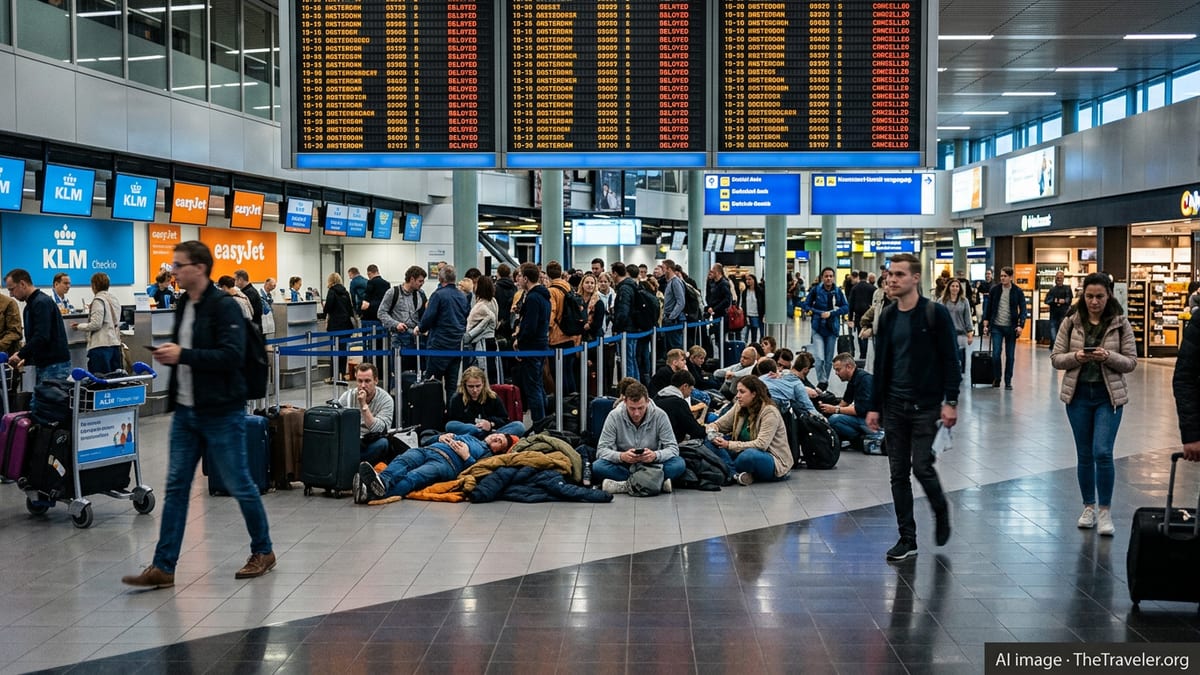
Delays Mount Across Key European Hubs
Monitoring platforms tracking real time aviation activity indicated that by late afternoon more than two thousand flights within European airspace had incurred delays, alongside dozens of outright cancellations. The disruption affected a mix of short haul and medium haul routes that link major capitals and regional cities.
London’s main airports, including Heathrow, Gatwick and Stansted, reported persistent knock on delays as aircraft arrived late from continental Europe and then departed behind schedule. Publicly available flight boards showed late running services between London and destinations such as Vienna, Mykonos and Scandinavian cities, with some sectors operating more than an hour behind schedule.
In Scotland, Edinburgh saw a wave of schedule changes on intra European services, particularly on links to London and key hub airports on the continent. Reports from passenger forums described late notice cancellations on at least one London City to Edinburgh rotation and onward rebooking to next day departures, adding to the overall tally of affected services.
Rome, one of southern Europe’s busiest gateways, also experienced operational strain, with delays rippling through domestic Italian routes and international links. Data from airport information pages showed adjusted departure and arrival times on services operated by both full service and low cost carriers, contributing to the regional congestion picture.
Multiple Airlines Caught In Network Disruption
The day’s disruption was spread across a broad range of airlines that rely on European hubs for connecting traffic. British Airways, ITA Airways, Ryanair and Air Baltic were among the carriers most visible in delay statistics, reflecting their dense schedules into London, Rome, Edinburgh and northern European airports.
For British Airways, several short haul services into and out of Heathrow showed extended delays, including flights from major European capitals where late inbound aircraft forced revised departure times. According to searchable schedule data, a number of central and eastern European routes were operating behind plan, in some cases approaching or exceeding ninety minutes of additional travel time.
Low cost carrier Ryanair, which operates an expansive point to point network, also appeared throughout delay logs at multiple airports. Public data from Italian regional airports highlighted Ryanair rotations to and from London and Rome that were operating off their planned schedule, reinforcing how even minor timetable shifts can accumulate into larger network pressure when aircraft are tightly utilized.
Air Baltic and other northern European carriers were meanwhile contending with congested airspace and downstream effects from earlier delays. Services linking the Baltic region with hubs in Germany, Denmark and the Netherlands showed revised timings, creating challenges for passengers attempting tight connections onto transatlantic or intra Schengen flights.
Operational Pressures Behind The Numbers
While the precise combination of causes varied by route and airline, aviation analysts typically point to a familiar set of operational pressures that can combine to generate widespread disruption. Summer schedules across Europe tend to run at or near maximum capacity, leaving limited slack in aircraft rotations or crew rosters once delays begin to accumulate.
Air traffic management constraints over busy sectors of European airspace often result in flow control measures, which can require aircraft to depart later than scheduled or take longer routings. Even modest restrictions in one region can cascade through airline networks that rely on short turnaround times and multiple daily sectors per aircraft.
Weather remains another recurring factor, with thunderstorms and reduced visibility capable of slowing arrivals and departures at major hubs. When combined with technical issues on individual aircraft or ground handling bottlenecks at heavily used airports, the outcome can be the kind of broad pattern of delays and scattered cancellations recorded across the continent today.
Industry observers also note that ongoing staffing challenges in some markets, particularly within ground handling and security, can lengthen processing times during peak hours. This can contribute to missed slot times and further push departures outside their original windows.
Passenger Impact In London, Edinburgh, Rome And Beyond
The operational picture translated into significant disruption for travelers moving through London, Edinburgh, Rome and other busy gateways. Passengers reported extended queues at check in and security, crowded departure lounges and uncertainty around revised boarding times as airlines worked to resequence aircraft and crews.
In London, the concentration of affected services at Heathrow and Gatwick had knock on effects for connecting traffic to long haul destinations. Travelers on itineraries involving transatlantic or Middle Eastern connections faced the risk of missed onward flights when short haul feeders from European cities arrived substantially late.
At Edinburgh, travelers described last minute gate changes and cancellations on routes to and from England, with some being automatically rebooked onto early morning departures the following day. For those with hotel reservations or onward rail connections, such changes generated additional expense and logistical complications.
Rome’s dual role as both a domestic Italian hub and a gateway between southern Europe and the wider region meant that even relatively small shifts in departure times could cause missed links onto island or regional services. Passengers connecting from international flights to domestic Italian routes reported needing to adjust travel plans as minimum connection times were exceeded.
What Disrupted Travelers Can Do Next
Consumer advocates highlight that passengers affected by delays and cancellations within Europe have defined protections under European and United Kingdom regulations when traveling on eligible routes and carriers. These frameworks set out circumstances in which travelers may be entitled to re routing, refunds, care such as meals and accommodation, and in some cases financial compensation.
Experts generally recommend that passengers keep detailed records of their journeys, including boarding passes, booking confirmations and any written notifications about delays or cancellations. Documenting the actual departure and arrival times, as well as any additional expenses such as hotels or meals, can help support later claims submitted directly to airlines or to alternative dispute resolution bodies.
Travel planners also advise allowing extra buffer time for connections during periods of heightened disruption across European airspace. Booking slightly longer connection windows, opting for through tickets on a single airline group where possible and considering travel insurance that covers schedule disruption can all reduce the risk of significant onward travel problems.
With European summer traffic building and airlines operating dense schedules across the continent, aviation observers expect that similar days of heavy delays and scattered cancellations are likely to recur, especially when airspace restrictions, weather and operational constraints coincide. Passengers planning trips through London, Edinburgh, Rome and other major hubs are being urged by travel advisors to monitor flight status closely and build flexibility into their itineraries.