


More news on this day
Fresh Iranian strikes on Kuwait and renewed threats to air traffic in the northern Gulf are unleashing another aviation shockwave, prompting France, the Netherlands, the United Kingdom, Spain and other European states to reinforce emergency coordination as airlines weigh delays, diversions and potential cancellations across key Europe–Asia corridors.
Get the latest news straight to your inbox!
New Strikes Revive Fears Of A Kuwait Airspace Shutdown
Recent Iranian attacks on Kuwaiti infrastructure and ongoing missile and drone activity in the wider Gulf have revived concerns that Kuwait could again suspend its airspace with little notice. Publicly available information shows that Kuwait has already endured several rounds of disruption since the outbreak of the Iran conflict in February, including attacks on Kuwait International Airport and a desalination plant that underpins the country’s water supply. Earlier episodes saw temporary airspace closures, radar damage and rapid operational changes at the main airport, underscoring how quickly conditions can shift for airlines and travelers.
Travel advisories updated in mid July highlight that Kuwait International Airport remains vulnerable to sudden security moves and partial shutdowns, even as some passenger operations continue from specific terminals. Regional supply chain bulletins describe a pattern of intermittent restrictions in Kuwaiti airspace and at key Gulf hubs, with carriers forced to adjust routings or pause services when missile alerts or drone interceptions are reported. The emerging picture is of an aviation system that can appear stable one day and highly constrained the next.
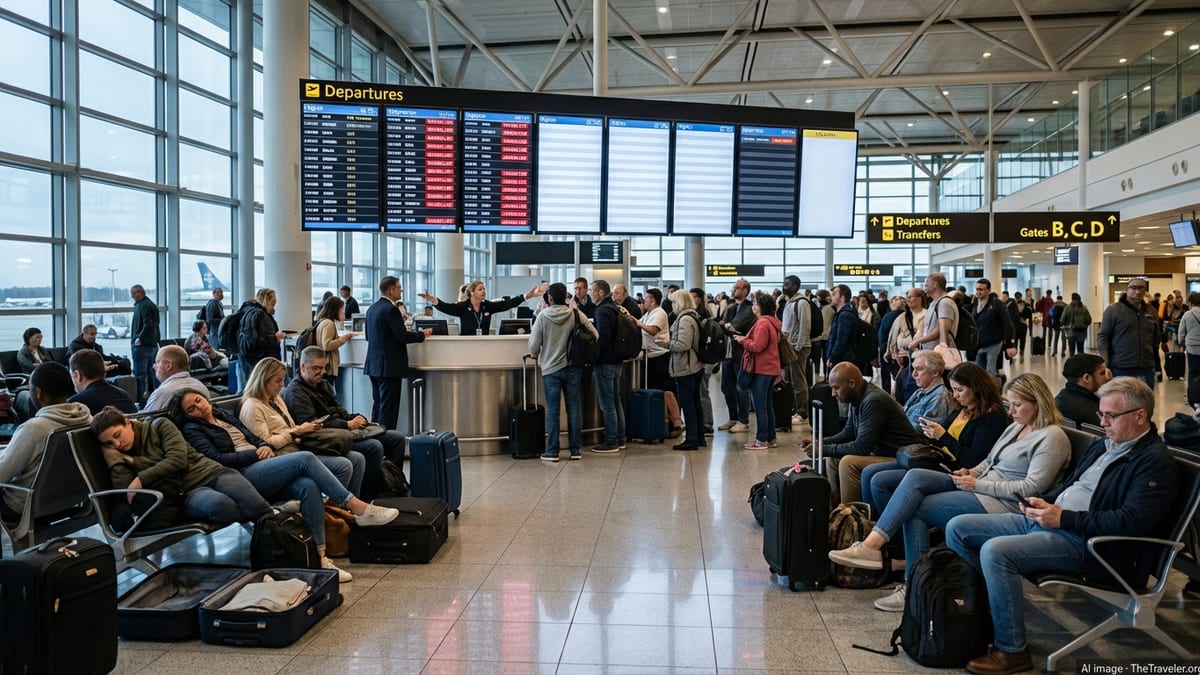
For passengers, the practical effect is a higher risk of last minute schedule changes on flights touching Kuwait or transiting nearby airspace. Airlines have been reshuffling departures, consolidating services and, at times, diverting aircraft to alternative Gulf airports when security conditions deteriorate. Industry updates suggest that this uncertainty could persist as long as military activity around vital energy and transport assets in Kuwait remains elevated.
France And Northern Europe Deepen Crisis Routing Ties
Against this backdrop, European governments are leaning on crisis coordination formats first developed earlier in the Iran war to keep people and cargo moving between Europe and Asia. Statements from Paris and other capitals in recent weeks show France working closely with the United Kingdom, Germany and the Netherlands on broader Gulf security and freedom of navigation, while civil aviation and transport agencies share airspace risk assessments and contingency routings with airlines. These frameworks are now being applied again as planners anticipate further turbulence around Kuwait.
Dutch foreign ministry briefings on the Middle East, including a rolling update service for travelers, outline how flights from Europe to Gulf and Asian destinations are being redirected along southern tracks via Egypt, Saudi Arabia and Oman or along more northerly paths over the Caucasus and Central Asia. This rerouting, already in place for months because of restrictions over Iran, Iraq and parts of Kuwait, is being stress tested once more as the possibility of another Kuwaiti airspace shutdown looms.
In France, the focus has been on tying maritime and air safety together. Official communiqués about cooperation with Gulf partners reference efforts to secure sea lanes in the Strait of Hormuz and Gulf of Oman, while aviation authorities work with carriers on avoiding the most exposed flight information regions. The practical outcome has been a set of preferred long-haul corridors that skirt conflict zones but add time and cost to journeys linking Paris, Amsterdam and other hubs with cities in the Gulf, South Asia and beyond.
UK, Spain And Other EU States Brace For Fresh Disruptions
The United Kingdom, Spain and other European Union members are also recalibrating their travel advisories and airline guidance in light of the renewed threat to Kuwait’s skies. Updated British travel advice on Kuwait warns that Iranian attacks have continued despite earlier de escalation efforts and notes that airport operations and airspace status can change at short notice. This language reflects a wider European consensus that the security environment for civil aviation in the northern Gulf remains volatile.
Spain and several other EU countries have previously signaled that they would not participate directly in offensive military operations linked to the Iran war, but they have supported diplomatic and logistical measures designed to keep commercial routes open where possible. In practice, this has translated into shared intelligence on missile and drone activity, coordinated notices to air missions and common recommendations that airlines avoid certain high risk airspace segments, particularly at cruising altitudes used by long haul passenger jets.
Airlines based in or serving these countries have already been reshaping their summer schedules in response to shifting Gulf risk maps. Factboxes and carrier statements compiled by industry outlets earlier in the conflict show European operators cancelling some services to Gulf hubs, extending block times on Asia routes and, in some cases, suspending flights to cities such as Kuwait, Bahrain or Doha when airspace closures ripple across the region. The threat of a renewed Kuwait shutdown is likely to feed directly into these operational decisions.
Knock on Effects For Europe Asia Travel And Cargo
The knock on impact of these developments extends far beyond Kuwait. With Iranian airspace heavily restricted and other Gulf states periodically limiting access, airlines have been funnelling more traffic through a smaller set of safe corridors. Logistics updates from global freight specialists describe longer routings, higher fuel burn and a squeeze on capacity as carriers balance safety, regulatory guidance and commercial viability. Any further closure of Kuwaiti airspace would intensify this congestion, particularly on lanes linking European gateways with India, Southeast Asia and Australia.
For passengers, the most visible consequences are extended journey times, missed connections at European hubs and a rising number of last minute changes to routings. Travel ministries in countries such as the Netherlands advise passengers to monitor airline notifications closely, allow extra time for connections and be prepared for diversions to unfamiliar airports if security alerts force mid route course changes. Travel insurance policies and airline rebooking rules, refined over months of conflict related disruption, are again coming under scrutiny as travelers seek clarity on their rights.
Tourism flows are also at risk. Kuwait itself, while not a major leisure destination compared with nearby Dubai or Doha, plays an important role as a regional connecting point and business travel hub. Repeated airspace scares and intermittent airport closures can erode confidence among corporate travelers and tour operators, who may opt to route clients through seemingly more stable hubs in Saudi Arabia, Qatar or Turkey. That shift has the potential to reshape regional aviation networks even after hostilities ease.
Uncertain Outlook Keeps Emergency Mechanisms Active
Looking ahead, publicly available analysis suggests that the trajectory of the Iran conflict and the security of key Gulf infrastructures will largely determine whether Kuwait faces a prolonged pattern of stop start airspace closures. For now, European governments appear committed to sustaining their joint crisis management structures, from France’s maritime security initiatives to Dutch and British travel advisory systems and Spanish participation in European Union level aviation risk sharing.
Airlines and passengers, meanwhile, are being urged in official communications and industry guidance to treat the region as a dynamic risk environment rather than a temporary disruption. Schedules that appear stable on booking may be adjusted repeatedly before departure, while routings that worked one week could be declared unsafe the next. As a result, flexible planning, real time information and close attention to airline advisories have become essential tools for navigating an airspace map still being reshaped by conflict.
Whether Kuwait’s skies remain open or are shuttered again, the latest surge in tension has reinforced a lesson airlines have been learning since the first missiles flew in February. Airspace in the northern Gulf can no longer be taken for granted, and Europe’s emerging web of emergency collaborations is likely to remain in place long after the current crisis fades from the headlines.