


More news on this day
Europe’s tourism recovery has shifted into a full-scale boom, with new rankings and visitor data showing Paris consolidating its status as the continent’s most visited city and one of the world’s top urban destinations.
Get the latest news straight to your inbox!
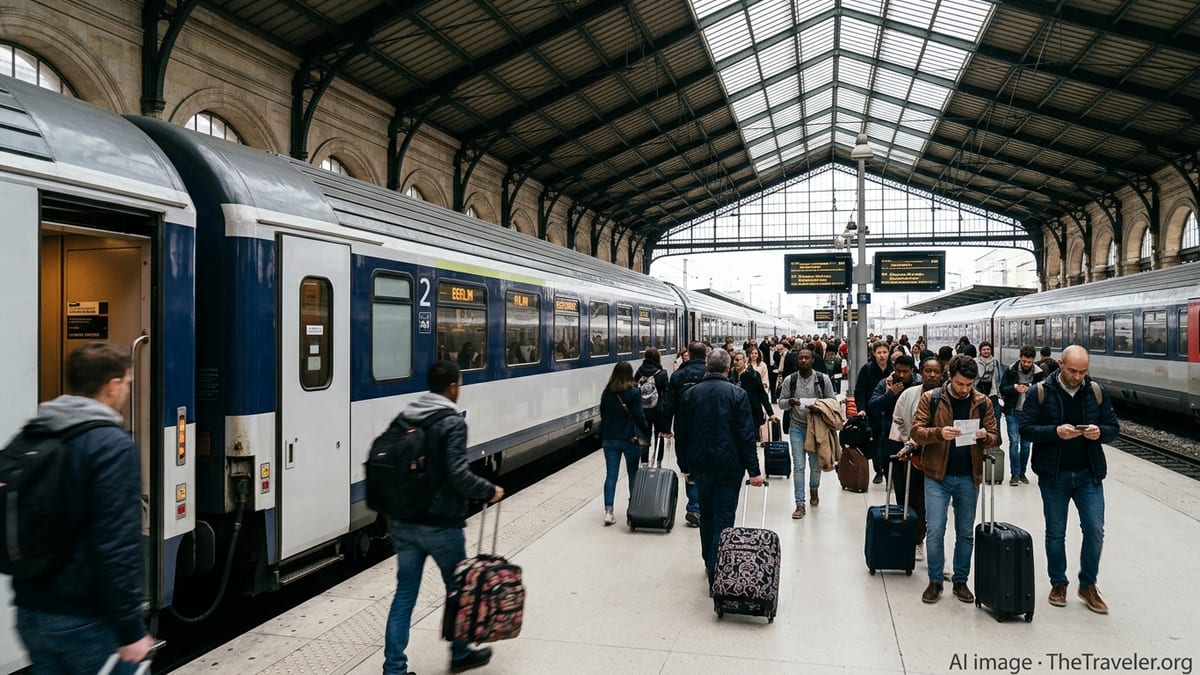
Record Tourism Volumes Signal a European Revival
Recent figures from European tourism bodies and national offices indicate that travel across the continent has not only recovered from the pandemic but is now exceeding many pre-2020 benchmarks. Nights spent in tourist accommodation across the European Union have climbed to record levels, reflecting strong demand from both intra-European travelers and long-haul visitors.
Travel analysts note that this resurgence is spread across major capital cities and secondary destinations alike, but large hubs continue to capture a disproportionate share of international arrivals. Within this broader trend, major European cities such as Paris, London, Rome, Barcelona and Amsterdam remain the principal gateways, supported by extensive air connections and high-speed rail networks.
Industry reports also suggest that shifting traveler behavior is contributing to the surge. Visitors are booking longer stays, mixing remote work with leisure, and returning more frequently to familiar destinations. Despite ongoing concerns over inflation and geopolitical tensions, demand for culture-rich city breaks and high-profile events remains robust across Europe.
Paris Extends Lead as Europe’s Flagship City Destination
Against this backdrop, Paris has emerged as the standout performer. Research from Euromonitor International and other global tourism analysts consistently places the French capital at or near the top of worldwide city destination rankings, citing its combined strength in visitor numbers, infrastructure, culture, gastronomy and business travel.
City and regional tourism barometers report that Greater Paris welcomed tens of millions of visitors in 2023 and 2024, with international arrivals growing faster than domestic tourism. Publicly available figures from the regional tourism board indicate that the Paris Region attracted close to 49 million visitors in 2024, a modest but significant increase on the previous year and a signal that demand has moved beyond simple post-pandemic catch-up.
Attraction data underline the city’s pulling power. Museums, monuments and major cultural sites across Paris have been registering tens of millions of visits annually, supported by strong interest from North American, European and increasingly Asian markets. The reopening of flagship sites and major exhibitions has further reinforced the city’s visibility on the global stage.
Global Rankings Highlight European Dominance
Paris’s position at the top of the European travel hierarchy is also reflected in international benchmarking indexes. Euromonitor’s Top 100 City Destinations series continues to rate Paris as the world’s most attractive city destination, with recent editions confirming that the French capital has held the number-one spot for four consecutive years. The index combines more than 50 indicators, ranging from tourism performance and infrastructure to sustainability and safety.
These rankings highlight a broader European advantage. Most of the top 10 positions are occupied by European cities, with destinations such as Madrid, Rome, Milan, Amsterdam and Barcelona joining Paris near the top of the table. While some Asian and North American cities also feature prominently, Europe remains the densest cluster of high-performing urban destinations, reflecting its concentration of cultural landmarks, mature transport systems and well-developed tourism services.
Credit card network travel analyses and aviation statistics show similar patterns, with Paris frequently cited among the world’s leading cities for international arrivals and spending. Paris Charles de Gaulle regularly ranks as one of Europe’s busiest airports, reinforcing the city’s role as both a final destination and a critical transfer hub for onward travel across the continent.
Major Events and Infrastructure Fuel the Paris Travel Boom
Beyond its enduring cultural appeal, Paris has benefited from a series of major events and infrastructure investments that have amplified visitor numbers. Large-scale sporting competitions and international gatherings in recent years have drawn millions of additional travelers, while also accelerating upgrades to transport networks, public spaces and hospitality capacity.
Tourism reports point to a strong first half of 2024 and into 2025, with regional data describing the year as one of the best on record for Paris in terms of total arrivals and overnight stays. Growth has been particularly notable among visitors from North America, as well as from markets such as Brazil and China where air connectivity has gradually been restored.
City and regional authorities have focused on improving accessibility, developing new mobility options and emphasizing the quality of public spaces around key attractions and along the Seine. This combination of event-driven exposure and urban investment has contributed to the perception of Paris as a city that is both historic and forward-looking, a positioning that resonates strongly with international travelers.
Overtourism Pressures and the Push for Sustainable Growth
The travel boom has also brought challenges. Popular neighborhoods in central Paris and other leading European cities are experiencing renewed pressure from crowding, rising accommodation costs and the expansion of short-term rentals. Residents’ concerns about quality of life, combined with environmental goals, are prompting local governments to tighten regulations and search for more sustainable models of growth.
According to published coverage, several European cities have introduced or increased visitor taxes, restricted coach access, and strengthened rules on tourist rentals in an effort to balance economic benefits with community needs. Paris has joined this wider movement with policies aimed at preserving residential housing, protecting cultural heritage and encouraging visitors to explore beyond the most congested districts.
Tourism strategists argue that the next phase of growth for Paris and its European peers will depend on spreading demand across seasons and regions, supporting lesser-known neighborhoods and nearby cities, and incentivizing lower-impact forms of travel. With international appetite for European city breaks still rising, the way leading destinations manage this boom is likely to shape the continent’s tourism landscape for years to come.