


More news on this day
Tokyo’s Haneda Airport is moving to a stricter 30‑minute baggage check-in cut-off for most domestic flights, aligning airlines and airport procedures around a shorter window that leaves less margin for late-arriving travelers.
Get the latest news straight to your inbox!
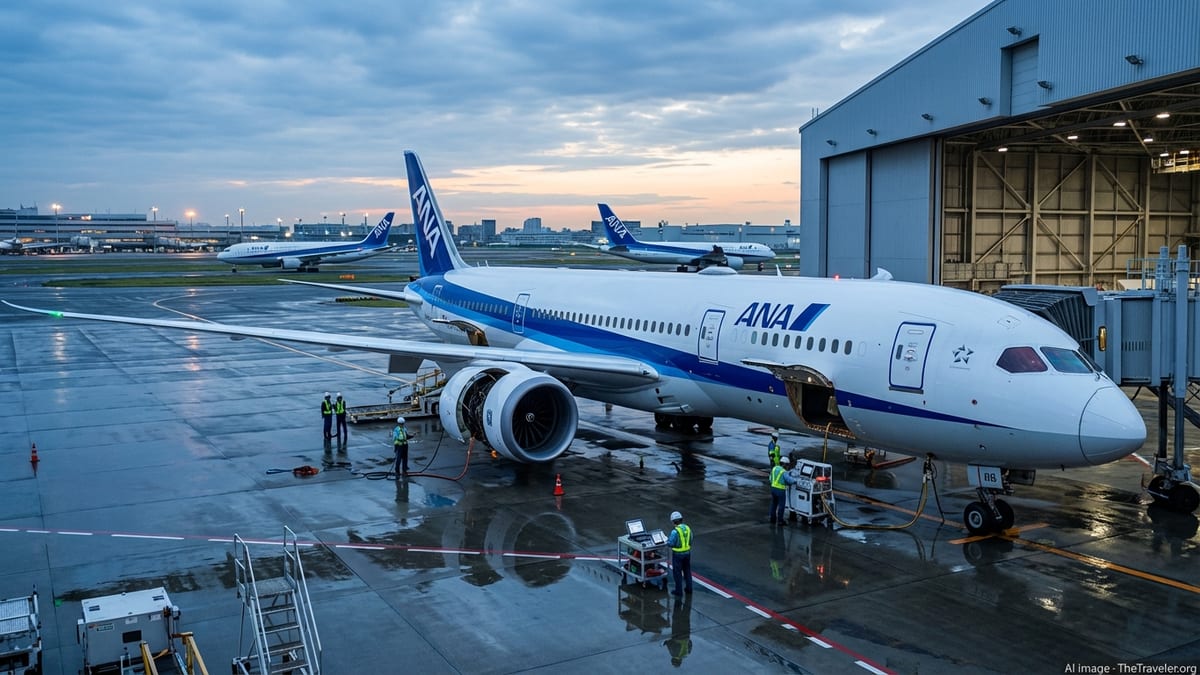
New timing rules reshape domestic departure routines
The 30‑minute baggage deadline reflects what many Japan-based carriers have already been practicing on domestic routes, but Haneda’s move gives the cut-off clearer, airport-wide visibility. Publicly available airline guidance shows that on Japan Airlines domestic services, baggage for airport check-in must now be accepted no later than 30 minutes before scheduled departure, with security and boarding cut-offs following shortly after that point.
All Nippon Airways domestic guidance likewise emphasizes early completion of baggage procedures, followed by security screening at least 20 minutes before departure. While ANA’s domestic pages often frame this as a recommended minimum rather than a new rule, the practical effect for passengers at Haneda is similar: travelers who arrive at the terminal within half an hour of departure are at increasing risk of missing baggage acceptance and, by extension, their flight.
The tightening at Haneda is being rolled out alongside broader efforts in Japan’s aviation sector to harmonize check-in and carry-on practices. Industry groups have pushed for more consistent rules on the size and quantity of cabin baggage, as well as clearer airport signage that highlights cut-off times for luggage, security screening, and boarding.
For passengers, the shift formalizes an expectation that has long existed informally in Japan’s domestic terminals: arrivals close to departure time may still make it through security with only a small bag, but larger suitcases need to be checked significantly earlier. The new emphasis on the 30‑minute limit at Haneda makes that boundary more explicit.
Why Haneda is tightening baggage cut-off times
The shorter baggage deadline is closely linked to punctuality goals at one of the world’s busiest domestic hubs. Haneda handles a dense schedule of departures to cities across Japan, many using narrow turnarounds that leave little room for late-loading of hold luggage. Airport planners and airline operations teams rely on predictable cut-off times so that baggage systems can be closed, weight-and-balance calculations finalized, and aircraft doors shut on schedule.
Public information from Japanese carriers and airport operators highlights concern about congestion at security lanes and boarding gates when passengers arrive in compressed waves close to departure. By firming up the baggage cut-off at 30 minutes before take-off, operators aim to smooth passenger flows, reduce last-minute rushes at baggage drops, and lower the risk of delayed departures caused by late check-in of suitcases.
The move also reflects the increase in self-service infrastructure at Haneda. Airlines have invested in automated baggage-tag kiosks and self-service bag drops, which are designed to process steady volumes of travelers rather than sudden surges minutes before pushback. Clearer cut-off times help ensure those systems are used as intended, with staff available to handle exceptions rather than routine late check-ins.
In addition, a stricter baggage deadline supports security planning. Checked luggage screening needs to be completed well before an aircraft leaves the gate, particularly on flights that carry high volumes of transfer passengers or connect to onward services at other Japanese airports. Once the cut-off passes, ground teams can focus on resolving outstanding screening issues and final loading.
Impact on domestic connections and tight itineraries
The new emphasis on a 30‑minute baggage cut-off is particularly significant for travelers connecting from international services into domestic flights at Haneda. Many long-haul arrivals land at Terminal 3 before passengers transfer to domestic terminals for onward journeys within Japan. Online booking itineraries sometimes show relatively short layover times, counting on the efficiency of Japanese border control, baggage delivery, and internal transfers.
Travel forums and recent traveler accounts indicate that domestic baggage acceptance for many Japanese carriers at Haneda already closes around 30 minutes before departure, with security checks expected to be completed 10 to 20 minutes before take-off. As that practice becomes more standardized and prominent in airport information, passengers with tight connections will have less flexibility if immigration queues are slow or inbound flights arrive late.
Airlines generally advise arriving at the airport well before those minimum thresholds, often recommending passengers with checked baggage present themselves at least 40 minutes before departure for domestic services. That advice is now more critical at Haneda: anyone planning to land from an international flight, clear formalities, move between terminals, and check bags within a window of 60 to 90 minutes faces a narrower margin for error than in the past.
Travel planners also point out that families and first-time visitors need extra time to navigate unfamiliar terminals, reprint boarding passes, and understand signage in multiple languages. With the baggage deadline fixed at 30 minutes, itineraries that once looked comfortable on paper may now feel rushed in practice, prompting some to build in longer layovers or choose later domestic departures.
Domestic passengers urged to arrive earlier at Haneda
For Japan-based travelers starting their journeys at Haneda, the practical message is to arrive earlier at the terminal, especially during peak periods and holiday seasons. While online and automated check-in options let passengers obtain boarding passes in advance, checked baggage still needs to be handed over to an airline or self-service bag-drop station before the 30‑minute cut-off.
Publicly available travel guidance from Japanese carriers typically suggests arriving at the airport about an hour before departure for domestic flights, and even earlier during busy travel weeks. At Haneda, that timeframe is becoming less a suggestion and more a functional minimum for those with suitcases, particularly given the need to clear security at least 20 minutes before the aircraft leaves.
Budget-conscious travelers who rely on rail connections to the airport also need to factor in walking time from train or monorail stations to terminals, as well as any lines at ticket machines, check-in counters, or bag-drop kiosks. With the baggage deadline now firmly set at 30 minutes, a late-running train or unanticipated queue can more easily translate into a missed flight or the need to travel carry-on only.
Even frequent domestic fliers within Japan, who are accustomed to Haneda’s relatively fast processing times, may adjust routines by shifting to earlier trains or buses and minimizing checked luggage on shorter trips. For many, the trade-off is between maximizing time in the city and building a more conservative buffer at the airport to avoid last-minute stress.
What travelers should watch for in coming months
Haneda’s move to highlight a 30‑minute baggage cut-off for most domestic departures comes amid a broader recalibration of airport rules as passenger numbers rebound. Industry notices point to continuing updates in carry-on baggage dimensions, security screening procedures, and self-service technology deployments across major Japanese airports.
Passengers planning trips over the coming months are advised by published airline guidance and travel advisories to check the latest check-in and baggage rules on their booking details and boarding passes. While 30 minutes is becoming a standard reference point for domestic baggage acceptance at Haneda, specific cut-offs can vary for codeshare services, through-checked international connections, or flights operated by partner carriers.
Observers of Japan’s aviation sector note that Haneda’s tighter timings are likely to be monitored closely for their impact on punctuality statistics and passenger satisfaction. If the new norms succeed in keeping departures on time while avoiding excessive congestion at security and gate areas, similar approaches could be further entrenched across other busy domestic hubs.
For now, the clearest takeaway for travelers is simple: at Haneda, the airport that already runs on precise schedules, the margin for dropping off checked bags has narrowed. Building in extra time on the ground is increasingly part of flying domestic routes in and out of Tokyo’s primary airport.