


More news on this day
Europe’s new biometric border regime has triggered such severe queues that airport and airline groups representing more than 600 airports across the continent are now urging Brussels to suspend the system during peak holiday periods, warning that passengers are facing border waits of up to five hours and widespread flight disruption.
Get the latest news straight to your inbox!
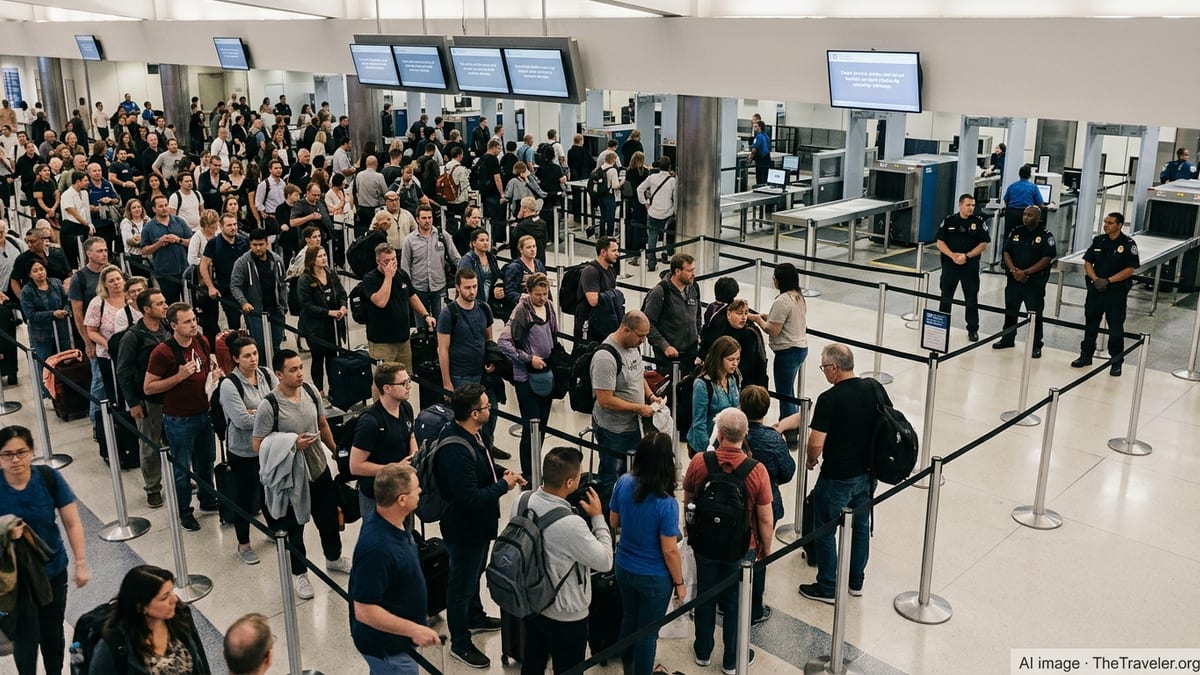
Airports and airlines unite against summer gridlock
Industry associations representing European airports and carriers have issued a coordinated appeal to European Union institutions over the Schengen Entry/Exit System, known as EES. According to publicly available letters and statements, groups including Airports Council International Europe, Airlines for Europe and the International Air Transport Association say the rollout has reached a “critical point,” with long queues at passport control now a daily reality at a growing list of hubs.
Their concerns focus on the cumulative impact of EES on non EU and non Schengen travelers, whose fingerprints and facial images are now captured and stored on first entry, replacing traditional passport stamps. While the technology is intended to tighten external border controls and track short stays more accurately, airport operators report that initial registrations are significantly slowing down processing times at border kiosks.
Reports from major European media outlets indicate that some flights are departing half full because passengers are still stuck in border queues, while other departures are being held at the gate to wait for delayed travelers. Aviation bodies have warned that, without temporary relief from the rules during the busiest weeks of summer, the disruption risks spilling over into missed connections, crew duty time overruns and large scale knock on delays across the network.
In earlier warnings, airport groups had already highlighted instances where border processing times increased by up to 70 percent during the phased introduction of EES, with some terminals experiencing three hour waits even before this summer’s full launch. The latest appeals suggest that those pressures have now intensified, pushing peak waiting times in some locations to around five hours.
Five hour queues and fears of even longer waits
Travel industry coverage from across Europe points to lengthy queues at major tourist gateways including airports in Spain, Italy, Portugal, France, the Netherlands and Belgium. In some cases, passengers are reported to be queuing outside terminal buildings or on airport aprons because indoor border halls have reached capacity. The combination of high summer traffic and first time EES registrations is cited as a key factor behind the most extreme bottlenecks.
Several outlets report that aviation officials are now warning of the possibility of six or even seven hour queues at the most congested airports if current trends continue into the late July and August peak. The International Air Transport Association has previously cautioned that waits of four to six hours were already being recorded at some border checkpoints, and that incremental tweaks on the ground would not be enough to absorb the additional workload generated by the new system.
Carriers focused on leisure routes from the United Kingdom and other non EU markets have begun advising passengers to arrive much earlier than usual for outbound flights from European airports. One major low cost airline has recommended that British holidaymakers returning from the continent allow at least three hours before departure to navigate potential queues at departure passport control, on top of time needed for check in and security.
Alongside the time cost, consumer groups and travel agents are reporting a growing number of missed flights, disrupted itineraries and abandoned short breaks, particularly among travelers with tight connections through Schengen hubs. Online forums and social media posts describe holidaymakers who have waited hours at border control, only to see onward flights depart without them despite having landed with what would normally be considered safe transfer times.
What the EES is and why it is causing friction
The Entry/Exit System is one of the European Union’s flagship digital border projects, designed to register non EU nationals each time they cross the external frontier of the Schengen area for short stays. Instead of manual passport stamps, the system records a traveler’s name, travel document details, biometric data and the time and place of entry and exit in a centralized database.
Once fully bedded in, the scheme is intended to automate compliance checks with the rule that limits most short term visits to 90 days in any 180 day period, while also strengthening security screening. Officials have long argued that the technology will eventually speed up controls by removing manual stamping and reducing disputes over time spent in the Schengen zone.
The problem, airport and airline groups say in their public statements, is that the initial capture of biometric data takes far longer than a traditional passport check, especially when large numbers of travelers are unfamiliar with the process or need assistance at kiosks. Border police staffing levels, physical space in arrivals and departures halls, and the capacity of self service desks were all dimensioned around older procedures, leaving little margin to absorb the added complexity of the new system.
Technical teething problems, inconsistent use of automated gates and variations in how individual countries interpret the rules have compounded the strain. Some travelers also report repeated registration attempts when data appears not to be recognized on subsequent trips, further increasing the time required at border control and adding to frustration.
Calls for suspension, flexibility and national workarounds
In their latest interventions, European aviation bodies are not asking for EES to be abandoned outright, but for the European Commission and member states to activate or introduce legal mechanisms that would allow its use to be suspended or relaxed during defined peak periods. Their open letters argue that temporary waivers, targeted at the busiest days and locations, are now essential to prevent “widespread saturation” of border facilities and to protect Europe’s reputation as a tourism destination.
Industry proposals described in public documents include allowing border authorities to revert to manual passport checks when queues exceed pre agreed thresholds, expanding the use of advance registration tools where feasible, and giving member states more flexibility to phase in full biometric capture over a longer period. Some national police and airport operators have already experimented with short term suspensions or reduced use of EES at specific terminals when congestion becomes unmanageable.
Airlines are also pressing for better coordination between national border agencies and airport operators on staffing, with suggestions that some states underestimated the number of officers needed to manage the more complex checks. In addition, carriers want clearer guidance on how they should handle passengers who miss flights purely because of EES related queues, particularly in relation to rebooking, care and assistance obligations.
Travel trade associations are calling for transparent communication so passengers know what to expect this summer. They argue that, while the system may offer long term benefits, the immediate reality is one of unpredictable delays, making detailed advance planning essential for both airports and travelers.
What travelers should expect in the coming weeks
Despite the mounting pressure on Brussels, there is currently no indication from public statements that the EU will fully shelve EES after years of investment. Instead, discussions appear to center on how far to relax application of the rules, and for how long, while technical and operational fixes are implemented at the national level.
For travelers from the United Kingdom, the United States and other non EU countries, the clearest immediate consequence is the need to factor in extra time at both arrival and departure passport checks when flying into or out of the Schengen area. Industry bodies suggest that passengers should not assume pre EES connection times are still viable, especially at larger hubs handling significant volumes of long haul traffic.
Some airports and airlines are publishing their own advisory guidelines, often recommending earlier arrival at the terminal and discouraging tight self booked connections that require clearing border control between flights. Travel agents and tour operators are similarly beginning to adapt itineraries, building in longer transfer windows and warning clients that queues of several hours are now a realistic possibility at certain times and locations.
How quickly the pressure eases is likely to depend on a combination of policy decisions in Brussels, rapid operational changes at national borders and the pace at which repeat travelers move from first time biometric enrolment to shorter subsequent checks. Until then, Europe’s aviation sector is signaling that the summer of 2026 will test both the resilience of its new border technology and the patience of millions of passengers.