


More news on this day
Europe’s peak summer travel season is under renewed pressure as Lufthansa and British Airways grapple with a fresh wave of disruption, with 1,457 flight delays and 91 cancellations reported across major hubs in early July 2026, underscoring the fragility of the continent’s aviation recovery.
Get the latest news straight to your inbox!
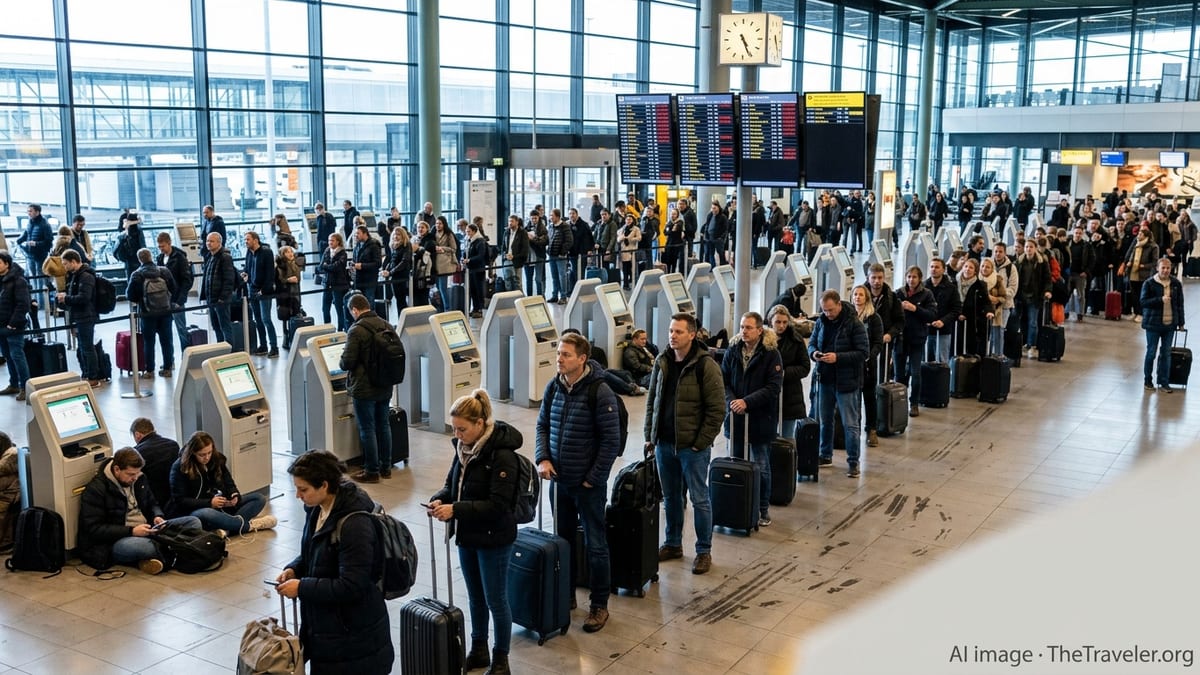
Delays Ripple Through Frankfurt, Munich, Heathrow and Beyond
Operational data and passenger reports indicate that disruption has been heavily concentrated at Europe’s largest connecting airports, including Frankfurt, Munich, London Heathrow and Berlin Brandenburg. A significant share of the 1,457 delays and 91 cancellations has been linked to complex hub operations, where small schedule slippages can quickly cascade across the network.
At Germany’s primary hubs, Frankfurt and Munich, Lufthansa services have been particularly exposed. Recent analysis of traffic at Germany’s six busiest airports on 1 July 2026 showed hundreds of delayed and cancelled flights in a single day, with Lufthansa featuring prominently alongside other European carriers. This surge came on top of capacity adjustments already built into the airline’s summer 2026 schedule, suggesting that buffers have not been sufficient to absorb day-of-operation shocks.
In the United Kingdom, Heathrow has experienced its own wave of disruption affecting British Airways’ short and medium haul operations as well as transatlantic services. Travellers have described early morning departures held on the ground for hours and missed onward connections later in the day due to air traffic control constraints and tight turnarounds. Publicly available complaints and travel forums show a consistent pattern of passengers arriving many hours late or having itineraries broken apart at the last minute.
The concentration of delays and cancellations at these major hubs has amplified the impact far beyond Europe. Long haul passengers connecting between North America, the Middle East and Asia have faced missed onward flights, rebookings at short notice and overnight stays, significantly extending journey times during one of the busiest travel periods of the year.
Fuel Costs, Staffing Gaps and Earlier Strikes Feed a System Under Strain
The latest disruption has not emerged in isolation. Airlines across Europe entered the 2026 summer season already contending with high fuel prices, fleet and crew realignments, and the lingering impact of industrial disputes. Industry publications note that Lufthansa has cancelled tens of thousands of flights between spring and autumn 2026, grounding aircraft and trimming short haul capacity as part of a broader response to an energy and cost crisis.
In February 2026, a large-scale strike at Lufthansa triggered mass cancellations across Germany, highlighting underlying tensions over pay and working conditions. While the current wave of delays and cancellations is not solely the result of industrial action, earlier disruptions prompted schedule reshaping and resource reallocation that continue to echo through the network months later.
British Airways has likewise been navigating a tight labour market and fleet constraints while operating an intensive Heathrow schedule. Reports from passengers and aviation observers suggest that modest technical issues, late inbound aircraft or minor weather disruptions can quickly escalate into extended delays when spare capacity in aircraft and crew is limited.
Higher operating costs, including elevated jet fuel prices, have also encouraged carriers to streamline networks, reduce backup capacity and consolidate flights. While these measures can improve financial resilience, they leave less margin when demand peaks or when air traffic control and infrastructure constraints emerge, as has frequently been the case in Europe’s congested airspace.
Passengers Turn to EC261 and UK261 for Redress
As delays stretch beyond three hours and cancellations accumulate, affected travellers are increasingly looking to Europe’s compensation regimes for relief. Under EU Regulation EC261, as reflected in guidance published by Lufthansa and other airlines, passengers may be entitled to compensation for long delays or short-notice cancellations when the cause is not considered an extraordinary circumstance beyond the carrier’s control.
For flights touching the United Kingdom, similar protections apply under the post-Brexit UK261 framework. British Airways’ publicly available information explains that customers whose flights are heavily delayed or cancelled may be eligible for rerouting, refunds and, in some cases, monetary compensation, depending on the circumstances of the disruption and the length of the delay at arrival.
Consumer rights organisations and passenger advocacy platforms report a marked rise in claims linked to the 2026 disruption cycle. Travellers affected by earlier Lufthansa strikes in the spring, for example, continue to document lengthy waits for EC261 payouts. In online accounts, some passengers describe following formal complaint channels and, when necessary, escalating to alternative dispute resolution bodies to enforce their rights.
Legal experts and travel advisers consistently stress that eligibility often hinges on the precise cause of the delay or cancellation. Air traffic control restrictions, extreme weather or security incidents may limit the scope for compensation, whereas staff shortages, technical faults and internal operational issues are more likely to fall within the airlines’ responsibility.
Major Hubs Brace for Ongoing Summer Volatility
Looking ahead to the rest of the 2026 summer season, aviation trend reports suggest that volatility is likely to persist, even as airlines refine schedules and staffing plans. Eurocontrol’s recent analyses of European delay patterns highlight how quickly localized issues, such as strikes at a single air navigation provider or staffing constraints at a key airport, can reverberate across the continent’s interconnected network.
Lufthansa has already announced further structural changes for the coming seasons, including consolidating more traffic through its main hubs and trimming short and medium haul fleets. British Airways, meanwhile, continues to adjust frequencies and aircraft types on select routes from Heathrow as it balances demand with operational resilience and regulatory requirements on airport slots.
For airports, managing passenger flows during irregular operations remains a central challenge. Check-in queues, security bottlenecks and crowded gate areas are more likely when multiple flights are delayed concurrently, especially during early morning and late evening peaks. Airport operators across Europe have been updating contingency plans and urging travellers to arrive early and monitor flight status closely when conditions look unstable.
Despite these efforts, the combination of strong leisure demand, tight capacity and recurring operational shocks means that Europe’s aviation system is operating close to its limits. Industry observers warn that similar episodes of mass delays and cancellations could reappear several times before the end of the summer, particularly if further industrial action or extreme weather events coincide with high-traffic weekends.
What Travellers Can Expect in the Coming Weeks
For passengers booked on Lufthansa or British Airways in the coming weeks, publicly available guidance points to a few likely themes: longer-than-usual queues, an elevated risk of missed connections and a greater reliance on rebooking via alternative routings. Airlines have encouraged customers to use mobile apps and online tools to track flights, select rerouting options and manage accommodation where eligible.
Both carriers outline on their websites the assistance they provide during severe disruption, including meals and refreshments after specified waiting times, hotel accommodation when overnight stays become unavoidable and transport between the airport and accommodation. However, the practical delivery of this support can vary widely on days when hundreds of flights are affected simultaneously.
Travel specialists advise that, in an environment where schedules remain fluid, passengers should build in additional buffer time for connections, particularly when itineraries rely on a single daily long haul departure. Booking slightly longer layovers at hubs such as Frankfurt, Munich or Heathrow can reduce the risk of misconnecting when inbound flights are delayed.
The latest wave of 1,457 delays and 91 cancellations at Lufthansa and British Airways underscores a broader European aviation crisis defined less by a single dramatic event and more by sustained operational fragility. For travellers and the industry alike, the challenge now is to navigate a peak season in which disruption has become a persistent, if unwelcome, feature of the journey.