


More news on this day
A passenger has died on an open deck during a Mediterranean cruise, according to regional media coverage and cruise-tracking reports, drawing fresh attention to safety and medical practices aboard large passenger ships at sea.
Get the latest news straight to your inbox!
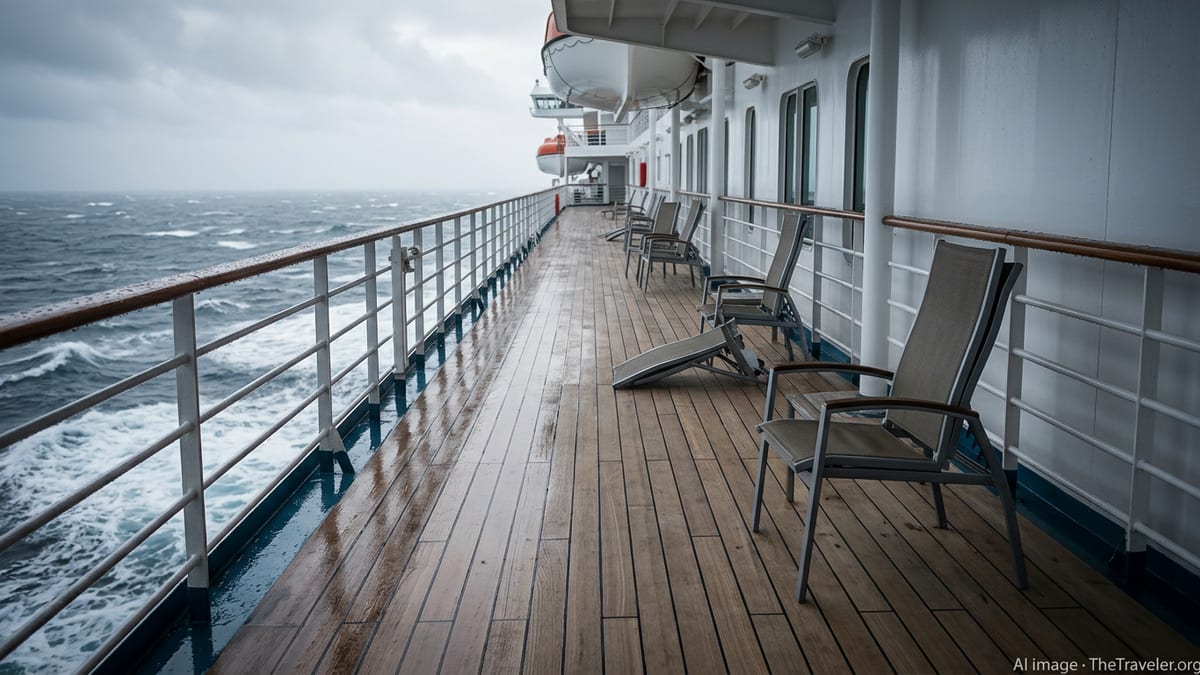
Incident Reported During Scenic Mediterranean Sailing
Reports circulating in European and maritime-focused outlets indicate that the fatal incident occurred while the vessel was underway on a scheduled Mediterranean itinerary, with the passenger collapsing on an outdoor deck area. Initial coverage suggests that onboard medical teams were called to attend to the individual, but efforts to resuscitate the passenger were not successful.
Publicly available information describes the sailing as a typical summer cruise in the region, with calls at popular ports and long stretches of open-water transits where passengers often gather on upper decks. Witness accounts shared via social media and cruise forums refer to a sudden medical emergency that unfolded in view of other guests.
At this stage, there is no indication of foul play from the information made public. Early accounts point instead to a medical event that resulted in the passenger’s death while the ship continued its itinerary under the company’s established procedures for handling serious onboard incidents.
The passenger’s identity, age and nationality have not been widely disclosed in open sources, consistent with common practice in similar cases, where companies and investigators typically defer to local laws and the wishes of family members before releasing personal details.
Onboard Response and Maritime Protocols
Published coverage of cruise incidents indicates that vessels sailing the Mediterranean generally carry medical centers staffed with doctors and nurses, as well as emergency equipment intended to stabilize patients until they can be transferred ashore. In situations where a passenger suffers a serious event on deck, crew members are trained to secure the area, render first aid and coordinate with the bridge.
Depending on the ship’s position and the nature of the emergency, captains have several options, including diverting to the nearest port, arranging a high-speed pilot boat transfer, or requesting a helicopter evacuation from coastal services. In many cases, however, outcomes depend heavily on how quickly an incident is reported and the underlying health condition of the person involved.
Maritime investigations in recent years, including reports released by government accident branches, have highlighted the importance of rapid communication between deck staff, medical personnel and shoreside operations teams when emergencies take place in public areas. These findings have encouraged operators to refine drills and response plans covering everything from cardiac events to falls and weather-related injuries.
In the current case, open reporting suggests the ship continued its voyage after the passenger was pronounced dead, following standard practice in which the body is cared for in a dedicated onboard facility until arrangements are made at the next major port.
Safety Culture Under Scrutiny in a Busy Summer Season
The death comes at a time when Mediterranean cruising is experiencing strong seasonal demand, with large vessels calling at ports in Spain, France, Italy and Greece. With passenger numbers climbing, every serious incident at sea tends to revive scrutiny of safety practices, training standards and the adequacy of medical resources on board.
Several high-profile cases reported across the cruise sector in recent months have involved passengers and crew suffering fatal medical events, falls from balconies, and accidents related to ship movements in port. While each case has distinct circumstances, consumer advocates frequently argue that the industry should treat every incident as an opportunity to revisit procedures and strengthen preventive measures.
Industry data published in safety reviews indicate that the overall rate of serious incidents on large ships remains relatively low when compared with the millions of passengers carried each year. Even so, campaigners point out that the combination of aging demographics among cruise travelers and more active onboard lifestyles can increase the likelihood of medical emergencies taking place in public spaces such as pool decks and promenades.
Analysts who follow the sector say that consistent communication, visible safety messaging and regular drills can help reassure passengers, especially when news of an onboard death circulates during a peak travel period.
Jurisdiction, Investigation and Company Policies
When a passenger dies during an international cruise, multiple jurisdictions may be involved, including the country where the ship is registered, the coastal state whose waters the vessel is sailing in, and the home nation of the deceased. According to maritime law summaries consulted by travel media, responsibility for any formal inquiry usually begins with the flag state and can extend to local port and law enforcement bodies if the ship calls at their harbors.
Cruise operators maintain internal incident-reporting systems that document medical responses, location, time and witness accounts. These reports are typically shared with insurers and, where required, with maritime authorities. In some circumstances, coroners or equivalent offices request additional information once the body is transferred ashore.
Publicly available company policies often emphasize cooperation with official investigations and stress that privacy laws may limit how much detail can be shared with other guests. As a result, passengers on the same voyage sometimes receive only brief announcements or written notices acknowledging a “medical emergency” or “medical situation” without specifics.
In the absence of formal public statements, travel observers often rely on port schedules, ship-tracking data and second-hand passenger reports to reconstruct timelines and verify whether a voyage has been altered following a serious onboard incident.
What Passengers Should Know About Medical Risk at Sea
Travel medicine specialists and cruise-focused publications frequently note that ships are equipped to handle many urgent situations but cannot substitute for full-scale hospitals. Passengers with known medical conditions are generally advised, in public health guidance, to travel with detailed records, prescribed medications and a clear understanding of their coverage for evacuation or treatment abroad.
Consumer-facing advice often encourages travelers to review the medical capabilities of a vessel before booking, including clinic hours, staffing levels and typical response procedures for cardiac events or serious injuries on deck. While such information is not always prominently advertised, it can sometimes be found in company policy documents and independent assessments.
Insurance comparisons published in the travel press consistently point out that standard policies may not cover all costs of emergency evacuations from a ship, particularly in international waters. For Mediterranean itineraries, where distances between ports can vary widely, this consideration is highlighted as especially relevant for older passengers or those with chronic conditions.
As the summer cruise season continues, the reported death of a passenger on deck during a Mediterranean sailing serves as a somber reminder that even leisurely voyages on modern ships involve real medical and safety risks, and that preparation and transparent information remain central concerns for many travelers.