


More news on this day
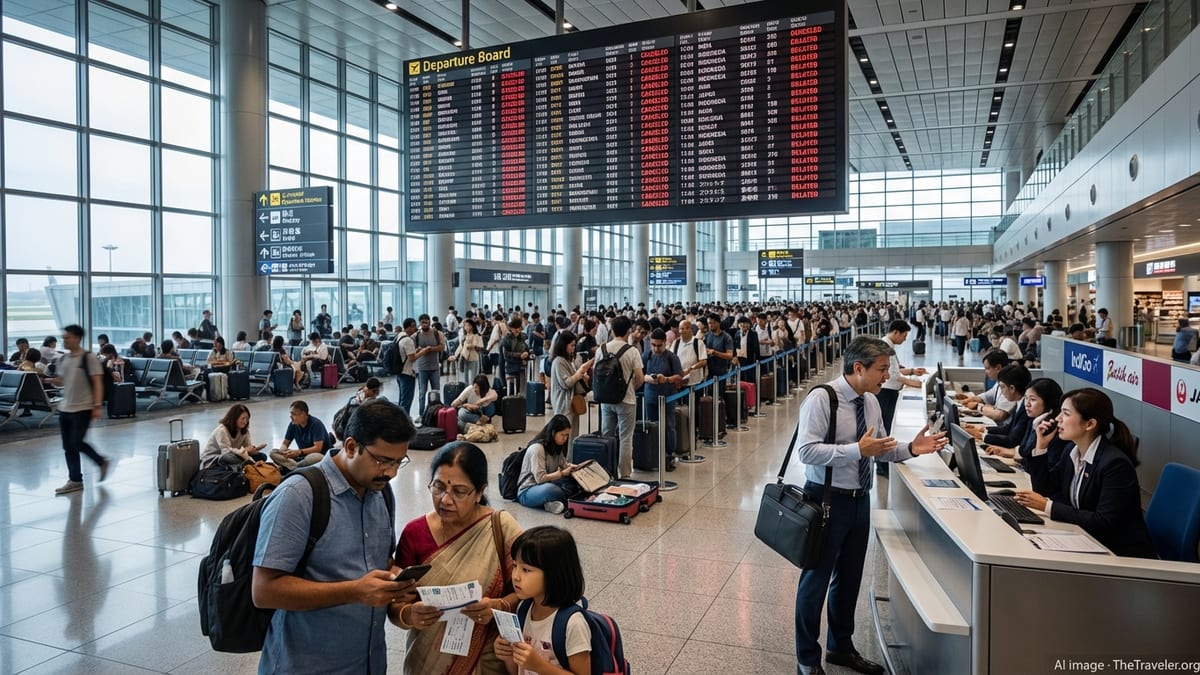
Air travellers across Asia faced fresh disruption this week as data from global flight trackers and regional media reports indicated more than 350 flights cancelled and over 3,500 delayed in key hubs including Singapore, Japan, India and Saudi Arabia, affecting operations at airlines such as Saudia, Japan Airlines and India’s Akasa Air.
Get the latest news straight to your inbox!
Weather Systems, Conflict Zones And Capacity Strains Collide
Published coverage across the region indicates that a mix of powerful summer storms, airspace restrictions linked to conflict in West Asia, and stretched airline capacity are combining to create a difficult operating environment for Asian carriers. Recent typhoon activity in North East Asia has led to clusters of cancellations from Singapore to Japanese and Chinese destinations, while separate geopolitical tensions around the Gulf continue to force re‑routings and schedule cuts between Asia and the Middle East.
In Japan and surrounding waters, strong systems such as Typhoon Bavi have already triggered waves of cancellations and retimings, with reports from Japanese and Singaporean outlets pointing to dozens of flights scrubbed over a single weekend as winds and heavy rain swept through Okinawa and on toward Taiwan and the Chinese coast. These weather related suspensions have had a knock on effect across airline networks, leaving crews and aircraft out of position for subsequent services.
At the same time, publicly available advisories from airlines show that long running airspace restrictions and security concerns in parts of West Asia continue to shape schedules between South and South East Asia and the Gulf. Routes linking Singapore, India and other Asian markets to Saudi Arabia and the wider region have been repeatedly adjusted since early this year, with carriers either cancelling selected rotations outright or extending earlier suspensions.
Industry analysts note that these simultaneous pressures are hitting just as summer demand for travel peaks across Asia, leaving carriers with limited slack to absorb disruptions. The result is a rising tally of day to day delays that far exceeds the number of outright cancellations, but which can still derail passengers’ onward connections.
Singapore And Gulf Routes See Continuing Cancellations
Singapore has emerged as one of the most visible flashpoints for regional disruption, given its role as a major connecting hub. Flight tracking services and local media coverage this week highlight continuing cancellations on routes from Changi Airport to the Middle East, particularly to Dubai and Jeddah, as airlines respond to evolving risk assessments and changing operating restrictions in the region.
Singapore based carriers and their low cost affiliates have issued a series of advisories in recent months covering services to key Gulf gateways. Notices detail repeated extensions of earlier suspensions on certain Dubai rotations and prolonged cancellations on routes to Jeddah in Saudi Arabia, with affected customers being offered rebooking options or refunds. These network changes, layered on top of weather related disruption to North East Asia, have concentrated pressure on remaining routes through the hub.
Regional coverage from Gulf based outlets indicates that Saudi airports are themselves facing schedule volatility as local and foreign airlines adjust flight timings or cancel individual services into Jeddah, Riyadh and other cities. The knock on effect for Singapore bound traffic has been particularly acute on religious and labour corridors, where demand remains strong but seat supply is constrained by operational limits and detours around restricted airspace.
Analysts point out that while the absolute number of flights removed from schedules between Singapore and the Gulf still represents a small fraction of overall traffic through Changi, the impact is amplified for travellers whose itineraries depend on specific connections through Middle Eastern hubs onward to Europe or Africa.
Indian Carriers Cut And Retime As Delays Mount
In India, operational updates from the country’s civil aviation authorities and airline statements have tracked a sustained period of disruption linked to the West Asia airspace situation, fuel constraints and aircraft availability. Official tallies earlier in the year already cited hundreds of cancellations by Indian and foreign carriers as they reworked routings to avoid sensitive airspace, and the pattern has continued into the summer travel season.
Low cost and full service Indian airlines alike have been trimming frequencies on certain international routes or consolidating flights where demand and operational constraints intersect. Reports from aviation industry publications describe schedule rationalisation that includes reductions on services to the Gulf as well as selective cuts in wider Asian networks, with some routes to Singapore, Japan and South East Asia being paused or shifted to different days of the week.
Among the carriers affected, newer entrants such as Akasa Air have faced particular scrutiny from passengers as the airline adjusts its growing international footprint. Social media posts and local news items highlight cases of late notice schedule changes and cancellations, which Akasa has attributed in part to sector wide challenges ranging from aircraft delivery delays to congested regional airspace.
While the number of outright cancellations across Indian carriers in the current disruption cycle is lower than during pandemic era shutdowns, operational data shared in local media suggests that delays have become widespread. This dynamic feeds into the broader regional figure of more than 3,500 delayed flights, as Indian hubs such as Delhi, Mumbai and Bengaluru struggle to absorb knock on effects from weather systems, crew shortages and air traffic control restrictions.
Japan Airlines, Saudia And Others Navigate Typhoons And Detours
Major flag carriers across Asia and the Middle East, including Japan Airlines and Saudia, are working through a complex operating environment shaped by both seasonal weather and longer term geopolitical constraints. Japanese media have documented repeated schedule adjustments by domestic and international airlines serving Okinawa and other southern islands as typhoons disrupt airport operations, forcing carriers to cancel or delay services to safeguard safety.
For Japan Airlines and its peers, these weather related cancellations add to a backdrop of network changes driven by evolving demand patterns and airspace availability. Some services into China have been trimmed or rerouted amid political and economic tensions, while long haul connections to Europe and North America must account for detours around restricted areas in West Asia, extending flight times and increasing fuel burn.
In Saudi Arabia, Saudia and other operators are similarly contending with a combination of regional instability and strong seasonal demand. Coverage from Gulf based news outlets describes selective cancellations and retimings on routes within the region and beyond, as airlines adjust to changing advisories on airspace safety and manage aircraft rotations into busy pilgrimage and labour markets. These adjustments feed into the broader count of more than 350 cancelled flights across Asia and nearby regions reported over recent days.
Industry observers note that while large network carriers often have greater flexibility to swap aircraft and crews, they also tend to run their fleets closer to capacity during peak seasons. This makes them especially vulnerable to cascading disruptions once typhoons, technical issues or airspace closures begin to affect a key hub.
Passengers Face Missed Connections And Longer Journeys
For travellers, the immediate impact of the current wave of cancellations and delays is showing up in missed connections, overnight layovers and improvised reroutings across Asia and the Middle East. Passengers connecting through Singapore, Tokyo, Delhi or Jeddah report having to accept longer itineraries via secondary hubs, or rebook on alternative days when same day options are unavailable.
Travel advisories from several airlines in the region urge passengers to check flight status frequently and to allow additional time for connections, particularly on itineraries that traverse airspace near current conflict zones or pass through airports exposed to typhoon season. Consumer advocates in several markets are also reminding passengers to review their rights to refunds or rebooking when flights are significantly delayed or cancelled, as policies differ between carriers and jurisdictions.
Online travel platforms and global distribution systems show that, despite the disruptions, most scheduled flights across Asia are still operating. However, operational statistics collated from multiple data providers indicate that on some peak days, only a modest percentage of services depart exactly on time, with a significant share experiencing short to moderate delays that can nonetheless cause problems for tightly timed connections.
Looking ahead, airlines and aviation authorities across Singapore, Japan, India, Saudi Arabia and other affected markets are signalling that schedule volatility is likely to continue over the coming weeks. With typhoon season still under way and no rapid resolution in sight for several geopolitical flashpoints, both carriers and passengers may need to plan for a protracted period of disrupted flying conditions across Asia’s busiest corridors.