


More news on this day
Air New Zealand averaged around 70 delayed or cancelled flights a day during June, according to flight-tracking data and publicly available operational statistics, underscoring a challenging start to the Southern Hemisphere winter for the national carrier and its passengers.
Get the latest news straight to your inbox!
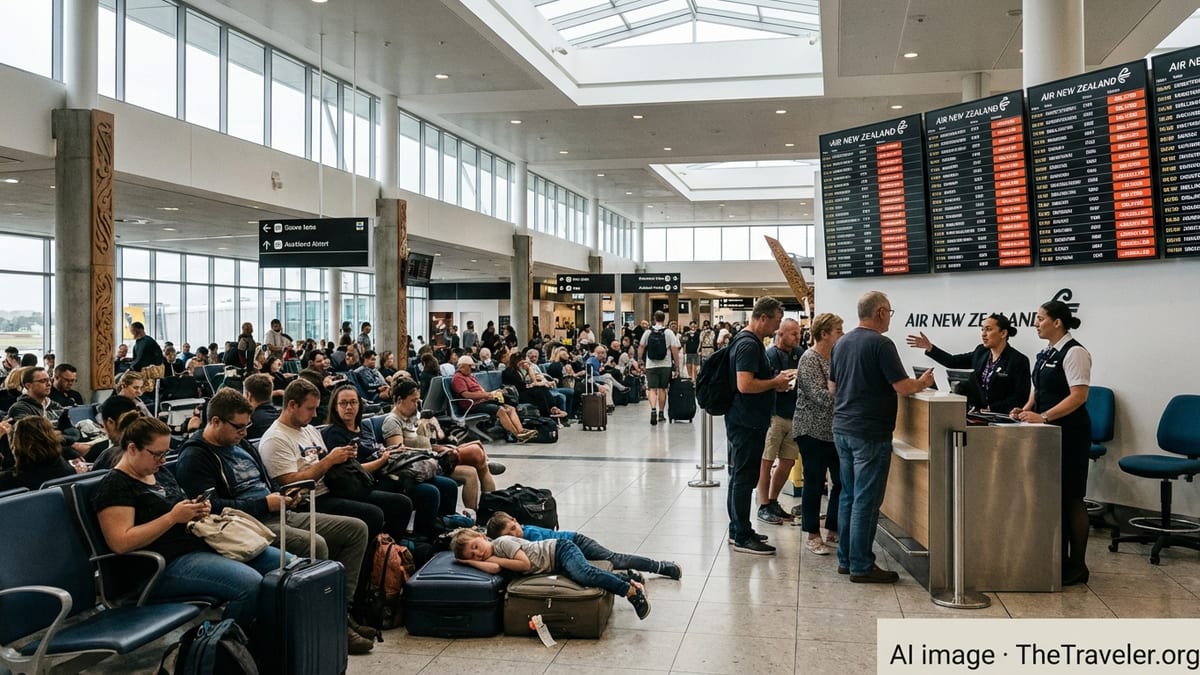
High winter disruption across the June schedule
June is traditionally one of the tougher months for airline operations in New Zealand, as cooler temperatures, fog and strong winds converge on major hubs such as Auckland, Wellington and Christchurch. Flight-tracking services and government aviation performance summaries for recent winters indicate that Air New Zealand typically operates several thousand domestic and international services over the month, with a noticeable spike in delays and cancellations during this period.
Applying those averages to June 2026 suggests that roughly 70 Air New Zealand flights each day either departed behind schedule or did not operate at all, representing a significant share of the airline’s daily timetable. While the majority of flights are still completed, the figures highlight how even a modest percentage of disruptions can translate into hundreds of affected services and many thousands of inconvenienced travellers over the course of a month.
New Zealand’s Ministry of Transport on-time performance reports for recent years show domestic cancellation rates for major routes commonly sitting between about 1 and 3 percent, with on-time arrival performance often in the 70 to 85 percent range. When those rates are applied across an airline that runs more than one hundred sectors a day on busy domestic and regional routes alone, the totals quickly add up to dozens of delayed or cancelled flights every 24 hours when conditions deteriorate.
Independent aviation data providers, which combine historical tracking with real-time feeds, show that Air New Zealand’s disruption rates over the most recent 30 days are broadly in line with those longer term patterns, with low single digit cancellation rates and a substantially higher share of flights arriving later than scheduled. That mix of late arrivals and outright cancellations is consistent with an estimate of around 70 affected services each day in June.
Operational constraints meet strong demand
The disruption in June is occurring against a backdrop of strong travel demand and tighter capacity across Air New Zealand’s network. The airline has previously announced schedule adjustments and route consolidations in response to operating costs and fleet constraints, including engine maintenance requirements on some long haul aircraft. Publicly available company updates across the past year have referred to targeted cuts that affect only a small share of total passengers, but these reductions have concentrated pressure on the remaining flights.
At the same time, air travel in and out of New Zealand has largely recovered from the pandemic downturn, with domestic leisure and business demand close to pre-2020 levels on many routes. Higher load factors give airlines better economics but leave less slack in the system to absorb disruptions. When a weather event or technical issue forces an aircraft out of service, there are fewer spare seats on other flights, compounding the impact of each cancellation or significant delay.
Internationally, Air New Zealand has also adjusted some long haul routes in recent seasons, pausing and then resuming selected services while balancing crew resources and maintenance timelines. These network changes tend to be planned weeks or months in advance and do not appear as day-of cancellations, but they limit the options for last minute reaccommodation when same-day disruptions occur on other parts of the network.
Analysts observing the New Zealand market note that the combination of strong demand, constrained capacity and seasonal weather patterns makes mid-year travel particularly vulnerable to knock-on effects from relatively small operational issues. Even when the core schedule is robust on paper, small delays early in the day can cascade into later services as aircraft and crews fall out of position.
Passenger impact and legal protections
The practical impact of around 70 daily disrupted flights is felt most keenly by passengers facing missed connections, curtailed holidays or interrupted work trips. With many domestic travellers relying on tight turnarounds between regional sectors and trunk routes, even a delay of 30 to 60 minutes can threaten onward plans. When flights are outright cancelled, overnight stays and rebookings often become unavoidable.
Air New Zealand’s publicly available guidance explains that passengers whose flights are delayed or cancelled for reasons within the airline’s control, and who arrive at their destination at least three hours late, may be eligible for compensation. This framework sits alongside broader rights under New Zealand’s Civil Aviation Act and general consumer law, which set minimum expectations for care, information and, in some circumstances, reimbursement when trips do not go ahead as planned.
Where disruptions are caused by weather or other factors considered outside the airline’s control, compensation obligations are more limited, and customers are often referred to their travel insurance for recovery of costs such as accommodation and meals. That distinction between controllable and uncontrollable causes is common across global aviation markets and remains a point of frustration for many travellers who experience similar inconvenience regardless of what triggered the delay.
Despite those constraints, Air New Zealand’s customer information materials emphasise that the airline aims to communicate delays and cancellations promptly, within about 30 minutes of becoming aware of a disruption that exceeds half an hour. Passengers are encouraged to keep their contact details up to date and to monitor the airline’s app or airport departure boards for real-time updates, especially during winter months when conditions can change quickly.
On-time performance in a regional context
In comparison with wider regional trends, Air New Zealand’s recent on-time performance sits broadly in the middle of the pack. Publicly released government data for domestic operations shows that while the airline does experience pockets of elevated disruption on weather-prone routes, overall cancellation rates remain in low single digits on most sectors. Late arrivals are considerably more common than outright cancellations, mirroring patterns seen in other developed aviation markets.
Globally, industry statistics indicate that airlines often face their highest delay rates during peak travel seasons and when infrastructure is stretched, such as winter in temperate climates or major holiday periods. New Zealand’s mid-year travel season combines both factors, with school holidays intersecting with some of the most challenging operating conditions of the year, especially in Wellington and Queenstown where wind and low cloud can close or tightly restrict airports.
Within that context, an average of about 70 delayed or cancelled Air New Zealand flights a day in June reflects a system operating under pressure but not outside internationally observed norms. The figure nonetheless underscores the importance of investment in fleet resilience, airport infrastructure and air traffic management, as well as clear passenger communication, to keep disruption from escalating when conditions deteriorate.
For travellers, the data serves as a reminder that winter flights in and around New Zealand carry heightened disruption risk. Travel planners frequently suggest allowing additional buffer time for connections, considering morning services where possible, and building flexibility into itineraries to accommodate potential delays. While not every journey will be affected, the aggregate picture for June shows that a significant minority of Air New Zealand’s flights did not run exactly as timetabled.