


More news on this day
A record-breaking heatwave sweeping across Europe is driving temperatures in Germany beyond 40 degrees Celsius and pushing Denmark to new national highs, straining transport networks, raising health risks for tourists and residents, and forcing travel providers to rapidly adjust peak-summer plans.
Get the latest news straight to your inbox!
Record Temperatures Redefine a European Summer
Recent data from national weather agencies and international climate services show that late June 2026 has delivered some of the hottest conditions ever observed in parts of Europe. Germany has registered provisional highs above 41 degrees Celsius in several locations, while Denmark has reported temperatures around 37 degrees, described in local reporting as the country’s hottest day since records began in the nineteenth century.
The heatwave, driven by a persistent high-pressure system sometimes described as a “heat dome,” has followed a west-to-east trajectory across the continent. Weather bulletins indicate that France, Switzerland and the United Kingdom recorded exceptional June heat earlier in the week before the focus shifted into central and northern Europe, including Germany, Denmark, the Czech Republic and Poland.
Climate monitoring organizations emphasize that this episode comes on top of a multiyear pattern of unusually warm European summers. Scientific summaries released in recent days describe an increasing frequency and intensity of heat extremes, with the current event flagged as one of the most disruptive June heatwaves recorded on the continent.
The result is that destinations widely marketed as “mild” summer escapes, from Berlin to Copenhagen, are now experiencing conditions more commonly associated with southern Europe in high season. For travelers who planned city breaks and rail itineraries around the expectation of pleasant mid-20s temperatures, the shift has been abrupt.
Transport Networks Buckle Under Extreme Heat
Travel infrastructure is emerging as one of the most immediate pressure points in this heatwave. Publicly available information from German road and rail operators indicates that parts of the Autobahn system have suffered heat-related damage, with reports of concrete sections buckling on major routes near Berlin. Temporary closures and emergency repairs have produced significant congestion at the start of the main holiday travel period.
Germany’s long-distance rail services are also under strain. The national rail operator has warned of delays and cancellations as high track temperatures, potential wildfires along lines and heat-stressed overhead cables converge. In response, the company has publicly announced more flexible rebooking and cancellation policies for journeys scheduled during the hottest days, a move intended to give passengers an incentive to avoid midday travel where possible.
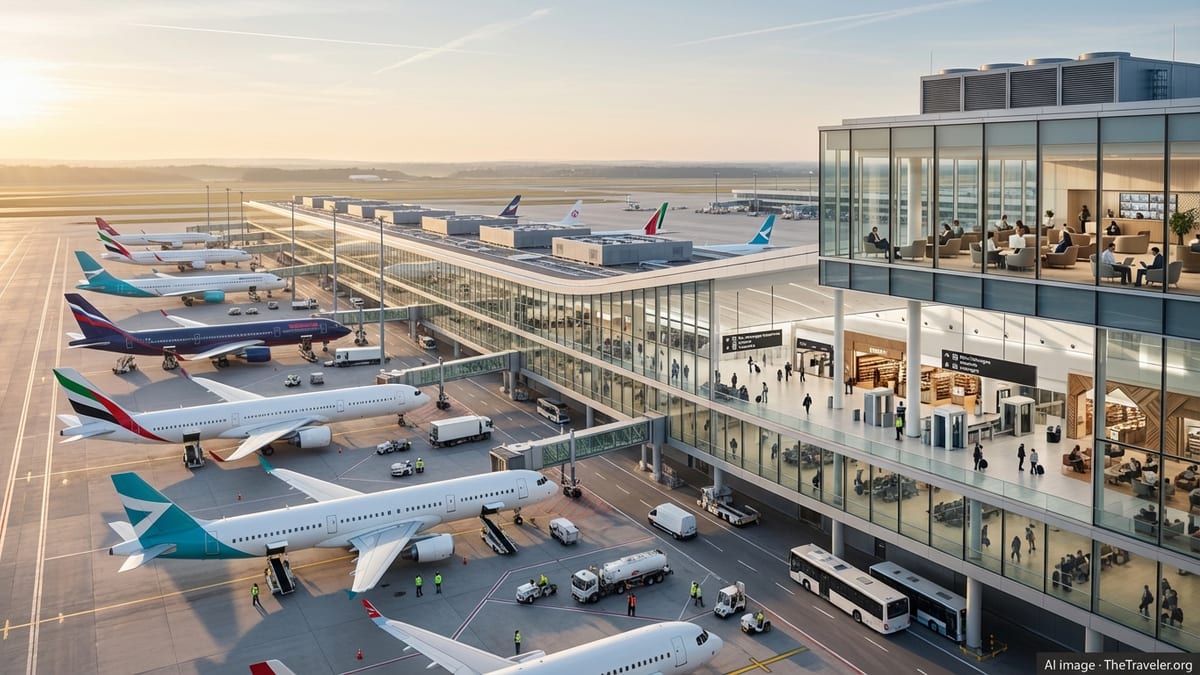
Aviation hubs are monitoring conditions closely as tarmac and runway temperatures soar. While most flights are operating, ground-handling times can lengthen as staff work under heat protocols and equipment is affected by high surface temperatures. Travelers connecting through major European airports are being advised by airlines and travel agents to allow extra time between flights and to monitor real-time updates.
Further north, transport systems in Denmark and southern Sweden, which were designed for occasional warm spells rather than prolonged extremes, are being stress-tested. Regional rail services and urban metros are dealing with crowded, overheated carriages, and municipal advisories are encouraging residents and visitors to avoid peak-hour use where alternatives exist.
Tourist Hotspots Shift Schedules and Safety Rules
Across popular European destinations, tourist-facing services are rapidly adapting. Museums, heritage sites and amusement parks in several countries have begun altering opening hours to concentrate activity in the cooler morning and evening periods. According to local media coverage, some outdoor attractions in Germany and Italy have reduced capacity or temporarily suspended afternoon operations during the hottest windows.
Waterfront cities along rivers and lakes are seeing a surge in demand for cooling spots, but this has introduced additional safety concerns. Recent news reports from Germany and France link a spike in accidental drownings to the ongoing heat, highlighting the risks for travelers seeking relief in unsupervised swimming areas. Local authorities have responded in some places with heightened patrols and temporary bathing restrictions.
Urban tourism is also being reshaped by heat advisories. City walking tours, beer gardens, rooftop bars and open-air festivals, all key elements of the European summer travel experience, are revising schedules or offering shaded and indoor alternatives. Event organizers in Germany, Denmark and neighboring countries have circulated guidance encouraging visitors to bring refillable water bottles, wear light clothing and seek regular breaks in air-conditioned spaces.
Hotels and short-term rentals are navigating a new layer of guest expectations. In regions where air conditioning was previously considered optional or even uncommon, accommodation reviews and travel forums now show a clear emphasis on cooling options, blackout curtains and access to cold drinking water. Properties that cannot provide these amenities are increasingly highlighting shaded courtyards, fans and proximity to parks or waterfronts as compensating features.
Health Risks and Advisory Levels Rise for Travelers
Health agencies across Europe have raised heat-health advisory levels as temperatures climb and nighttime minimums remain unusually high. Publicly available guidance reinforces standard precautions such as staying hydrated, limiting physical exertion during the hottest hours and checking on vulnerable individuals, including older adults and young children. For travelers, this means rethinking daily itineraries that might previously have included long bike rides, intensive sightseeing or mountain hikes in midday sun.
Medical services in several countries have reported increased call-outs for heat-related conditions, including dehydration, heat exhaustion and heatstroke. Travelers may be particularly exposed if they underestimate local conditions or are unfamiliar with how their medications interact with extreme heat. Insurance experts note that policies often cover emergency treatment but may not extend to additional accommodation costs incurred when travelers need to change plans because of health advisories.
Nighttime temperatures are emerging as a key concern. Climate analyses released this week highlight that many European cities, including in northern countries such as Denmark and regions of northern Germany, are experiencing unusually warm nights that offer limited recovery from daytime heat. Visitors staying in older buildings without air conditioning or adequate ventilation may find sleep difficult, compounding fatigue and increasing the risk of heat-related illness over several days.
National tourism boards and city visitor centers are amplifying practical advice through multilingual channels. Recommendations typically include identifying the nearest shaded parks or public cooling centers, carrying oral rehydration salts on longer day excursions and making use of public fountains, where available, not just as landmarks but as important hydration points.
Planning a Summer Trip in an Era of Extreme Heat
The latest European heatwave is reinforcing a growing message within the travel industry: summer itineraries can no longer assume predictable, comfortable weather. Tour operators and travel advisors are revisiting standard recommendations for city breaks and rail-based “Grand Tours,” placing greater emphasis on flexible booking conditions, travel insurance that explicitly addresses extreme weather and the value of shoulder-season trips.
Data from recent summers already indicated a rising interest in so-called “coolcations,” with travelers favoring higher latitudes or mountainous regions during July and August. The current conditions in Germany and Denmark, however, underline that even traditional cool-weather destinations may now face occasional extremes, making resilience and adaptability as important as destination choice.
Practical planning measures for upcoming trips include scheduling long train segments or road transfers in the early morning or late evening, reserving accommodation with credible cooling options, and structuring sightseeing around air-conditioned cultural institutions at midday. Travelers are also being encouraged by consumer groups to read the fine print on airline, rail and tour cancellation policies related to heat, as well as to keep digital copies of key travel documents accessible in case sudden schedule changes are required.
For many visitors currently in Europe, the 2026 heatwave is becoming a defining travel memory and a stark illustration of how climate volatility is reshaping even the most established holiday patterns. Germany and Denmark’s shattered temperature records are likely to feature prominently in future climate assessments, but they are also rewriting the practical playbook for experiencing Europe in high summer.