


More news on this day
Flights at Leipzig/Halle Airport in eastern Germany faced disruption this week after an explosive-laden drone was discovered near a Ukrainian cargo aircraft, triggering runway closures, diversions and an intensive security response at one of Europe’s key freight hubs.
Get the latest news straight to your inbox!
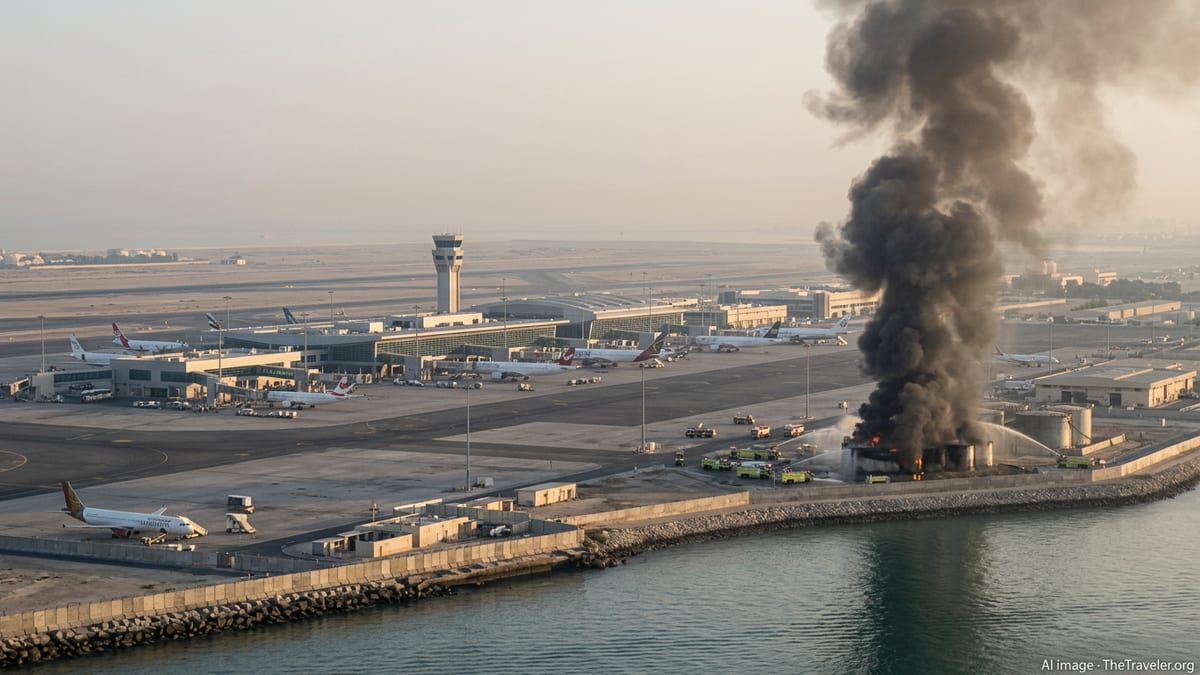
Runway closed and flights diverted after late-night discovery
According to published coverage in German and international media, the incident unfolded late on the night of Tuesday, 4 August, when an airport worker spotted a small drone in a secure cargo area close to the south runway at Leipzig/Halle. The device, reportedly carrying an improvised explosive charge and a detonator, was found near parked Ukrainian Antonov cargo aircraft that regularly shuttle military and humanitarian supplies.
Airport operations data and local reporting indicate that flight movements on at least one runway were suspended while police cordoned off the area and bomb disposal specialists examined the drone. A bomb-disposal robot was deployed to neutralise the explosives, and the detonator was removed before the device was taken away for forensic analysis.
Airline tracking information shows that several cargo flights were diverted or delayed during the closure, including services operated by major freight carriers that use Leipzig/Halle as a European hub. Passenger operations were less affected, but travelers reported delays and extended waiting times as aircraft were held on the ground or rerouted to other airports.
Leipzig/Halle, which lies between Leipzig and Halle in the state of Saxony, is one of Germany’s busiest cargo airports and a critical gateway for express freight and military logistics. The airport also serves nearby Leipzig and Halle with limited passenger services, meaning that even a short suspension of operations can have ripple effects across airline networks and road-based logistics chains.
Second in-air incident adds to alarm over drone threat
Publicly available information from aviation trackers and subsequent media coverage indicate that the ground discovery of the armed drone was followed by a second, separate incident involving a DHL cargo aircraft. The freighter reportedly aborted its approach to Leipzig/Halle as the security operation unfolded and then experienced a collision with an unidentified object while climbing away from the airport.
The aircraft, believed to have been struck near a wing or fuselage section, continued on to Hannover Airport in northern Germany, where it landed safely. After landing, inspections revealed minor external damage consistent with impact from a small object, which media reports have linked to a suspected second drone. There were no injuries reported among crew members and no cargo loss.
Aviation safety specialists quoted in German and European media note that even a small drone can pose a serious hazard to aircraft during takeoff and landing phases, when speeds are high and pilots have less time to react. Intake into an engine, impact on cockpit windows or interference with critical sensors can all lead to significant safety risks.
The twin incidents at Leipzig/Halle, involving both a discovered explosive device on the ground and a suspected mid-air collision, are being treated as part of the same security event by investigators. Publicly available statements from regional and federal security agencies describe the case as a serious attack on Germany’s transport and logistics infrastructure and highlight a need for improved protection of critical aviation sites.
Leipzig/Halle’s strategic role in European cargo networks
Leipzig/Halle Airport has grown into a major European cargo hub over the past decade, serving as a central node for express freight operators and as a logistical bridge between North America, Europe and Asia. Airport and government information show that it is also used extensively by the German military, NATO partners and Ukrainian operators to move equipment and aid.
The presence of Ukrainian Antonov aircraft on the ramp, which has been widely noted in coverage of the incident, underlines Leipzig/Halle’s importance for supply routes connected to the war in Ukraine. These flights typically carry a mix of military materiel, humanitarian cargo and oversized industrial components that cannot easily be transported by road or rail.
Any disruption at such a facility has outsize consequences. Routing cargo via other European hubs such as Frankfurt, Cologne/Bonn or Liège can temporarily absorb the impact, but logistics planners warn that last-minute diversions raise costs, strain ground handling capacity and lengthen delivery times. Time-sensitive shipments for automotive plants, medical supplies and e-commerce fulfillment are particularly vulnerable to short-notice interruptions.
Travelers using Leipzig/Halle as a passenger gateway were also indirectly affected. While most long-haul and high-frequency routes in Germany operate from Frankfurt, Munich and Berlin, delays at Leipzig/Halle can force missed rail connections and cause knock-on disruption across regional transport networks, especially when incidents occur overnight or in the early morning peak.
Ongoing investigation and heightened security across German airports
Federal and state-level security services have opened a counterterrorism investigation into the Leipzig/Halle incidents, focusing on how an explosive drone was able to reach the secure cargo area and whether the suspected mid-air collision was part of a coordinated attack. Publicly available briefings describe the device as a new level of risk for civil aviation in Germany because it combined an unmanned aircraft with an apparent live explosive package.
Investigators are examining the drone’s components, flight path and control systems to determine its origin and potential operators. Reporting in German outlets indicates that officials are exploring several scenarios, ranging from politically motivated sabotage aimed at Ukrainian assets to attempts to probe or intimidate German and NATO logistics operations. No group has publicly claimed responsibility.
In the immediate aftermath, Germany’s aviation and security authorities ordered heightened monitoring of airspace around major airports and sensitive infrastructure. Media accounts and traveler reports describe increased patrols around perimeter fences, additional spot checks on airside access roads and closer coordination between airport security teams and police aviation units tasked with monitoring for drones.
Other German airports have previously experienced short-lived suspensions of traffic after unexplained drone sightings, but the confirmed presence of explosives at Leipzig/Halle is being treated as a significant escalation. Analysts note that the incident comes amid wider European concerns about hostile unmanned aircraft operations around airports, energy facilities and military sites, prompting renewed calls for investment in counter-drone technology and clearer rules of engagement.
What travelers and airlines should expect in the days ahead
For now, published schedules show that operations at Leipzig/Halle have largely returned to normal, with cargo and passenger flights continuing while the investigation proceeds. However, travelers can expect more visible security measures in and around the terminal, including increased police presence and occasional checks of vehicles accessing airport grounds.
Airlines and logistics companies using Leipzig/Halle are reviewing their own risk procedures, including how they respond to unconfirmed drone sightings and how quickly they can divert flights to alternate airports. Aviation analysts suggest that carriers may temporarily add more fuel reserves for flights into eastern Germany to allow for unplanned holding patterns or diversions while the security situation evolves.
Passengers connecting through German airports in the coming days may experience sporadic delays if additional drone alerts occur or if security services test new monitoring systems. Travel industry experts recommend allowing extra time for transfers, especially for late-night and early-morning departures that coincide with peak cargo operations.
The Leipzig/Halle incident adds to a growing list of security-related disruptions that have affected European air travel in recent years, from drone incursions and cyberattacks to strikes and extreme weather. For travelers, the episode is a reminder that even airports far from major tourist gateways can become flashpoints in broader geopolitical tensions, with potential knock-on effects across flight networks and itineraries.