


More news on this day
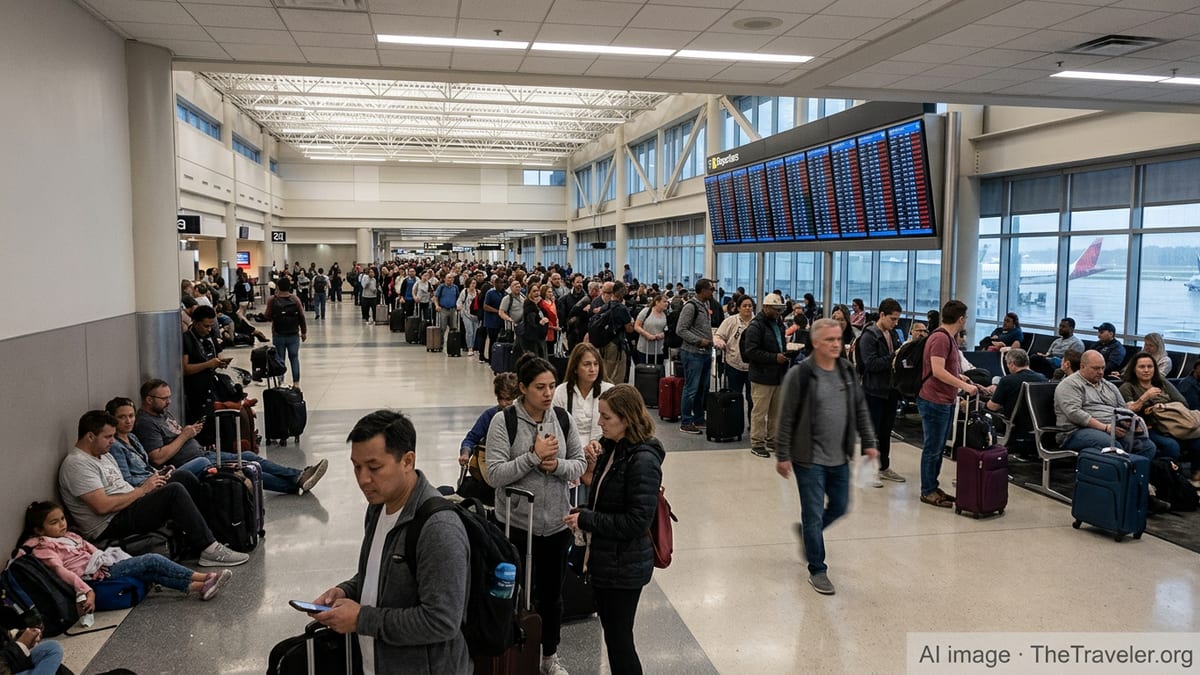
As extreme heat waves become more frequent across the United States, hot-weather disruptions are no longer limited to thunderstorms and ground stops. Increasingly, scorching temperatures are quietly forcing airlines to delay departures, cap passenger loads, or reshuffle schedules at some of the country’s busiest airports, particularly in the Southwest and high-elevation hubs.
Get the latest news straight to your inbox!
Why Hotter Days Mean Slower Departures
High temperatures reduce air density, which in turn reduces the lift a wing generates at a given speed. To compensate, aircraft may need longer runways, more engine thrust, or lighter takeoff weights. When those options run out, airlines face weight restrictions, leaving some seats empty or cargo behind, or they delay departures until temperatures fall. Research published by NASA and in peer-reviewed climate and aviation studies indicates that as average and extreme temperatures rise, a growing share of flights departing during the hottest hours of the day will need these restrictions to meet performance limits.
Analyses of aircraft performance under climate scenarios suggest that, by mid to late century, 10 to 30 percent of flights departing at the daily temperature peak could face some level of weight restriction, with typical reductions of 0.5 to 4 percent of payload and fuel capacity on affected routes. That may sound modest, but across a full schedule it can translate to multiple passengers removed from individual flights, or rerouting decisions that ripple through already busy summer operations.
Aviation-focused climate research has flagged temperature and airport elevation as key variables. Hotter air and higher altitude both reduce density, making it harder for wings and engines to perform efficiently at takeoff. As extreme heat days increase, infrastructure such as runways and pavements also face more thermal stress, adding another layer of vulnerability to peak-period operations.
US Airports Most Exposed to Extreme Heat
Airports in already hot regions, especially those at higher elevations or with intense summer heat waves, are at the greatest risk of heat-related disruptions. Phoenix Sky Harbor International and Las Vegas Harry Reid International sit near the top of that list. Phoenix has averaged more than 40 days per year at or above 110 degrees Fahrenheit since 2020, according to recent analyses of local weather station records, while NASA and other climate researchers note that early-season heat waves in the Southwest have repeatedly broken June records in both Phoenix and Las Vegas.
In July 2025, Las Vegas offered a stark illustration of this trend when extreme temperatures reached around 114 degrees. Coverage from that period describes airlines seeking volunteers to give up seats on certain departures because hot, thin air limited aircraft takeoff weights. These kinds of adjustments are expected to become more common as climate change pushes summer highs higher and extends the season when they occur.
Research examining how future warming will affect takeoff performance has repeatedly identified US hubs such as Phoenix, Denver, and Las Vegas as among the most sensitive. Their combination of heat, in some cases higher elevation, and heavy traffic makes them particularly susceptible to payload restrictions on the hottest afternoons. Studies also point to other busy airports in hot climates, including in Texas and the inland West, as places where the frequency of heat-driven constraints is likely to rise over coming decades.
Climate Projections Point to More Hot-Weather Disruptions
Climate assessments from US agencies and international energy and climate organizations highlight extreme heat as a growing challenge for transportation systems, including aviation. Federal climate information notes that as global temperatures climb, the number of days with high or extreme heat will increase across much of the United States, raising the risk of airport delays and weight restrictions linked directly to temperature.
Scenario analyses drawing on climate models suggest that, under higher-emissions pathways, the number of spring and summer days when temperatures are too hot for aircraft to take off at normal weights could roughly double at some airports by around 2050. Additional studies estimate that for widely used narrowbody aircraft such as the Boeing 737 family, the number of weight-restriction days in peak travel months could increase by 50 to 200 percent at selected major airports by midcentury under more extreme warming scenarios.
These projections imply that extreme heat will not only influence a few isolated days each summer. Instead, it is expected to shape airline planning, from runway length and fleet choices to how carriers schedule departures at heat-prone hubs. Reports examining airport resilience emphasize that operators may need to plan for longer takeoff distances, potential runway upgrades, and operational strategies designed around hotter daily temperature profiles.
When Flight Timing Matters Most
For travelers, one of the most practical ways to reduce the risk of heat-related disruptions is to pay close attention to timing. US aviation data analyses and industry-facing guidance consistently show that early-morning departures are less likely to be delayed than flights later in the day, especially during the peak summer months when extreme heat is most common.
An examination of federal on-time performance data from 2024 found that delays and cancellations were significantly more frequent from June through August than during the rest of the year. Within those summer months, the earliest departures had the strongest on-time performance. By contrast, flights scheduled in the mid to late afternoon, when temperatures and airport activity both peak, showed substantially higher odds of departing late or being canceled.
Separate rate analyses conducted by travel and automotive organizations reached similar conclusions. Looking at nationwide performance statistics, these reports indicate that summer flights leaving in the earliest morning hours enjoy substantially higher on-time rates than those departing in the midafternoon window. By around 3 p.m., the probability of a delay can climb to roughly one in three, as aircraft inherit earlier disruptions and confront the hottest part of the day.
The Best Time of Day to Fly in a Warming World
Morning remains the most reliable time of day for travelers trying to avoid heat-related problems. Overnight cooling brings temperatures down, improving air density and helping aircraft achieve their required performance with fewer restrictions. It is also the time of day before many weather-driven and operational delays from earlier flights can accumulate and cascade through the system.
Expert guidance compiled by aviation-focused information services notes that cooler morning conditions can also help reduce certain types of weather-related turbulence tied to surface heating. While no time of day can guarantee a completely smooth or disruption-free flight, earlier departures offer a statistical advantage during the warm season, both in terms of comfort and on-time performance.
Travelers who must fly through heat-prone hubs, or who are connecting through airports like Phoenix, Las Vegas, or Denver during a heat wave, may benefit from choosing the first available departure of the day, or at least flights scheduled before the midafternoon temperature peak. As climate trends point toward longer and more intense hot spells across much of the United States, pairing this kind of timing strategy with flexible itineraries, longer connection times, and close monitoring of flight status can help reduce the risk that extreme heat will derail travel plans.
Federal Aviation Administration summer travel guidance on heat and delays
NASA research on rising temperatures and aircraft takeoff performance
Associated Press coverage of extreme heat disruptions at US airports