


More news on this day
European air travel has been hit by a fresh bout of disruption, with live tracking and industry tallies indicating 3,511 delays and 135 cancellations across Amsterdam and 14 other major airports in a single 24 hour period, straining airline schedules, airport capacity and passenger patience at the height of the summer season.
Get the latest news straight to your inbox!
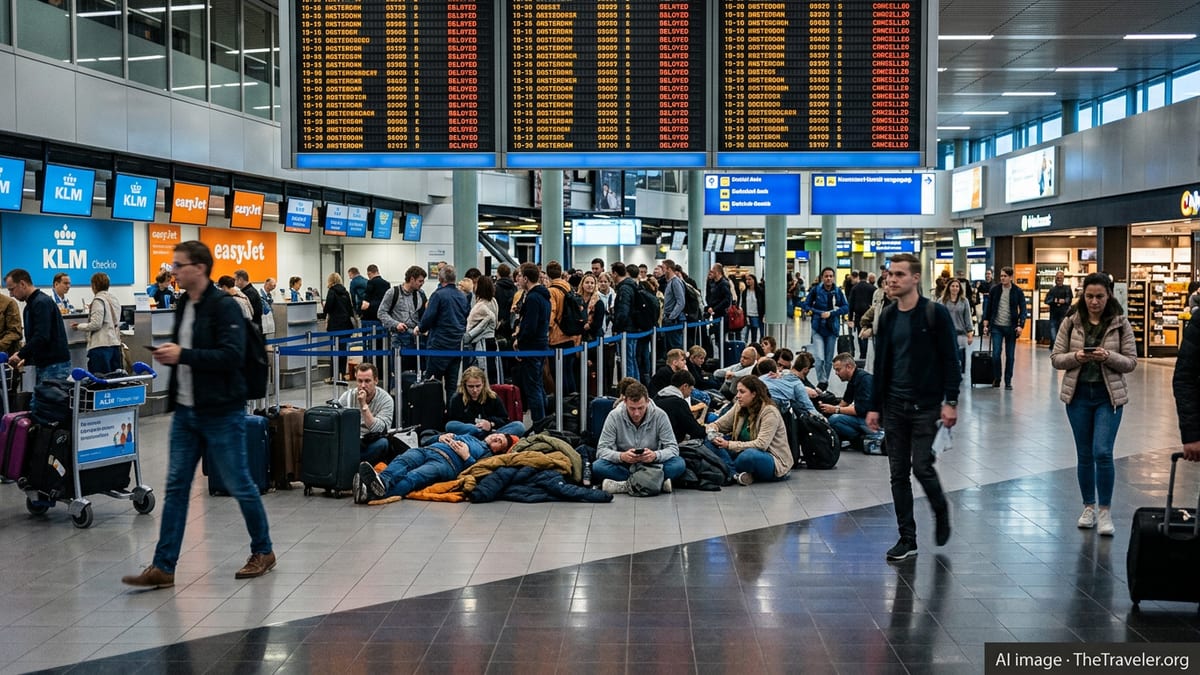
Amsterdam at the Center of a Wider European Squeeze
Recent disruption data places Amsterdam Airport Schiphol among the hardest hit hubs, with elevated levels of late-running and cancelled departures rippling through its dense short haul and long haul network. Schiphol has repeatedly appeared in Europe wide disruption tallies in 2026, including days when more than 250 flights were delayed and over 20 cancelled, underlining its vulnerability when conditions tighten across the wider system.
Because Amsterdam is both a major origin airport and a key transfer point, local issues there tend to push problems far beyond the Netherlands. Published coverage of earlier disruption days shows that relatively small numbers of outright cancellations at Schiphol can still cause hundreds of onward delays as aircraft and crews slip out of their planned rotations and miss tightly timed connection banks.
In the latest wave of problems, trackers and aviation reports point to Schiphol once again recording some of the highest concentration of delays among European hubs, contributing substantially to the combined total of 3,511 late flights and 135 cancellations logged across the continent. Those figures build on a pattern seen throughout the summer, with repeated spikes of more than 2,000 delayed services on individual days as traffic volumes push airport and airline operations close to their limits.
Fourteen Major Hubs Share the Fallout
Amsterdam is far from alone in facing a difficult operational environment. Recent disruption summaries covering Europe highlight pressure at London Heathrow, London Gatwick, Madrid Barajas, Barcelona El Prat, Frankfurt, Paris Charles de Gaulle and Dublin, among other large airports. On some days, these hubs collectively recorded close to 3,000 disrupted flights, with more than 80 cancellations, even before the latest surge pushed overall numbers beyond 3,500 delayed services.
Publicly available delay and cancellation tallies show that when multiple large airports encounter problems at the same time, the impact multiplies quickly. Flow restrictions at one hub can slow aircraft arriving from another, and ground handling bottlenecks or bad weather in one country can leave aircraft and crews out of position for services scheduled several sectors later in the day. The latest numbers from across Amsterdam and 14 other major European airports reflect this cumulative effect, with disruption spread across north, west and southern Europe.
Industry analyses note that some of the heaviest strain has recently been felt in the United Kingdom, Spain and the Netherlands, with knock on effects spreading into nearby markets such as Germany, Portugal, Switzerland and the Nordic countries. Even airports not listed among the primary 15 hubs have seen secondary disruption as airlines reroute aircraft and consolidate flights to restore schedules.
From Weather Shocks to Airspace and IT Problems
The spike of 3,511 delays and 135 cancellations is part of a broader season marked by overlapping causes. Earlier in the summer, a strike at Belgian air navigation provider Skeyes temporarily restricted a central section of European airspace and disrupted nearly 6,800 flights across at least 13 countries, with more than 6,100 of those services delayed and more than 600 cancelled. Separate days of disruption have been traced to air traffic control flow restrictions, local staffing shortages and adverse weather around key hubs.
Amsterdam itself has recently dealt with strong wind events severe enough to ground more than 100 flights in a single day, as well as winter weather episodes that forced the cancellation of hundreds of services, highlighting how quickly capacity can shrink when conditions worsen. At the same time, major European airports have also been affected by wider operational and IT incidents, which slowed check in and departure processes even when local weather was within normal limits.
Analysts observing the latest disruption figures argue that a combination of high demand, constrained airspace, legacy staffing gaps and tight turnarounds has left the network more exposed to shocks. When a weather system passes over a hub like Amsterdam or Frankfurt, or when air traffic controllers impose temporary flow limits, there is less slack in the schedule to absorb delays before they tip into missed connections and cancellations.
Impact on Passengers and Network Operations
For passengers traveling through Amsterdam and the 14 other affected airports, the immediate consequences of 3,511 delays and 135 cancellations include missed connections, overnight stays and complex rebookings. Travel industry coverage from recent disruption days describes long queues at service desks, limited same day alternatives on popular routes and passengers being reprotected through different hubs to reach their destinations.
Because many European and long haul networks are built around carefully timed connection waves, even a moderate delay on an inbound service can cause passengers to miss onward flights, stranding them until the next available departure with seats. On heavily booked summer days, that can mean waiting many hours or even an extra day, particularly for long haul routes where there may only be one or two daily frequencies.
The higher number of delays relative to cancellations in the current tally also has operational implications. While cancellations immediately remove flights from the schedule, a large volume of delayed services clogs runways and gates for longer periods, slows baggage handling and constrains pushback and taxi flows. This, in turn, makes it harder for airports and airlines to restore punctuality once disruption sets in, prolonging the effects of a single day’s problems into subsequent rotations.
What Travelers Can Do as Disruption Persists
With live trackers and recent coverage indicating that Europe’s air network continues to experience regular disruption spikes, travel advisers recommend a more cautious approach to planning. Guidance drawn from passenger rights specialists suggests building longer connection times into itineraries that pass through hubs such as Amsterdam, London, Paris, Frankfurt or Madrid, especially on days when weather or industrial action is forecast.
Travel industry explanations of recent events also emphasize the importance of monitoring flight status through both airline apps and independent tracking tools, and checking departure and arrival boards on airport websites in the 24 to 48 hours before travel. When flights are cancelled or heavily delayed, European Union rules can entitle eligible passengers departing from or arriving into the EU to fixed sum compensation in addition to rerouting or refunds, depending on the cause and length of the disruption.
Given the elevated totals recorded across Amsterdam and 14 other major European airports, travelers are being encouraged to keep boarding passes, delay notifications and receipts for meals or accommodation, as these can be needed when pursuing claims after a severely disrupted trip. While the current wave of 3,511 delays and 135 cancellations may ease as schedules stabilize, recent patterns suggest that Europe’s aviation network is likely to remain vulnerable to further disruption spikes across the remainder of the busy travel season.
Europe Flight Chaos: Nearly 3,000 Trips Disrupted in One Day
Europe flight delays and cancellations: your rights