


More news on this day
Greece’s peak travel season is colliding with an early, intense heatwave that is straining infrastructure, disrupting flight schedules and prompting many visitors to abandon inland city breaks in favor of cooler island and coastal escapes.
Get the latest news straight to your inbox!
Soaring Temperatures Raise Safety Concerns for Travelers
Publicly available meteorological data and recent coverage indicate that Greece is once again facing unusually high early-summer temperatures, renewing worries about heat stress for both residents and tourists. In recent years, June and July heat events have pushed afternoon highs well into the upper 30s Celsius, with authorities classifying several episodes as extreme. Analysts note that this year’s pattern is consistent with that trend, with heat alerts issued earlier in the season and for wider regions than historically typical.
Climate assessments by regional and international agencies point to the eastern Mediterranean as a hotspot for rapid warming, with Greece frequently cited among the countries experiencing more frequent and longer heatwaves. Tourism experts say this is reshaping visitor behavior: travelers are adjusting daily routines, reducing time spent in exposed archaeological sites and increasingly looking for shaded, breezy environments near the sea.
Travel advisories and consumer media now routinely recommend that visitors to Athens and other urban centers treat midafternoon outdoor sightseeing as a health risk during heat alerts. That guidance, combined with on-the-ground reports of oppressive conditions on sunbaked pavements and queues, is nudging more tourists to shorten stays in the capital and shift nights to coastal hubs.
Health-focused travel articles also highlight that even short transfers between air-conditioned hotels, public transport and museums can be taxing when temperatures spike. Families with children, older travelers and those with medical conditions appear particularly likely to modify or cancel city-based itineraries in favor of milder microclimates on the islands.
Airport Disruptions Compound Heatwave Pressures
Greek aviation has already been under scrutiny this year after a major technical issue in early January forced a temporary shutdown of national airspace, causing cancellations and extensive delays across the country’s airports. Although that disruption was not directly linked to weather, it exposed vulnerabilities in a system that now has to cope with both heavy tourist volumes and climate-related stressors.
Recent updates from airports and airline information channels show that high temperatures are increasingly factored into schedule planning, ground operations and turnaround times. On very hot days, ramp work slows, aircraft loading takes longer and crews are rotated more frequently for safety reasons. This can lead to rolling delays that ripple across the domestic network, particularly at busy island gateways where runway and apron capacity are limited.
Travel forums and consumer reporting describe passengers in Athens, Heraklion, Rhodes and other popular gateways facing longer waits at security and border control when heat coincides with peak arrival waves. Some of these bottlenecks are attributed to new border systems and heavy traffic, but travelers note that overcrowded, warm terminal spaces amplify the discomfort and heighten frustration when flights are delayed or rescheduled.
Airlines serving Greece have responded by publishing more detailed disruption notices, advising passengers to monitor flight status closely and to arrive earlier when heat alerts are in place. In some cases, carriers have proactively offered fee-free rebooking within a short window when temperatures and wildfire risk are forecast to climb, allowing travelers to shift to early-morning or late-evening flights that avoid the hottest hours.
Iconic Sites Curtail Hours as Tourists Head for Shade
In recent summers, Greek cultural authorities have periodically shortened opening hours at headline archaeological sites such as the Acropolis during severe heat, and published information for 2026 indicates that similar contingency measures remain on the table. When forecasts surpass critical thresholds, afternoon access has previously been halted to protect visitors and staff, leaving crowds gathered outside closed gates and forcing last-minute changes to tour itineraries.
Reports from cruise passengers and land-based tour groups describe hurried reshuffling of schedules when inland attractions either curtail access or become uncomfortable to visit during midafternoon. Guides and operators have adjusted by concentrating walking tours in the early morning, while pushing museum visits, shopping and indoor dining to the hottest part of the day. Even so, many visitors now opt to skip multi-hour excursions to exposed ruins in favor of more forgiving environments.
In parallel, coverage from Greek and international outlets highlights how climate risks are already reshaping access to some of the country’s most photographed coastal landmarks. Navagio Beach on Zakynthos, for instance, remains closed to visitors this season due to long-running safety concerns tied to rockfall and erosion, underlining how authorities are increasingly cautious about high-risk landscapes that draw crowds in the summer heat.
Travel writers note that repeated closures at high-profile sites have a cumulative effect on visitor planning. Prospective travelers are paying closer attention to seasonal patterns of heatwaves and restrictions, often reserving fully flexible tours and tickets or avoiding dates that in recent years have seen the highest temperatures and the most frequent emergency measures.
Coastal and Island Hubs Absorb Rerouted Demand
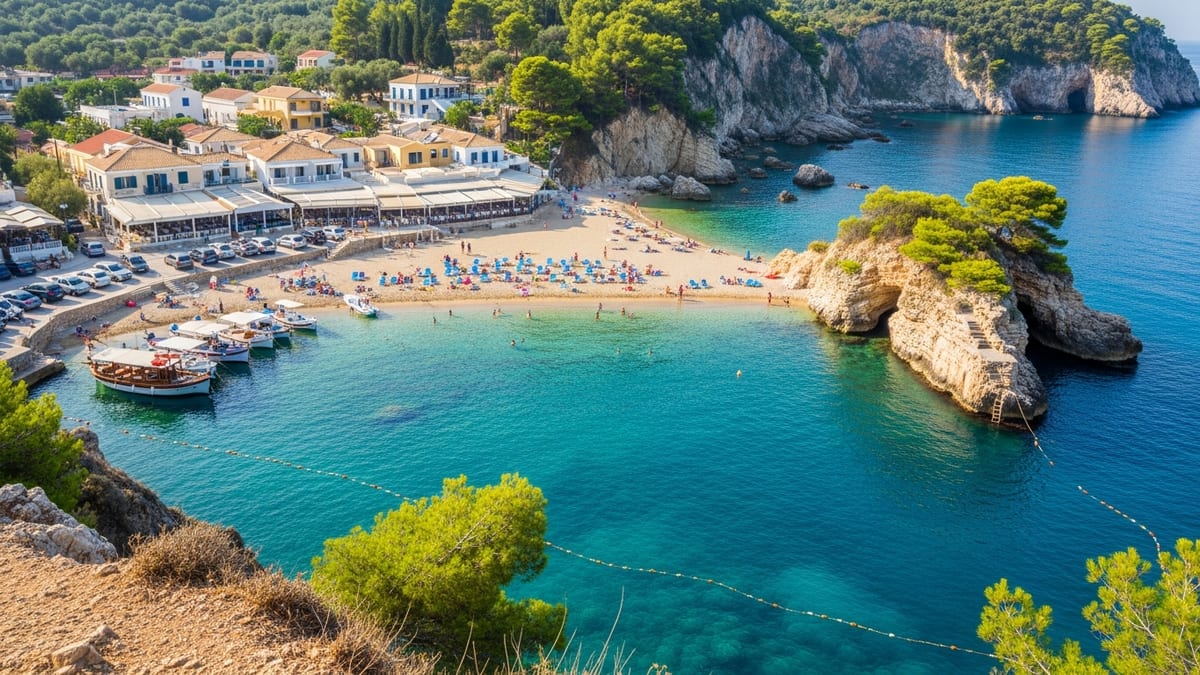
As inland heat builds, tourism demand is gravitating toward breezier destinations across the Aegean and Ionian Seas. Booking data highlighted in industry commentary indicates strong interest in islands with shaded waterfront promenades, natural gorges, caves and beaches that offer both swimming and shelter. Newly reopened attractions on Crete, such as upgraded natural sites and caves, are being promoted as cooler alternatives that combine cultural interest with the chance to escape the sun.
At the same time, other islands are dealing with a different climate-related challenge: water scarcity. Government announcements this week confirmed that Alonnisos and Tinos have been placed under a state of emergency due to drought and drinking water shortages, just as summer tourism ramps up. Local authorities are expected to introduce stricter water management, and accommodation providers are signaling that guests may face limits on nonessential water use during peak season.
Despite these constraints, coastal hotels and resorts on better-resourced islands report solid occupancy as travelers who are wary of city heat choose longer stays by the sea. Travel agents say multi-stop itineraries are shifting toward a brief arrival in Athens followed by extended time on islands such as Crete, Corfu, Rhodes and parts of the Cyclades, where sea breezes and shaded tavernas offer relief from intense afternoon sun.
Domestic tourism patterns are changing as well. Greek residents who in the past might have combined city errands with short stays inland are increasingly prioritizing second homes and rentals near the coast. Regional commentators suggest that this internal migration toward the shoreline during heatwaves is likely to intensify pressure on island infrastructure, particularly water systems and local transport.
Airlines and Travelers Adjust Strategies for a Hotter Future
The growing overlap between extreme heat, wildfire risk and peak tourism is pushing airlines to integrate climate considerations more deeply into operations affecting Greece. Industry analysis notes that carriers are building larger buffers into turnaround schedules at Greek airports, planning more night-time operations on domestic routes and coordinating more closely with airport operators when heat alerts and smoke from wildfires are expected to affect visibility or working conditions on the ground.
Travel insurers and consumer advocates are also drawing attention to the evolving risk landscape. Policy summaries now frequently flag heat-related disruptions, wildfire evacuations and emergency site closures as potential triggers for claims, although coverage details vary. Prospective visitors are encouraged by travel media to read terms carefully, particularly if they are traveling during the hottest weeks of July and August.
On the traveler side, booking patterns suggest a shift toward earlier or later seasonal travel. More visitors are targeting late spring and early autumn for cultural sightseeing in Athens and the mainland, while leaving high summer for island stays focused on swimming and relaxation. Flexible airfares, refundable hotel rates and itinerary designs that allow quick shifts from inland to coastal destinations are increasingly viewed as essential rather than optional.
Tourism analysts argue that Greece’s long-term appeal remains strong, but agree that heatwaves are now a structural feature of the travel calendar rather than an occasional anomaly. For airlines, airports, hoteliers and travelers alike, the new normal involves planning around extreme temperatures, building in contingency options and recognizing that shaded coastal hubs may become the default refuge when inland heat makes traditional city breaks untenable.