


More news on this day
A cluster of Air Inuit flight cancellations across northern Quebec has unleashed severe travel disruption this week, leaving passengers stranded in remote Nunavik communities and highlighting the fragility of the region’s essential air links.
Get the latest news straight to your inbox!
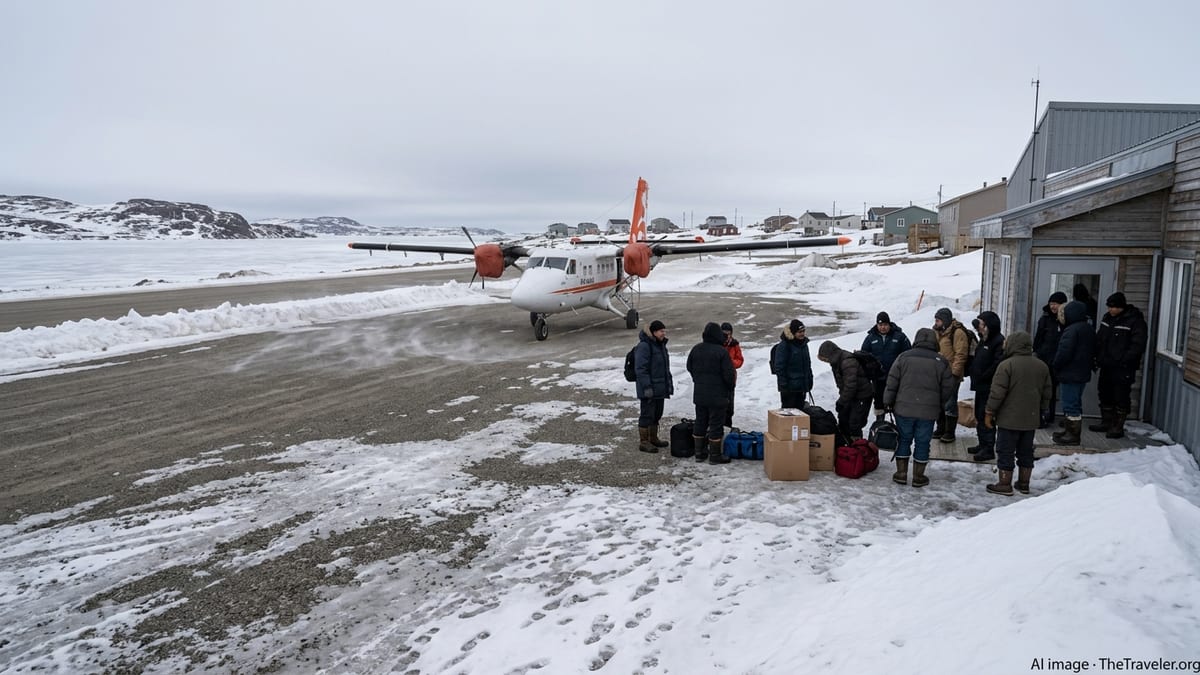
Wave of Cancellations Hits Remote Nunavik Routes
According to real time aviation tracking data and published regional coverage, four Air Inuit flights serving Nunavik communities were cancelled in close succession, triggering cascading disruption along several lifeline routes. The affected services connect small Arctic settlements with regional hubs such as Puvirnituq and Kuujjuaq, as well as onward links to La Grande and Montreal. With few backup aircraft and no alternative carriers on many segments, even a short burst of cancellations can immobilize travel across the network.
Reports indicate that at least one northbound and one southbound flight on Nunavik routes were withdrawn from the schedule on the same operating day, with follow on cancellations the next day as aircraft and crew rotations fell out of alignment. Tracking platforms show gaps where services such as Ivujivik to Puvirnituq and other Hudson Bay and Ungava Coast sectors would normally appear, underscoring the scale of the disruption for sparsely served communities.
For travelers, the impact has been immediate and acute. With road access impossible and marine options still limited by ice and weather in parts of the region, many residents rely exclusively on Air Inuit for medical appointments, work travel, school programs and access to essential supplies. When several flights disappear in a tight window, the result is a rapid buildup of stranded passengers at small airstrips with minimal facilities.
Observers note that the timing of the cancellations coincides with a period of schedule adjustments and operational changes on Air Inuit’s northern network. Recent updates to the carrier’s regular timetable for Hudson Bay and Ungava Coast communities have already compressed options on some days, reducing the margin for recovery when unforeseen disruptions arise.
Operational Strain in a Logistically Fragile Region
Publicly available information on Air Inuit’s network shows the airline serving around 20 destinations across Quebec, with the bulk of its operations focused on Nunavik. The region’s extreme distances, harsh weather and short gravel runways mean that specialized aircraft and crews are required, leaving minimal slack in the system when a technical issue, crew availability problem or sudden weather deterioration affects even a single rotation.
Industry data and regional planning documents indicate that Air Inuit’s fleet is tasked with balancing passenger, cargo and charter work on tight schedules, especially in peak travel periods. When a mechanical inspection or weather diversion removes one aircraft from service, the knock on effect can spread quickly to other communities as the carrier attempts to reposition planes and crews across a large geographic area.
Aviation analysts who follow northern operations point out that this structural vulnerability is not unique to Air Inuit. Carriers in the Canadian Arctic and other remote regions operate with limited redundancy, meaning that multiple cancellations in quick succession can trigger what effectively becomes a regional standstill. In Nunavik, where Air Inuit has a near exclusive role on many routes, the effect is even more pronounced because travelers have no practical alternative airlines to switch to when cancellations mount.
Recent accessibility and service planning documents associated with Nunavik air travel have flagged communication gaps and the difficulty passengers face in rebooking or getting timely information when schedules change. The latest wave of cancellations appears to echo those concerns, with travelers reporting confusion about new departure times, overnight accommodation and the handling of urgent trips such as medical referrals.
Stranded Passengers Face Limited Options and Long Delays
Accounts emerging from affected communities describe stranded passengers waiting many hours, and in some cases days, for replacement flights as aircraft are rotated back into service. In small villages without hotels or formal transit infrastructure, families report relying on relatives, local organizations or community centers for temporary shelter while they wait for news of rescheduled departures.
Travelers holding connections through Puvirnituq, Kuujjuaq or La Grande are particularly vulnerable when a multi leg itinerary unravels. The cancellation of a single feeder flight can cause passengers to miss onward segments toward Montreal or Quebec City, forcing them to wait for the next available seat on heavily booked services. In some instances, publicly accessible aviation logs show same day itineraries stretching into multi day odysseys as travelers are gradually re accommodated.
Medical and government travel, which often relies on fixed appointment times in southern Quebec, is especially exposed. Community leaders and regional planners have previously warned that repeated cancellations can delay specialist care, postpone court appearances, or disrupt educational programs that depend on predictable transport. The latest incident is likely to renew scrutiny of how contingency planning and prioritization are handled when limited replacement capacity must be allocated among competing needs.
Consumer advocates note that while federal regulations set baseline standards for refunds and rebooking in Canada, northern travelers frequently face practical barriers to exercising those rights. For residents of Nunavik communities, simply opting to cancel a trip and obtain a refund is often not a real choice, because there are no other viable transport options to reach critical services in the south.
Regulatory Context and Passenger Rights in Northern Canada
The disruption arrives against a broader backdrop of evolving passenger rights rules and scrutiny of airline reliability in Canada. Regulatory frameworks set standards for communication, rebooking and compensation in cases of significant delays and cancellations, although the application can become complex in remote regions where weather and safety constraints are ever present factors.
According to publicly available guidance, carriers are required to provide timely information about schedule changes and to offer either rebooking at the earliest opportunity or refunds when flights are cancelled and travelers choose not to continue. However, in communities served only by one airline, the practical value of a refund may be limited compared with the need for a guaranteed seat on a later flight, especially when trips involve medical referrals or government services.
Past regional consultative processes in Nunavik have highlighted persistent concerns over how quickly information about delays reaches passengers, including those with disabilities or limited connectivity. The recent disruption is likely to revive debate over how airlines, regional authorities and community organizations can better coordinate to provide real time updates through local radio, community offices and mobile messaging platforms.
Industry observers suggest that more granular, northern specific performance reporting on cancellations and delays could help clarify where bottlenecks are most acute and guide investments in backup aircraft, maintenance facilities or shared contingency capacity among Arctic carriers. At present, data for remote routes often receives less national attention than major southern hubs, even though the human impact of a handful of cancelled flights can be disproportionately severe.
Pressure Mounts for More Resilient Nunavik Air Links
The latest Air Inuit disruption is already fueling discussion about the long term resilience of Nunavik’s air transport system. Regional planning documents and airline advisories show ongoing adjustments to schedules serving the Ungava Coast and Hudson Bay, with tweaks to departure times and routings aimed at improving operational efficiency. Yet every episode of clustered cancellations underscores how thin the margin for error remains.
Community advocates and northern development specialists have long argued that the reliability of air service in Arctic and sub Arctic regions should be treated as critical infrastructure, comparable to major highways or rail lines in southern Canada. From this perspective, recurring multi flight cancellations are not just an inconvenience but a systemic risk affecting health care access, food security and economic participation for remote communities.
Some policy discussions have centered on potential funding mechanisms and partnerships that could support additional spare aircraft, more localized maintenance capacity, or coordinated backup arrangements among regional airlines. Others emphasize the importance of transparent contingency planning so that passengers know in advance how priority boarding, accommodation and rebooking will be handled when multiple flights are withdrawn at once.
As Air Inuit works to stabilize its Nunavik operations and rebuild normal schedules following the latest four flight cancellation wave, travelers across northern Quebec are once again reminded of how dependent their daily lives are on a small number of aircraft operating in some of the most challenging conditions in the world. Whether future investment and planning can ease that vulnerability remains an open question for the region.