


More news on this day
Formula 1’s run of season-ending races in the Gulf is facing renewed scrutiny from fans and travelers after updated UK government advice warned of potential flight cancellations, periodic airspace closures and wider disruption across parts of the Middle East.
Get the latest news straight to your inbox!
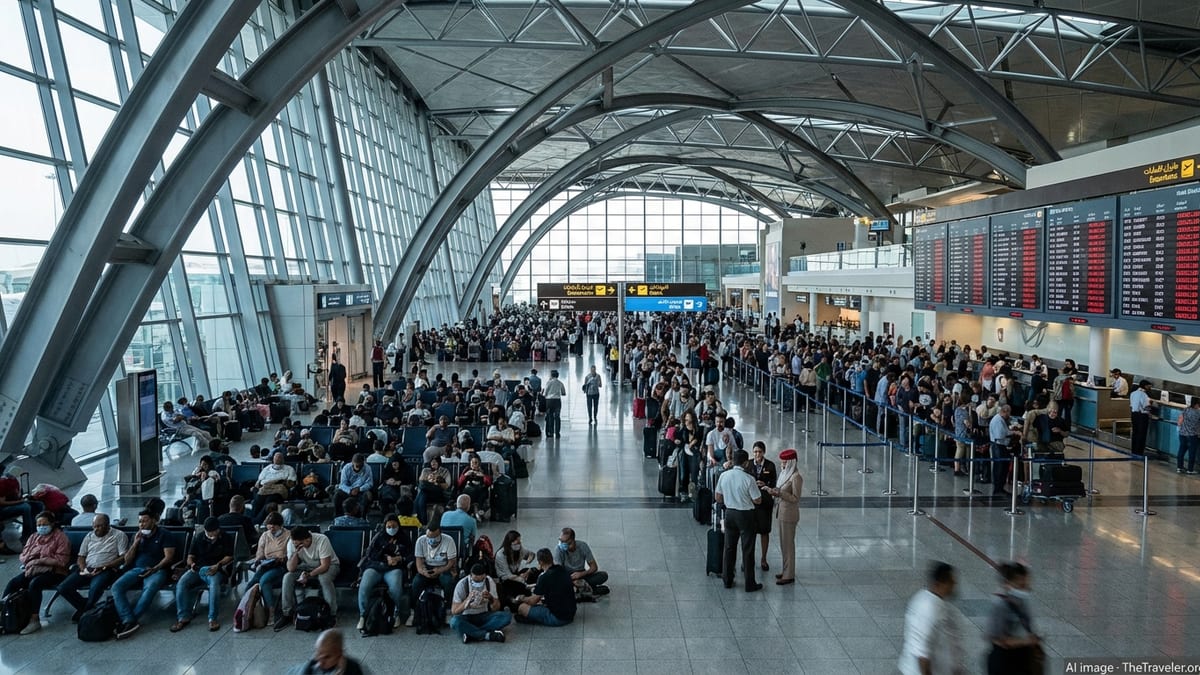
UK travel advice highlights risk of flight and airspace disruption
On 27 October 2026, the UK Foreign, Commonwealth & Development Office updated its travel advice for several Gulf states, including the United Arab Emirates, repeating warnings that British nationals in the region should be prepared for possible flight cancellations, temporary airspace closures and sudden changes to airline schedules. The wording reflects concern that regional tensions and recent attacks could again affect civil aviation.
Similar phrasing appears in the UK’s advice for Qatar and Bahrain, which notes that British travelers should monitor airline communications closely, review departure plans and be ready for disruption at short notice. The updates follow months of intermittent missile and drone activity around key regional hubs and critical infrastructure, as well as announcements from militant groups that airports and airspace remain potential targets.
The European Union Aviation Safety Agency has separately issued guidance to air operators about Gulf airspace, advising caution and, in some cases, avoidance of certain routes. Risk advisories from private security firms have also highlighted the potential for further restrictions, even where airspace is currently open, adding to uncertainty for passengers booked on flights to or via the region.
For Formula 1, which now finishes its season with races in Qatar and Abu Dhabi after earlier stops in Bahrain and Saudi Arabia, this evolving advice lands just as thousands of international spectators prepare to travel for the 2026 finale.
Security incidents put Gulf aviation under the spotlight
Recent incidents have intensified focus on aviation safety and resilience across the Middle East. In early October 2026, a missile strike on King Khalid International Airport in Riyadh caused significant damage and casualties, prompting widespread cancellations and diversions of flights serving the Saudi capital. UK travel advice for Saudi Arabia now explicitly warns that further attacks against airports are very likely and that disruption and cancellations should be expected.
Risk briefings compiled since March 2026 describe a volatile picture across the wider region, with periods when airspace over Iran, Israel, Qatar, Bahrain, Kuwait and the UAE was fully or partially closed, and major carriers in the Gulf temporarily suspended operations in response to hostilities. Advisories issued in March and later in the year note that several international airlines curtailed services to destinations across the Gulf and Israel as a precaution.
Security analysts have also linked travel disruption to the broader conflict with Iran and the 2026 Strait of Hormuz crisis, which reduced tanker and cargo traffic and exposed the vulnerability of key shipping and aviation corridors. While most Gulf hubs, including Doha and Abu Dhabi, are currently operating, reports indicate that they remain at heightened risk of schedule changes if regional tensions escalate again.
The combination of targeted attacks on airports, shifting airspace restrictions and higher insurance and fuel costs has already reshaped some airline networks serving the Gulf. For fans planning to attend F1’s late-season events, the situation adds a layer of complexity to what is usually a straightforward trip to some of the sport’s most modern venues.
Fans weigh up travel plans for Qatar and Abu Dhabi
Despite the challenging backdrop, Formula 1’s Qatar Grand Prix and Abu Dhabi Grand Prix remain on the calendar, with organizers promoting them as major international spectacles and key pillars of the championship’s late-season run. Tickets, hospitality packages and hotel rooms in Doha and Abu Dhabi have been on sale for months, and many supporters have built longer trips around the races.
However, updated government advisories and embassy security alerts across the Middle East are prompting some travelers to reassess their plans. Publicly available guidance from the UK, Australia and other countries encourages anyone heading to or transiting through the region to monitor airline operations closely, have flexible itineraries and keep travel insurance policies under review. In some jurisdictions, university and corporate travel programs have temporarily restricted non-essential trips that route through Gulf hubs.
For independent travelers, a key question is not only whether the grands prix will proceed but how easily they might be able to reach or leave the host cities if circumstances change quickly. Past episodes in 2026, when Gulf airspace closures led to thousands of flight cancellations and passengers were stranded at airports or forced to reroute via Europe or Asia, are informing current risk calculations.
Travel specialists advising corporate clients note that routings via multiple hubs, longer minimum connection times and refundable or changeable fares are increasingly being recommended for journeys involving the Gulf during the coming weeks, particularly for those heading to large-scale events.
Organizers and airlines emphasize continuity but urge vigilance
Formula 1 and the local promoters in Qatar and Abu Dhabi have not announced any alterations to the 2026 season-ending schedule in response to the latest travel advisories. Race preparations in Lusail and on Yas Island remain focused on delivering full-capacity events, with infrastructure, fan zones and transport links already in place following recent editions.
Airlines based in the region are similarly emphasizing continuity of service while acknowledging that the security situation remains dynamic. Operational updates published by major Gulf carriers in recent months describe the use of alternative routings, close coordination with aviation authorities and ongoing reviews of flight paths in response to changing airspace restrictions.
At the same time, risk assessments circulated by travel security firms highlight that future missile or drone incidents, or fresh escalation affecting key corridors, could prompt rapid schedule changes. In prior episodes, this has included the suspension of late-night departures, consolidation of services on selected routes and the rebooking of affected passengers across alliance networks.
Travelers heading to the grands prix are being advised by multiple official and commercial sources to ensure that contact details with airlines and travel agents are up to date, to download carrier apps for real-time alerts and to build contingency time into their plans in case outbound or return flights are rescheduled.
Practical steps for travelers headed to the F1 finale
For fans still planning trips to the 2026 F1 finale in the Middle East, the evolving guidance does not make travel impossible, but it does call for a more conservative approach to logistics. Public travel advice emphasizes checking government travel pages for Qatar, the UAE, Bahrain and Saudi Arabia before departure and again shortly before returning, as risk assessments can change quickly.
Travelers are also encouraged to verify flight status directly with airlines before leaving for the airport, to consider booking flexible tickets that allow date or routing changes, and to confirm that travel insurance explicitly covers disruptions linked to regional conflict or airspace closures. Some insurers have noted in their own bulletins that once a risk is considered foreseeable, cover for new bookings may be limited.
Those connecting through Gulf hubs on the way to or from the races may wish to allow longer layovers to reduce the risk of missed onward flights if departure slots are adjusted. Keeping essential items, prescription medicines and a change of clothes in hand luggage can reduce the impact of an unexpected overnight stay if aircraft or crews are out of position.
Ultimately, spectators weighing up whether to attend the F1 finale this year are balancing the draw of high-profile races in state-of-the-art venues against a regional environment that remains more uncertain than in previous seasons. The latest UK travel advice and wider international alerts underline that, while the events themselves are currently set to go ahead, journeys to and from the Gulf require more preparation and a higher tolerance for last-minute change than many fans are used to.