


More news on this day
The UK Foreign, Commonwealth and Development Office (FCDO) has issued updated travel warnings covering 16 countries across the Middle East region, prompting airlines, tour operators and travellers to review plans amid ongoing security concerns and the risk of sudden disruption.
Get the latest news straight to your inbox!
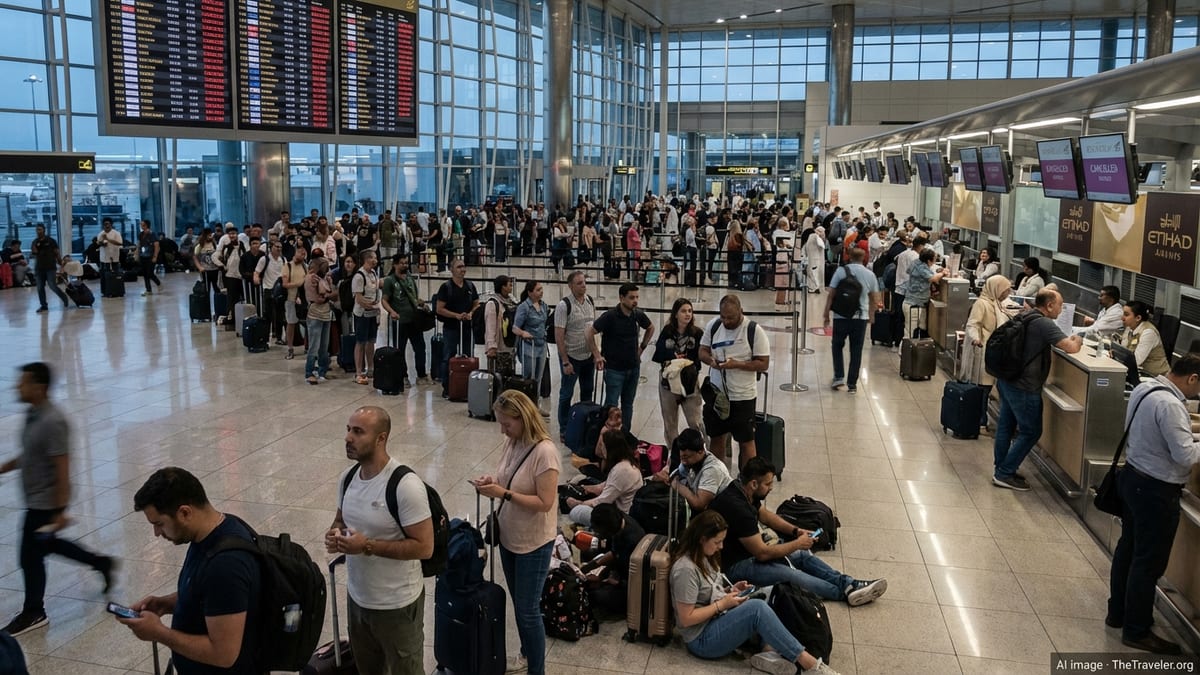
Heightened regional tensions trigger broad UK review
The latest update, highlighted in recent UK and international coverage, reflects what government material describes as serious concern about the security environment across the wider Middle East. The advisory follows a period of missile and drone activity, periodic airspace closures and military escalation that has affected both conflict zones and traditionally popular stopover hubs.
Reports indicate that the UK has reshaped its guidance several times during 2026 as the situation has evolved, initially expanding strict warnings during the height of the Iran conflict and later easing advice for some Gulf states once a ceasefire took hold. However, the overall message for British nationals considering travel to the region remains cautious, with official travel pages stressing the potential for rapid change and localised flare-ups.
The 16 countries covered by the current warning framework span both active conflict areas and key transit states. Published guidance groups destinations by severity rather than treating the Middle East as a single block, but stresses that interconnected air routes and shared airspace mean incidents in one country can quickly affect flight schedules and safety assessments in neighbouring states.
Publicly available material from travel and risk consultancies notes that the broad warning has also been shaped by the large number of UK and European nationals who were stranded in the region earlier in 2026 when multiple airports closed with little notice. That disruption, which led to emergency repatriation efforts and complex rerouting, continues to inform the FCDO’s risk calculations.
Countries facing strongest “do not travel” advice
Conflict-affected countries remain subject to the strictest UK warnings. Recent digests of FCDO guidance and specialist risk reports show that Iran, Iraq, Syria, Lebanon, Yemen and the Palestinian territories continue to sit in the highest risk category for British nationals, with advice not to travel at all except in the most exceptional circumstances.
Israel also remains subject to very restrictive advice in light of both recent conflict and the possibility of renewed hostilities. Summaries of the official country pages highlight ongoing security incidents, the presence of armed groups and the potential for targeted attacks on infrastructure that could affect visitors, including transport hubs.
Advisories for these destinations underline that airspace closures, roadblocks, curfews and communication outages can occur without advance notice. Travellers already present are urged in public information to keep movements to a minimum, maintain flexible exit plans and stay in close contact with airlines or travel providers for updates on evacuation or commercial flight options.
Insurance industry guidance circulated since early 2026 also draws attention to policy exclusions where travellers choose to visit locations against clear government advice. In practice this can mean that medical evacuation, trip cancellation or missed connection cover is significantly limited or withdrawn for journeys into the highest risk states.
Heightened caution for Gulf hubs and key transit states
Alongside outright conflict zones, the Foreign Office warning framework extends to Gulf and Levant states that serve as major flight hubs and tourism destinations. According to travel association briefings based on FCDO material, countries such as Saudi Arabia, Jordan and Oman currently sit in a category where travellers are urged to reconsider their need to visit, particularly for non-essential leisure trips.
Guidance compiled for the travel trade in October 2026 notes that Saudi Arabia remains under especially close review, with advice against all but essential travel to parts of the country due to proximity to regional flashpoints and the risk of missile or drone activity. Some areas away from these front-line zones are subject to a lower level of caution, but travellers are still encouraged to monitor updates closely before departure.
Elsewhere in the Gulf, advice has eased since the most intense phase of the 2026 crisis but remains cautious. Media coverage in mid-2026 recorded the UK lifting its strongest warnings for the United Arab Emirates and Qatar after a regional de-escalation, yet the current guidance still flags terrorism risk and the possibility of renewed disruption. Airlines serving Dubai and Doha have restored many routes, but schedules are being adjusted frequently in response to security assessments.
Jordan and Kuwait also feature within the group of 16 countries highlighted by UK-focused travel risk summaries. While both remain open to visitors, advisory text signals that border areas and sites close to conflict zones are of particular concern, and that demonstrations or cross-border incidents could lead to temporary closures or restrictions that would affect road travel and popular tourist itineraries.
Airspace closures and operational disruption for travellers
One of the most immediate impacts for travellers is at the operational level. Industry bulletins compiled in March and April 2026 recorded partial or complete airspace closures over Iran, Israel, Qatar, Bahrain, Kuwait, Iraq, Syria and the UAE during periods of heightened tension, resulting in diversions, extended flight times and, in some cases, mass cancellations.
Although many of those closures have since been lifted or moderated, airlines and global distribution systems continue to route around certain corridors when risk levels rise, sometimes with only a few hours’ notice. This has knock-on effects for passengers flying from the UK to Asia, Africa and Australasia, as flights that would traditionally cross the Gulf or wider Middle East are sent on longer paths that avoid particular conflict zones.
Travel management companies advising corporate clients note that some businesses have temporarily suspended staff travel to higher-risk Middle Eastern states or imposed additional layers of internal approval. Tour operators, meanwhile, have reprogrammed itineraries to reduce exposure to volatile border regions, switching some group tours to alternative destinations in southern Europe and North Africa.
For individual travellers, publicly available guidance stresses the importance of checking the status of connecting flights through regional hubs, confirming that travel insurance remains valid in light of official warnings, and allowing extra time for security checks or possible schedule changes at departure and arrival airports.
What UK travellers are advised to do now
The FCDO’s standing message is that anyone planning travel to or through the Middle East should review the detailed, country-specific pages for all destinations on their itinerary, including transit points. Those already in the region are urged in public information campaigns to register their presence where possible so that they can receive email or SMS updates if the security picture deteriorates.
Travel risk specialists recommend that travellers hold fully flexible tickets where budgets allow, keeping open the option of rebooking onto alternative routes if a hub airport suddenly becomes unavailable. Many airlines now offer fee waivers or credit vouchers when government advisories tighten, but these are often limited to specific dates and routes, so checking the small print is essential.
Current guidance from both government and the travel industry also underlines the value of maintaining a basic contingency plan. This can include keeping copies of key documents, ensuring access to additional funds in case of unexpected hotel stays, and having more than one way to receive urgent alerts, such as airline apps, email and SMS notifications.
With the situation across the Middle East still described in official material as unpredictable, the broad Foreign Office warning for 16 countries is expected to remain in place in some form for the foreseeable future. For now, British holidaymakers and business travellers are being encouraged to keep plans under constant review, weigh the necessity of each journey carefully and stay informed as conditions continue to evolve.