


More news on this day
Fresh UK and international travel alerts covering parts of the Middle East are putting an uncomfortable spotlight on Formula 1’s season-ending races in the Gulf, as fans weigh safety warnings against the draw of high-stakes action in Qatar and Abu Dhabi.
Get the latest news straight to your inbox!
Heightened travel alerts reshape risk calculations
The United Kingdom’s Foreign, Commonwealth & Development Office has widened its security guidance for the Middle East in recent months, urging caution or advising against non-essential travel to several states affected by regional tensions. Parallel advisories from other governments and private insurers highlight risks linked to terrorism, missile and drone activity, and armed conflict across the Gulf corridor used by Formula 1 teams and spectators.
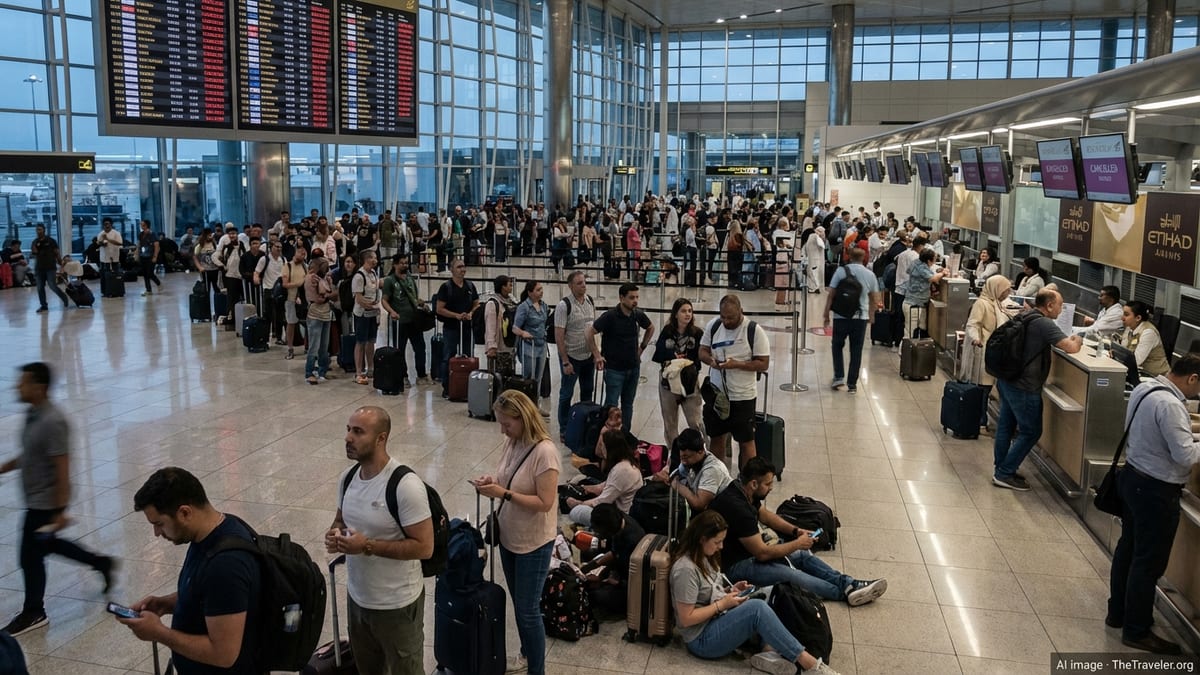
Insurance and corporate travel bulletins issued in early March 2026 describe extensive disruption, noting that airspace has at times been fully or partially closed over Bahrain, Qatar and the United Arab Emirates, as well as Iran, Israel, Kuwait, Iraq and Syria. Major knock-on disruption has also been reported in Saudi Arabia, Oman, Jordan, Lebanon and Egypt, raising the likelihood of missed connections and lengthy diversions for anyone travelling to motorsport events in the region.
Publicly available travel advice from North American governments now places Bahrain at a high risk level, with guidance updated in October 2026 urging travellers to reconsider visits due to terrorism and armed conflict. Saudi Arabia is rated at a similar level of concern, with specific references to the risk of drone and missile attacks by armed groups, including those targeting civilian infrastructure.
While the United Arab Emirates and Qatar generally carry slightly lower formal risk ratings, recent regional updates emphasise that the wider Middle East context remains volatile, and that new incidents can prompt rapid changes to flight operations and official guidance. This evolving picture has fed directly into debates around the wisdom of anchoring Formula 1’s calendar in the Gulf.
Gulf circuits locked in as season bookends
Formula 1’s competitive and commercial structure is deeply intertwined with the Middle East. The modern calendar both starts and ends in the region, with long-term contracts underpinning races in Bahrain, Saudi Arabia, Qatar and Abu Dhabi. The Yas Marina Circuit in Abu Dhabi is contracted to host the championship finale through at least 2030, while Bahrain holds a multi-decade deal that runs to 2036.
The 2024 schedule set a pattern that has continued: an opening night race in Bahrain, followed by Saudi Arabia and a late-season swing that brought teams to Qatar before ending in Abu Dhabi on 8 December. BeIN Media Group holds regional broadcast rights for the championship across the Middle East and North Africa until 2033, underscoring the strategic value that both Formula 1 Management and Gulf partners attach to the sport.
Even as the 2026 season became mired in security concerns, the basic framework remained. Bahrain and Saudi Arabia were originally slated to host early-season rounds before being cancelled because of the conflict linked to what many outlets describe as an “Iran war” affecting the safety of events in both countries. Fan discussions and specialist coverage indicate that organizers have been more hesitant about swiftly cancelling the later rounds in Qatar and Abu Dhabi, with financial exposure and contractual obligations cited as key pressures.
Draft calendar discussions for 2027, reported by specialist motorsport outlets and amplified on fan forums, still place Abu Dhabi as the final round, while Bahrain and Saudi Arabia remain pencilled in at the start subject to the regional situation. This continuity has fuelled debate about whether the sport is sufficiently responsive to the changing risk profile faced by international travelers.
Security, airspace and the fan travel experience
Beyond formal government warnings, practical travel conditions are shaping the experience of those heading for Gulf grands prix. Flight-tracking services and aviation reports have documented extended routings around Iranian airspace when tensions spike, increasing journey times and fuel costs for airlines operating between Europe, Asia and the Middle East. In periods of heightened alert, carriers have been reported to reroute flights via northern corridors over Azerbaijan and Central Asia, or southern tracks across Egypt and Saudi Arabia.
Corporate travel advisories compiled in March 2026 state that airspace over Bahrain, Qatar and the UAE has, at points, been fully or partially closed, forcing widespread schedule changes. For prospective race-goers, that has translated into late-notice rebookings, longer layovers and uncertainty about whether flights will operate as planned in the days leading up to a grand prix weekend.
Online travel communities dedicated to Formula 1 have documented the personal impact of this instability. Some fans report having booked trips built around the Bahrain and Saudi Arabian rounds in 2026, only to see both races cancelled after host countries were deemed unsafe. Many were left negotiating partial refunds from airlines and accommodation providers or relying on travel insurance policies that did not always clearly anticipate large-scale sporting cancellations linked to regional conflict.
Travel practitioners note that these experiences are now feeding into more cautious booking patterns. Fans looking at Qatar or Abu Dhabi finales are increasingly encouraged by insurers and risk consultants to check exclusion clauses covering war, civil unrest and government advisories, and to monitor updates from foreign ministries and airlines closely in the weeks before departure.
Human rights and ‘sportswashing’ concerns intensify
Alongside safety questions, Formula 1’s Gulf races are once again under scrutiny from human rights organizations. Groups including Human Rights Watch, the Bahrain Institute for Rights and Democracy and Article 19 have, for years, characterised the region’s grands prix as part of broader efforts by governments to polish international reputations in spite of domestic rights records, a practice often described as sportswashing.
In March 2026, Human Rights Watch renewed its call for Formula 1 and the FIA to put stronger human rights due diligence at the heart of race-hosting decisions. A review of the 2026 calendar highlighted events in Bahrain, Saudi Arabia and Qatar as particular flashpoints, citing long-standing concerns over political repression, treatment of dissidents and migrant worker abuses, as well as newer issues linked to the regional conflict.
Earlier campaigns have specifically targeted the Bahrain Grand Prix, including a 2024 open letter from multiple organizations marking what state media billed as “20 years of Formula 1 glory” in the kingdom. Rights groups argued that such narratives risked obscuring patterns of alleged arbitrary detention and harassment of activists, and questioned whether the sport’s own human rights commitments were being meaningfully enforced.
Similar critiques have been directed at Saudi Arabia and Qatar, where previous grands prix and other major events have drawn attention to the treatment of women’s rights defenders, restrictions on expression and the legacy of large-scale construction projects. With the Middle East now providing both the opening and closing chapters of the Formula 1 season, campaigners contend that the symbolic weight of these races has only increased.
Formula 1’s balancing act between commitment and caution
The sport’s leadership has repeatedly argued in public forums that engagement can help drive positive change and that withdrawing from controversial venues outright is not always the most constructive option. At the same time, Formula 1 and the FIA face growing pressure to demonstrate how safety, security and human rights considerations are factored into decisions about whether races proceed during periods of elevated risk.
Recent comments attributed in media reports to senior figures in Formula 1 and the FIA indicate that safety assessments guide decisions on whether to hold Middle Eastern rounds. For the 2026 season, this approach was tested directly when Bahrain and Saudi Arabia were removed from the schedule while later events in Qatar and Abu Dhabi remained under review pending further developments.
Specialist coverage suggests that commercial considerations also weigh heavily, with broadcasters locked into long-term contracts and race promoters investing significantly in infrastructure and tourism campaigns around each event. If finales in Qatar or Abu Dhabi were to be cancelled close to race week because of a sudden deterioration in the regional security picture, it could trigger complex questions over lost media rights income, promoter guarantees and fan compensation.
For now, Formula 1’s Middle East finales continue to sit at the junction of high-level diplomacy, commercial ambition and traveler risk management. With travel advisories liable to shift quickly and regional tension an ongoing concern, fans planning a year-end pilgrimage to the Gulf face a more complicated set of choices than the on-track spectacle alone might suggest.