


More news on this day
The Federal Aviation Administration is moving ahead with an artificial intelligence powered overhaul of how U.S. air traffic is managed, unveiling a new system intended to predict congestion, reshape flight schedules and significantly cut delays across the national airspace by 2028.
Get the latest news straight to your inbox!
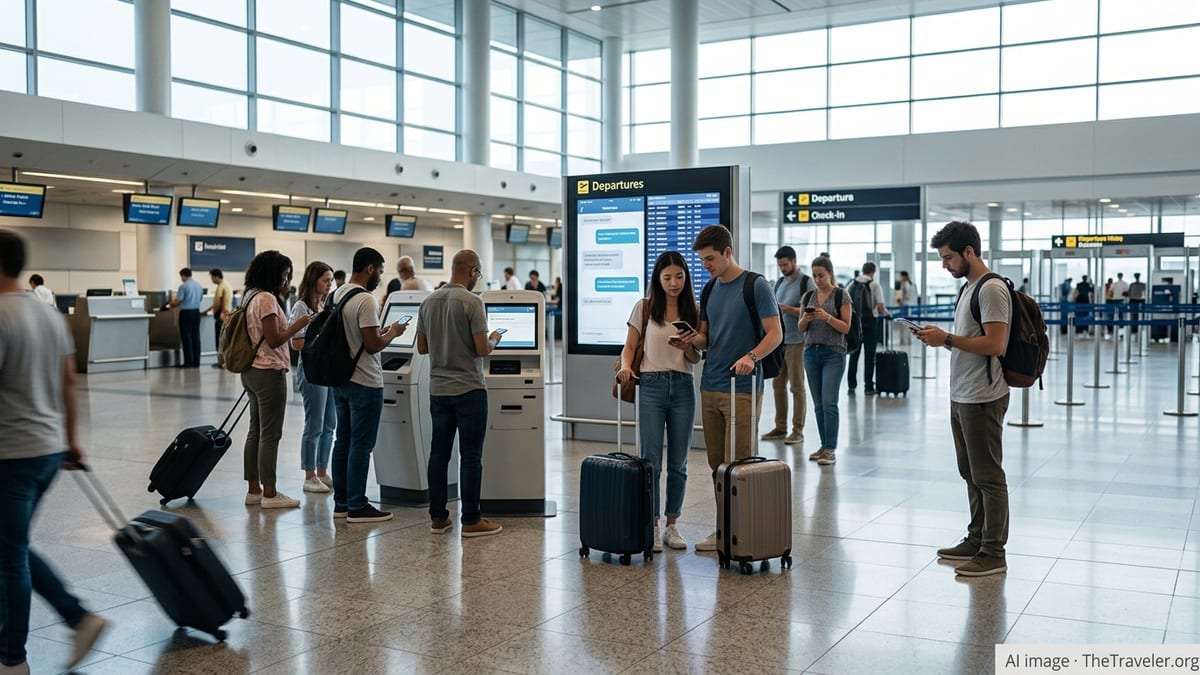
New AI platform becomes centerpiece of FAA modernization drive
According to recent federal fact sheets and industry coverage, the AI initiative is emerging as a central pillar of a broader plan to replace large portions of the aging U.S. air traffic control system by the end of 2028. The effort builds on years of incremental NextGen upgrades but represents a more sweeping shift toward predictive, data driven management of the skies.
Publicly available information indicates that the Department of Transportation and the FAA have framed 2028 as a decisive deadline for introducing a new generation of digital systems that can reduce delays, enhance resilience and better accommodate future traffic growth. The new AI tools are intended to sit at the heart of that architecture, ingesting data from across the network and recommending how flights should be sequenced and routed long before problems materialize.
The push comes after a series of high profile outages, weather disruptions and equipment failures in recent years that exposed how fragile legacy systems had become. Federal briefing documents describe flight delay minutes linked to equipment issues in the mid 2020s as several times higher than the previous decade’s average, reinforcing political pressure for a faster technology transition.
In that context, the AI program is being presented as both a response to mounting operational risks and a way to extract more performance from constrained airport and airspace capacity without compromising safety.
SMART system aims to predict congestion days in advance
At the core of the new architecture is a platform known as Strategic Management of Airspace, Routes and Trajectories, or SMART. Coverage of the contract award indicates that SMART will use advanced analytics and machine learning to constantly analyze airline schedules, weather forecasts, airport capacity, airspace constraints and other operational data to predict where traffic bottlenecks are likely to form.
Instead of reacting to gridlock as it happens, the system is designed to flag problematic surges of traffic hours, days or even weeks ahead and propose alternatives. Those options could range from adjusting departure times and flight sequences to recommending different routes or altitudes that make better use of available airspace around storms or military operations.
Industry reports emphasize that SMART is not intended to take over real time separation of aircraft. Controllers would still be responsible for tactical safety decisions in the tower and radar room. The AI system is focused on the upstream strategic planning layer, where relatively small changes to schedules and routings can prevent large cascades of delays from ever occurring.
Supporting documentation suggests that an initial version of SMART could begin limited operations as early as 2026, with a more comprehensive deployment rolling out over the following one to two years. That timetable aligns with the broader 2028 milestone for completing the current phase of air traffic control modernization.
Air Space Intelligence wins multiyear contract to build the system
The FAA has awarded an estimated 875 million dollar, twelve year contract to software company Air Space Intelligence to deliver the new AI systems, according to recent business and technology reporting. The award covers both SMART and a companion program for flow management data and services that will consolidate and standardize the information feeding the algorithms.
Publicly available descriptions of Air Space Intelligence’s existing products indicate that the company already provides predictive traffic and flight optimization tools to major U.S. airlines. Those systems are reported to be in use on a large share of domestic flights, giving the firm a substantial operational dataset and real world experience to draw on for the national deployment.
Analysts note that the FAA’s decision follows a competitive process in which other major technology firms also pursued the work. Observers interpret the outcome as a sign that the agency is increasingly interested in commercially proven tools that can be adapted to federal requirements rather than bespoke systems built entirely from scratch.
The contract runs alongside other large modernization investments, including previously announced efforts to replace hundreds of aging radar units, move critical functions into the cloud and upgrade telecommunications infrastructure to fiber and wireless networks. All of those pieces are expected to support the data hungry AI environment that systems like SMART will require.
Potential benefits for travelers and airlines
Research cited in federal planning documents and academic studies highlights the scale of the problem the FAA is trying to solve. Flight delays cost the U.S. economy billions of dollars annually through lost productivity, crew and aircraft disruptions and missed connections, while also eroding traveler confidence in the reliability of air travel.
By predicting and resolving conflicts earlier in the planning process, the new AI system is expected to reduce knock on delays that propagate across the network when a single hub or region experiences disruption. Reports on the program suggest that the tools could help airlines coordinate schedules more efficiently, reduce fuel burn associated with holding patterns and airborne reroutes, and create more predictable operations for crews and ground staff.
For passengers, the most visible impact would likely be fewer last minute cancellations and lengthy tarmac or gate waits tied to congestion. If the system functions as designed, more of the necessary adjustments would occur hours or days earlier in the form of small schedule changes, reassignments of aircraft and optimized use of available runway and airspace capacity.
Industry commentary points out that the benefits may be particularly significant at chronic chokepoints such as the New York area airports, where dense schedules, frequent weather disruptions and limited runway capacity routinely produce cascading delays that ripple across the country.
Questions over safety, staffing and implementation
While the technology promises substantial efficiency gains, the FAA’s AI driven strategy is also surfacing questions across the aviation community. Recent workforce planning documents indicate that the agency is lowering its target for fully certified air traffic controllers over the next several years, while leaning more heavily on automation and data driven staffing models.
Critics in pilot and controller forums have raised concerns that relying on new tools to offset reduced staffing could increase pressure on already stretched front line personnel, particularly during the early years of deployment when both legacy and modern systems must operate side by side. They also point to recent near misses and high profile incidents as reminders that any major change in procedures must be carefully managed.
Published coverage notes that the FAA will still need to establish rigorous safety cases, certification pathways and contingency plans before AI supported routing and scheduling tools are fully embedded in national operations. Open questions include how recommendations from SMART will be presented to controllers and airline operations centers, how disagreements will be resolved and what safeguards will apply when models behave unexpectedly.
Implementation details will also shape how quickly travelers see tangible improvements. The modernization program envisions not only new software in control centers, but also upgrades across airports, airlines and telecom networks. How those parallel efforts are funded and sequenced between now and 2028 will determine whether the AI system delivers on its promise to cut delays or becomes another partial upgrade in an already complex aviation technology landscape.