


More news on this day
Flight operations across North America are diverging, as the Federal Aviation Administration relaxes a series of weather related ground stops in the United States while cancellations and schedule cuts continue to mount at major Canadian hubs.
Get the latest news straight to your inbox!
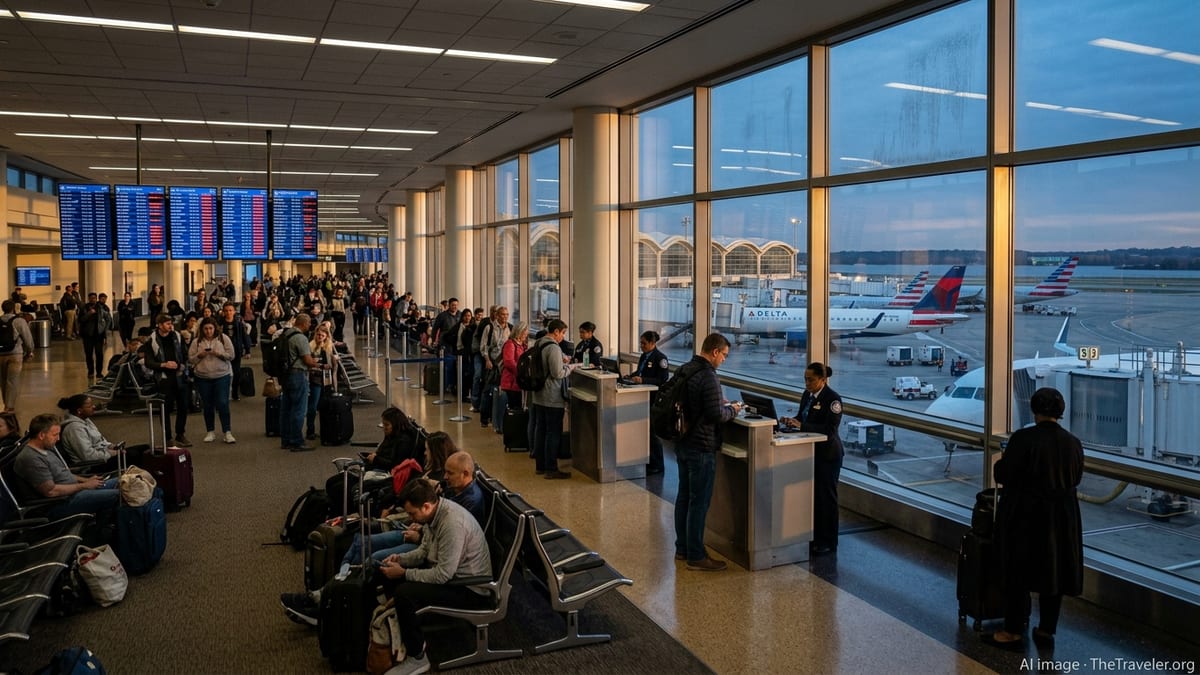
Ground Stops Loosen Across Key U.S. Hubs
Publicly available FAA traffic management data indicates that a series of ground stops and ground delay programs affecting several large U.S. airports have been scaled back or converted into less restrictive measures. The changes follow rounds of severe summer weather and air traffic flow constraints that slowed operations from the Northeast corridor to major hubs in the Midwest and Texas.
Ground stops are among the most stringent tools used by air traffic managers, temporarily preventing flights bound for an affected airport from departing. In recent days, many of these orders have been time limited and targeted, and are now being replaced by ground delay programs and miles in trail spacing that allow a reduced but steady flow of arrivals.
Data from the FAA command center advisories shows that airports such as New York’s three main facilities, Chicago O’Hare, Dallas Fort Worth and Atlanta have cycled through multiple short term restrictions as thunderstorms developed and dissipated. As convective activity eases, those constraints have shifted toward advisory level measures, allowing airlines to move more of their backlogged traffic.
Industry tracking services report that while delays across the United States remain elevated compared with an average summer day, the proportion of outright cancellations has declined since the height of the most recent storm systems. Carriers are increasingly focusing on rebalancing aircraft and crew positions after earlier disruptions rippled through their networks.
Rising Cancellations North of the Border
In contrast to the easing picture in the United States, Canadian travelers are facing a sharper rise in cancellations and schedule reductions. Flight tracking dashboards and published airline timetables indicate that Canada’s largest carriers have been cutting frequencies on a range of domestic and cross border routes as they juggle demand patterns, operating costs and airport congestion.
Recent coverage from Canadian news outlets highlights that Toronto Pearson, Montreal Trudeau and Vancouver International have all seen periods of heightened disruption, with weather, staffing, and aircraft availability contributing to irregular operations. The knock on effects are particularly evident on shorter routes to U.S. cities, where reduced frequencies leave travelers with fewer same day alternatives when flights are canceled.
Schedule information compiled from airline and airport portals shows that some carriers have already thinned their Canada to U.S. offerings for the late summer and early autumn travel periods. Routes linking secondary Canadian cities to American hubs appear especially vulnerable, with certain seasonal services starting later than initially planned or not returning at all.
Passengers on both sides of the border report longer rebooking windows when flights are canceled in Canada, reflecting more limited spare capacity. While U.S. travelers affected by storms may find multiple alternative departures later the same day, Canadian itineraries often require overnight stays or routing through distant hubs.
Operational and Regulatory Backdrop
The divergent trends come against a broader backdrop of evolving air traffic management and consumer protection policies in North America. In the United States, the FAA and the Department of Transportation have introduced a series of measures over the past two years to balance capacity with controller staffing levels and to clarify passenger rights when flights are delayed or canceled.
Federal Register notices and policy statements describe efforts to match scheduled flights to the available air traffic control workforce in congested airspace, particularly around New York. Slot relief and targeted waivers are intended to prevent chronic gridlock while still preserving connectivity. At the same time, new and updated rules on refunds and schedule changes seek to ensure travelers are compensated when services do not operate as advertised.
In Canada, publicly available information from Transport Canada and Nav Canada outlines a parallel but distinct framework. Modernization of navigation infrastructure and airspace procedures has aimed to increase efficiency, yet airports continue to wrestle with peak time congestion and resource constraints. Airlines operating in Canadian airspace have also cited fuel prices and aircraft utilization as key factors driving recent schedule revisions, including on cross border routes.
The regulatory differences are particularly visible when disruptions straddle the border. Carriers must account for separate oversight regimes, varying compensation rules and distinct air traffic management practices when planning their fleets and crew rotations between U.S. and Canadian cities.
Impact on Travelers and Airlines
For travelers, the easing of U.S. ground stops offers short term relief, but the persistence of cancellations in Canada complicates itineraries that cross the border. Passengers starting their journeys in American hubs may depart on time only to face missed connections or overnight delays upon arrival in Canadian gateways affected by local disruptions.
Publicly available booking and fare data suggest that some travelers are adjusting by selecting routings that remain entirely within one country’s network when possible, even if that involves longer surface journeys to reach a departure airport. Others are opting for earlier flights in the day in an attempt to secure additional rebooking options if schedules unravel later on.
Airlines face a delicate balancing act as they respond to these conditions. In the United States, carriers are working to restore schedules as weather improves while avoiding overtaxing air traffic control resources that remain under pressure in key sectors. In Canada, operators are trimming or consolidating routes to maintain reliability with the aircraft and crews available, accepting that this can result in fewer choices and higher load factors for passengers.
Analysts following airline performance note that the current period underscores how closely integrated yet operationally distinct the U.S. and Canadian aviation systems remain. A storm system over the Great Lakes or a staffing shortfall in a major terminal control area can quickly translate into cross border ripple effects, even when formal ground stops are limited to one side of the frontier.
What to Watch in the Coming Days
Weather patterns over the next week are expected to play a significant role in determining whether the recent easing of U.S. ground stops continues. Forecasts monitored by aviation planners point to more isolated storms rather than the widespread systems that prompted multiple national airspace advisories in late July.
In Canada, the focus will likely remain on how airlines manage capacity heading into the late summer travel period. Any further schedule adjustments on cross border routes could tighten conditions for travelers who rely on those flights for business and leisure trips between the two countries.
Observers of North American aviation trends suggest that the current episode may accelerate longer term shifts in how carriers structure their transborder networks. Increased emphasis on reliability, careful coordination with air navigation service providers, and renewed scrutiny of compensation policies are all emerging as key themes as passengers and airlines navigate another volatile travel season.