


Fort Lauderdale’s Water Taxi turns the city’s canals into a relaxed, hop-on hop-off network that doubles as a sightseeing cruise. If you are trying to decide whether to spend a day riding the yellow boats and gazing at mansions on Millionaires Row, or wondering how the routes connect beaches, restaurants, Hollywood and Pompano, this guide walks you through exactly how it works in practice and whether it is worth the price for your trip.
Get the latest updates straight to your inbox!
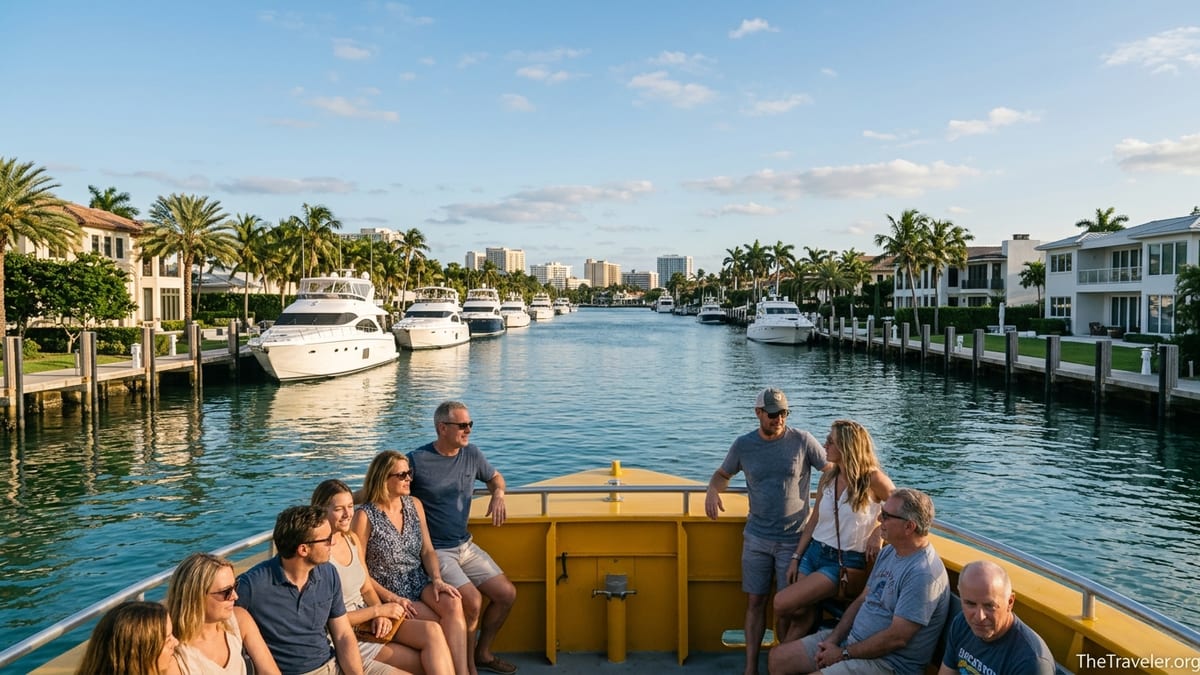
How the Fort Lauderdale Water Taxi Works Day to Day
The Fort Lauderdale Water Taxi is a privately run hop-on hop-off service operating on the Intracoastal Waterway and New River, with routes that reach Fort Lauderdale, Hollywood and Pompano Beach. Boats run daily, generally from late morning through the evening, and your ticket is sold as an all-day pass rather than point-to-point fares. That means you can board at any participating dock, ride as long as you like, then step off to explore and catch the next boat later.
On the core Fort Lauderdale and Pompano routes, boats typically arrive every 30 to 45 minutes at a given stop, depending on time of day and season. In Hollywood, where the system runs more like a shuttle, departures are spaced farther apart, often about every two hours from each terminus. Travelers should factor this into planning: it is perfect for a leisurely day of wandering between stops but not ideal if you are on a tight timetable for dinner reservations or airport transfers.
Crews provide live narration on most rides, pointing out notable homes, yachts and local history along the way, especially through the central Fort Lauderdale section and Millionaires Row. Onboard, you can usually buy soft drinks, beer, wine and simple mixed drinks, turning a basic transfer into a mini sightseeing cruise. Many visitors ride at least one full loop just to enjoy the commentary before using the taxis more like transport.
Tickets are typically sold as adult and child day passes, with discounts sometimes available for seniors, military and late-day or evening-only passes. Exact prices change periodically, but travelers can expect the adult all-day pass to be in the moderate excursion range rather than a budget bus fare. Given that the pass includes unlimited rides and a narrated cruise experience, many visitors find it compares favorably to separate sightseeing boat tours that last 90 minutes and cost a similar amount for a single trip.
Key Routes and What You See Along the Way
The heart of the system is the Fort Lauderdale route, which threads together the New River downtown, the Las Olas waterfront, and the Intracoastal corridor north and south of the city center. A classic day starts near the Greater Fort Lauderdale / Broward County Convention Center area, then winds west along the New River through the low-rise skyline of downtown, under drawbridges and past the Riverwalk. From there, boats loop east again toward the beaches, with constant views of marinas and waterfront condos.
To the north, the Fort Lauderdale boats continue past Hugh Taylor Birch State Park and into a corridor of waterfront restaurants and marinas that locals frequent by boat. This section is where many riders hop off for lunch at places like Shooters Waterfront or similar dock-and-dine spots along the Intracoastal. Beyond that, the Pompano route picks up, extending the experience to a quieter stretch of canals, residential neighborhoods and local marinas in Pompano Beach and Lighthouse Point. This northern section feels less touristy and more like everyday South Florida waterway life.
To the south, a dedicated Hollywood route connects Fort Lauderdale to the Margaritaville Hollywood Beach Resort area and neighboring marinas. The Hollywood leg behaves more like a connector service with fewer intermediate stops and longer gaps between departures, but it opens up an easy, scenic way to combine a Fort Lauderdale stay with an afternoon or dinner in Hollywood without driving. On this southern segment you pass under larger bridges and alongside a line of high-rise beachfront hotels and condos that gives a sense of the region’s modern resort skyline.
Each route is color-coded and shown on printed maps and in the Water Taxi’s digital tracker, which makes it easier to understand how the Fort Lauderdale, Pompano and Hollywood legs dovetail. In practice, most visitors focus one full day on the Fort Lauderdale stretch, then add the Pompano or Hollywood connectors only if they have a second day or a strong desire to explore those specific areas, since riding end-to-end from Pompano through Fort Lauderdale down to Hollywood and back can easily fill many hours.
Millionaires Row: The Classic Sightseeing Highlight
Millionaires Row is the nickname for a prime stretch of waterfront mansions lining the Intracoastal Waterway in Fort Lauderdale. When the Water Taxi glides through this area, the narration usually becomes more animated as crew members point out sprawling estates with private docks, superyachts and unusual architectural details. You may see sleek white megayachts stretching longer than many houses, side by side with classic motor yachts and sportfishing boats that speak to the city’s boating culture.
Homes here often feature multi-level pools, glass-filled living rooms facing the water, and large boat garages or lifts instead of simple backyard sheds. Some properties belong to business executives and celebrities, while others are owned by long-time local families. The crew will often share light anecdotes about which houses once belonged to well-known figures or were used in films or television productions, though details about current owners are generally kept vague out of respect for privacy.
From a traveler’s perspective, the appeal of Millionaires Row is less about celebrity spotting and more about gaining a visual sense of how deeply boating is woven into Fort Lauderdale’s identity. You see that the water is effectively the front yard for many residents, with delivery boats pulling up like cars, paddleboarders gliding by, and small tenders shuttling people between larger yachts and the dock. It is a distinctly different view than what you get driving along the same area on a parallel road.
If Millionaires Row is your main reason for considering the Water Taxi, it is worth timing at least one pass through this section during daylight hours. Late afternoon often offers warm, flattering light on the houses and yachts, while early evening can be beautiful for seeing the properties lit up as the sky darkens. A practical tactic is to board midafternoon, ride one full loop through the mansions in daylight, then stay on board or reboard later for a second pass at dusk to compare the atmosphere.
Notable Stops for Beaches, Dining and Exploring
One of the strengths of the Water Taxi is how many genuinely useful stops it has for day-to-day exploring. Near the beaches, several docks lie a short walk from the sand, allowing you to combine a swim with a scenic cruise without moving your car. For example, some Fort Lauderdale Beach stops sit close to clusters of oceanfront hotels and public beach access points, so guests at those properties can head straight to the dock after breakfast, ride to Las Olas for shopping, then drift back in time for sunset.
For dining, certain waterfront restaurants have become de facto Water Taxi hubs. Shooters Waterfront, for instance, is a popular lunch or happy hour destination that sits directly on the Intracoastal; many riders plan their day around hopping off here for a waterside table and reboarding later. In Pompano and Lighthouse Point, smaller local favorites near marina stops serve everything from fresh seafood to casual burgers, and are used heavily by residents arriving on their own boats as well as by taxi riders.
Downtown Fort Lauderdale’s Riverwalk and Las Olas areas are another highlight. Stops along the New River put you steps from Huizenga Plaza, Esplanade Park, Riverfront Plaza and nearby streets lined with cafes, boutiques and galleries. It is entirely possible to spend the morning cruising, disembark downtown for lunch and a museum visit or coffee, stroll the Riverwalk, then catch a later boat back toward the beach or your hotel. First-time visitors often combine a Las Olas Beach stop with a Riverwalk stop to get a sense of both the oceanfront and the urban riverfront sides of the city.
Beaches themselves are easiest to enjoy if you build in some buffer time between boats. Since vessel frequency is approximate, allowing at least 45 minutes to an hour at a given beach stop lets you swim, rent a beach chair or simply walk the promenade without nervously checking the time. Remember that getting from the dock through a hotel property or public path to the actual sand can take several minutes, especially at larger resorts in Hollywood or near major intersections in Fort Lauderdale.
Hollywood and Pompano Connections: When They Make Sense
Beyond the core Fort Lauderdale route, the Water Taxi’s Hollywood and Pompano connections allow you to treat the system as a broader coastal transport network. To the south, the Hollywood route typically links a Fort Lauderdale marina area near the Broward County Convention Center or a nearby hotel with a dock at Margaritaville Hollywood Beach Resort. From there, you can walk directly onto the Hollywood Broadwalk, a lively beachfront promenade lined with cafes, ice cream shops and bars, or explore nearby parks and canals.
Because Hollywood departures tend to run every couple of hours rather than every half hour, this connection works best if you are planning a half- or full-day outing instead of a quick side trip. For example, a couple staying in Fort Lauderdale might catch a midmorning boat to Margaritaville, spend several hours wandering the Broadwalk, having a leisurely lunch and perhaps renting bikes, then return on a late afternoon or evening boat as the sun sets. Traveling both directions by water can take a significant portion of the day, but many guests find the slow pace and changing scenery worth it compared with sitting in traffic on coastal roads.
To the north, the Pompano route extends service through neighborhoods such as Lighthouse Point and up toward central Pompano Beach. Local announcements describe around a dozen Pompano stops, including parks, marinas and restaurant docks that give riders access to quieter residential streets and local hangouts. This connector is especially attractive for repeat visitors who have already spent time in central Fort Lauderdale and want to see a more low-key side of the Intracoastal, or for Pompano hotel guests who prefer to ride into Fort Lauderdale for an evening out rather than drive.
In both directions, the connections between Fort Lauderdale and Pompano or Hollywood are usually seamless in the sense that you stay within the same Water Taxi system, but they do demand patience. Travelers should think of these legs less as pure transportation and more as part of the sightseeing experience, with long stretches of relaxed cruising punctuated by occasional drawbridge openings, slow zones and views of everything from simple fishing skiffs to multi-deck yachts moving through the same waterways.
Tickets, Timing and Practical Tips for a Smooth Day
The Water Taxi’s pricing structure centers on all-day passes that allow unlimited hops along a specific route. While exact figures can change, recent patterns suggest that adult passes sit in the range of a mid-priced city sightseeing tour, with reduced fares for children and occasional promotions for later-in-the-day riding. Families often find value in purchasing passes for everyone over a certain age, then making a full day of it, getting on and off at enough stops that the effective cost per ride becomes modest.
Operating hours generally run from around 10 a.m. to about 10 p.m. for the Fort Lauderdale and Pompano routes, with the first Hollywood departures slightly earlier from certain stops and the last boats returning before or around late evening. Boats run in most weather, but schedules can be adjusted for heavy rain, lightning or marine conditions. If you have restaurant reservations, it is wise to plan to arrive a boat or two earlier than strictly necessary, allowing for potential delays due to bridge openings or crowds at popular boarding points late in the day.
To track timing in real time, many riders use the official Water Taxi app or online tracker, which shows approximate boat positions and wait times. The estimates are not precise to the minute but help you avoid standing at a dock with no idea when the next vessel will appear. In downtown Fort Lauderdale, the free LauderGO Water Trolley, funded by the city and operated in partnership with Water Taxi, runs a separate New River loop with about eight stops and 20 to 30 minute intervals, offering an additional option for quick hops between Riverwalk attractions without buying a full Water Taxi pass.
Practical packing for a Water Taxi day includes sun protection, a light layer for breezy evening runs, and footwear you are comfortable climbing a moving gangway in. While most docks are straightforward, water levels and boat movement can make boarding tricky for anyone with mobility challenges; one major Fort Lauderdale stop near the convention center has an ADA-compliant ramp, but not all docks are equally accessible. If accessibility is crucial, it is worth confirming in advance which specific stops best meet your needs and planning your route around them.
Is the Water Taxi Worth the Price?
Whether the Water Taxi is worth the cost depends on how you use it. If you buy a pass, ride a single short segment from your hotel to a restaurant, then never reboard, you will likely feel you overpaid compared with taking a rideshare or regular taxi. On the other hand, if you treat it as a combined sightseeing cruise and all-day transportation network, making multiple hops and taking in the Millionaires Row narration, it can become good value relative to booking a separate boat tour plus several car rides.
Consider a typical visitor scenario: a couple staying near Fort Lauderdale Beach purchases two adult passes. Over the course of the day they ride from the beach to Las Olas, walk the Riverwalk and have lunch downtown, ride again through Millionaires Row to a waterfront restaurant for an afternoon drink, then continue north toward a quiet park before returning to their hotel at sunset. They have effectively received several hours of narrated cruising, transport to three or four neighborhoods and a relaxed front-row view of the city’s waterways, which compares favorably to a single dedicated sightseeing cruise at a similar price point.
For families, the calculation can be more nuanced because multiple child or teen tickets add up. However, children often enjoy the novelty of boarding boats instead of cars or buses, and the freedom to hop on and off for beach time, ice cream stops and exploring around the Riverwalk. If you plan a day with clear stops that matter to your group, and everyone understands that the experience is part leisurely boat ride and part transport, the overall value can still be attractive, especially on a sunny day when being on the water is half the point of visiting Fort Lauderdale.
On a tight budget or a short visit, you might opt for the free LauderGO Water Trolley downtown to get a taste of river cruising, then choose one specific paid Water Taxi leg that aligns with a key activity like dinner on the Intracoastal or an afternoon exploring Hollywood. This hybrid approach gives you some of the same views and experiences at a lower overall cost while leaving room in your budget for other activities such as airboat tours, museums or beachfront rentals.
FAQ
Q1. How long does a full loop on the Fort Lauderdale Water Taxi take? A complete loop on the central Fort Lauderdale route usually takes around two to two and a half hours if you stay on board, depending on traffic, bridge openings and how busy the docks are.
Q2. Can I use one pass on all routes, including Hollywood and Pompano? Passes are generally valid for unlimited rides on the route or routes specified at purchase, and current offerings often cover the broader network. It is best to confirm at the time of buying your ticket whether Hollywood and Pompano are included in your chosen pass.
Q3. Do I need to reserve a specific departure time? No advance reservations are typically required for regular Water Taxi service. You simply show up at a stop, buy a ticket if you have not already, and board the next available boat, subject to space.
Q4. Is food allowed on board the Water Taxi? Light snacks are generally acceptable, and most boats sell drinks. However, bringing full meals or large coolers is discouraged, and policies can vary slightly by vessel, so discreet, simple snacks are the safest option.
Q5. How early should I arrive at a stop before boarding? Arriving 10 to 15 minutes before the expected boat time is usually enough on quiet days, but during peak season, weekends or festival periods it is wise to arrive earlier, particularly at popular stops such as Las Olas or major beach docks.
Q6. Is the Water Taxi a good option for people with limited mobility? Some stops, including a main Fort Lauderdale convention center area dock, have more accessible ramps, but not every stop is equally easy to use. Travelers with limited mobility should plan routes around the most accessible docks and may need assistance when boarding.
Q7. What happens if it rains during my Water Taxi day? Boats operate in light rain, and many have covered seating areas. Service can pause or slow in cases of lightning or severe weather, so it is smart to carry a light rain jacket and build in extra time if storms are forecast.
Q8. Can I bring a stroller on board? Foldable strollers are commonly allowed and can be brought on board as long as they do not block aisles or exits. Crews may ask you to collapse and stow them in a specific spot during busy periods.
Q9. Is there commentary on all sections of the routes? Narration is most detailed through central Fort Lauderdale and Millionaires Row, but crew members often share local details along other stretches too. Commentary may be lighter on some connector legs where boats are functioning more as transit.
Q10. Should I tip the Water Taxi crew? Tipping is customary but not mandatory. Many riders leave a gratuity similar to what they would give for a comparable guided tour or boat excursion, especially if the narration and service were helpful and entertaining.