


More news on this day
Storms moving through the Phoenix area on Wednesday disrupted flight operations at Phoenix Sky Harbor International Airport, with tracking data showing hundreds of delays and a smaller number of cancellations as airlines and air traffic management systems worked to keep traffic moving safely.
Get the latest news straight to your inbox!
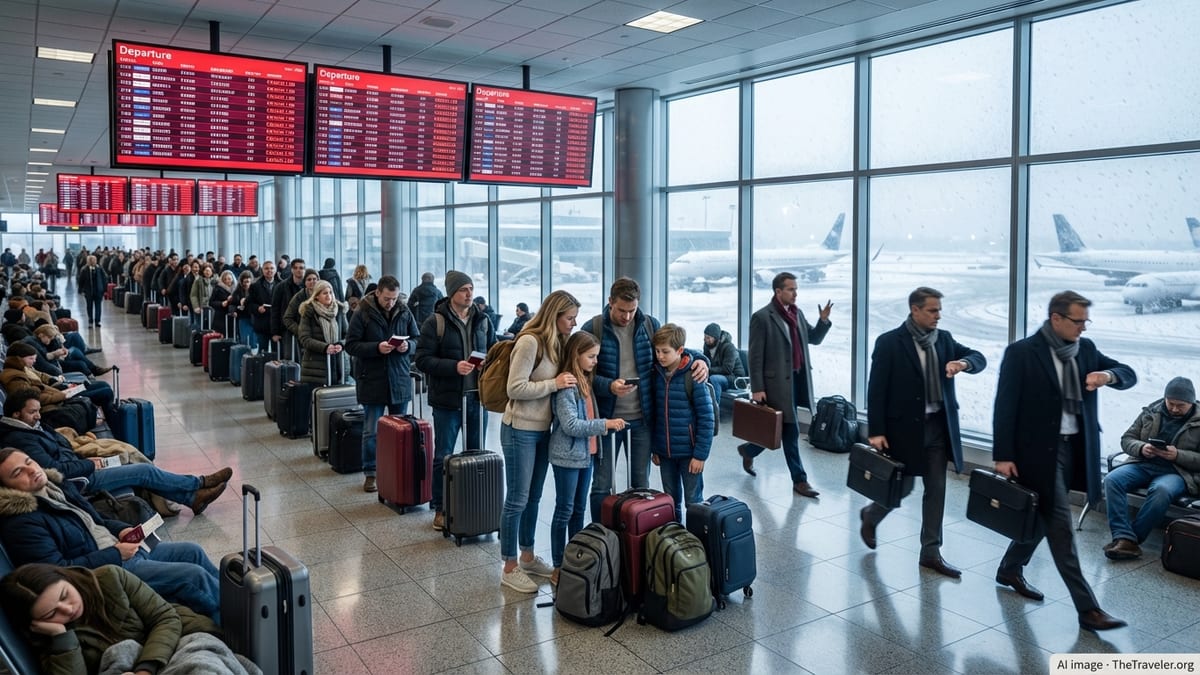
Ground stop window and delay counts climbed through the afternoon
Published coverage indicated a temporary ground stop was put in place for some inbound flights to Phoenix Sky Harbor on Wednesday, September 16, 2026, during a period of thunderstorm activity. The reported window ran from noon to 1:15 p.m. local time, reflecting the kind of short, targeted traffic management action that can be used when weather or airspace constraints tighten arrival rates.
Flight-tracking data showed disruption extending beyond that window. FlightAware’s airport statistics page for Phoenix Sky Harbor listed 262 total delays and eight cancellations for “today,” reflecting flights within, into, or out of the United States tied to PHX operations. Those figures can change quickly as schedules update and late aircraft rotations ripple through an airline’s network.
At the same time, FAA status information for PHX posted late Wednesday showed comparatively modest systemwide delay language, listing general departure delays of 15 minutes or less and general arrival delays of 15 minutes or less, with no destination-specific delays reported at the time of the update. That contrast is common during storm days: even when broad air traffic metrics look manageable, individual flights can remain significantly behind schedule due to aircraft positioning, crew legality, ramp constraints, and earlier flow restrictions.
Why storms disrupt a desert hub: lightning, wind, and cascading schedules
Thunderstorms around a major airport can slow both arrivals and departures because the spacing required between aircraft may increase, approach patterns can be adjusted to avoid convective cells, and routing options can narrow as airspace becomes constrained. Operationally, storms can also affect the ramp environment, where safety rules can limit or pause ground handling during lightning in the immediate area.
Public FAA explanations of weather-related delay programs describe how air traffic management tools, including ground delay programs and ground stops, are used to meter flights into impacted airports and regions. The aim is to reduce congestion and airborne holding while maintaining safe traffic flows, but the result for passengers is often gate holds, late departures, missed connections, and aircraft arriving out of sequence across the day.
For Sky Harbor, the compounding effect can be pronounced because the airport functions as a major origin and connection point for multiple airlines. When inbound aircraft arrive late, the delay can carry directly into the next departure, especially on high-utilization aircraft that have limited slack in the schedule.
What travelers should do now: check flight status, plan for rebooking, and time ground transportation
Sky Harbor’s own traveler guidance emphasizes that delay information is not flight-specific and that passengers should verify departure and arrival times directly with their airline. On storm-impacted days, travelers often see frequent changes: a flight may shift from “on time” to “delayed” shortly before boarding as inbound aircraft and crews are reassigned.
For passengers heading to the airport, the practical priority is confirming whether the airline still expects the flight to operate, then watching for gate and aircraft changes. If a flight cancels, rebooking options can tighten quickly once multiple banks of arrivals and departures get disrupted. Travelers who can act early, even before reaching the terminal, may find more choices for same-day or next-day alternatives.
Those already at the airport may also want to plan for longer waits inside the terminal. Weather slowdowns can create peak congestion at customer service desks, and the knock-on effect of delayed inbound flights can stack departures later into the evening. Travelers relying on pickups or rideshares may want to coordinate timing, since the actual arrival time at the gate can shift multiple times during irregular operations.
Recovery can lag after skies clear, as airlines reposition aircraft and crews
Even after the most intense storm cells move away from the airfield, airports and airlines often need hours to unwind the backlog. Aircraft may be out of position, crews may time out under duty rules, and gate availability can tighten when several flights arrive late at once. That is why a short ground stop or a brief period of heavy rain can still translate into delays well into the night.
Third-party airport condition trackers also reflected that disruption was easing later in the day. One widely used status page described PHX as in a “moderate” delay state and decreasing, alongside routine weather readings such as visibility and wind. Travelers should still expect that individual flights can remain impacted even as overall conditions improve.
For those traveling Thursday morning, the key is to treat the first departures of the day as potentially vulnerable if aircraft overnighted away from Phoenix or arrived late. Checking airline alerts before leaving for the airport and building in extra time for connections can reduce the risk of surprise disruptions following a stormy day at a busy hub.