


Landing at Faro Airport is the start of most Algarve holidays, but the first hour on the ground can feel confusing if you do not know the layout or local routines. This practical arrivals guide walks you step by step from the aircraft door to your hotel or resort, with concrete examples of services, prices and typical timings so you can start your trip calmly and confidently.
Get the latest updates straight to your inbox!
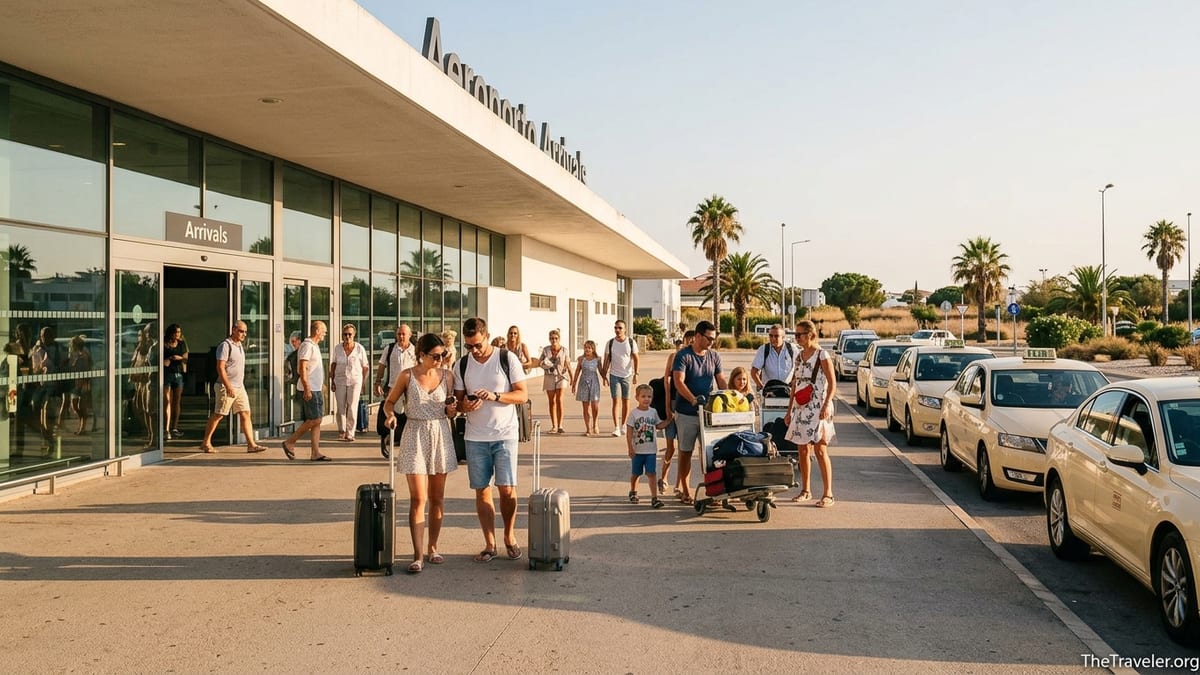
Understanding Faro Airport’s Arrivals Layout
Faro Airport, officially Faro Gago Coutinho International Airport, has a single, compact terminal with arrivals on the ground floor. After your plane parks, you will either walk directly into the terminal via an airbridge or take a short bus ride from a remote stand. Both flows bring you to a corridor that funnels passengers toward passport control first, then baggage claim, customs and finally the public arrivals hall.
Once you clear formalities and step into the public arrivals area, most onward travel options are only a short walk away. Taxis line up directly outside the terminal, dedicated car rental facilities are just beyond the car parks, and the main road in front of arrivals leads to bus stops and transfer meeting points. The airport is relatively small compared with major hubs, so even first-time visitors usually find it manageable if they follow the overhead signs in English and Portuguese.
Expect walking distances inside the building to be modest. For example, many passengers report taking 10 to 15 minutes from aircraft door to exiting the front of the terminal on a normal day with light queues. In peak summer, it can take longer due to busy passport control, so build in extra time if you have a pre-booked transfer or a tight bus connection from Faro city.
Passport Control: EU, UK and Non-EU Arrivals
After disembarking, you will first reach passport control, operated by Portugal’s border police. There are usually separate queues: one for EU and Schengen-area passports, another for all other nationalities, and automatic e-gates for eligible biometric passports. Since the United Kingdom is no longer in the EU, UK travelers must now use the non-EU line or any clearly marked UK and third-country queue rather than the EU channel.
Queue times fluctuate through the year. In shoulder seasons, many travelers clear passport control in under 10 minutes. In July and August, particularly when several flights arrive from northern Europe at once, the wait can stretch to 30 minutes or more. If you are traveling with children, keep snacks and water handy, as there are no shops before passport control. Have your passport ready, boarding pass accessible on your phone or printed, and any supporting documents such as hotel bookings or return flights in case officers ask basic questions about your stay.
Nationals from some countries outside the EU and Schengen require a visa to enter Portugal. If you are in this category, ensure your visa is in order before you fly, as you cannot obtain a Schengen visa on arrival at Faro. Border staff may check that you have accommodation arranged and sufficient funds for your visit. They may also ask for proof of onward travel, for example a return ticket from Faro or Lisbon.
Baggage Claim, Lost Luggage and Customs
Once you pass passport control, you enter the baggage claim hall on the same level. Overhead screens list your flight number and corresponding carousel. Faro Airport handles a large number of seasonal charter and low-cost flights from the United Kingdom, Ireland, Germany and Scandinavia, so several flights can be unloading at once. Standard waiting times for bags are often 10 to 25 minutes, though priority-tagged luggage from full-service airlines may appear sooner.
If your suitcase does not appear, locate your airline’s baggage services desk in the claim area. These counters are usually staffed by ground-handling agents representing multiple airlines. Have your baggage tag from check-in ready so staff can file an irregularity report and give you a reference number. Most misrouted bags arrive on the next flight, and many hotels in the Algarve are accustomed to receiving delayed-luggage deliveries on behalf of guests.
After collecting your bags, you walk toward the customs exit. As in the rest of the European Union, customs at Faro operates on a green channel for passengers with nothing to declare and a red channel for those carrying goods above duty-free allowances or restricted items. Most tourists with personal belongings and normal duty-free purchases simply exit via the green lane. Random inspections do occur, so keep receipts easily accessible if you are carrying higher-value goods like electronics or large amounts of alcohol or tobacco.
Money, ATMs and SIM Cards in the Arrivals Area
You will find ATMs both in the baggage claim zone and in the public arrivals hall. Machines are typically operated by large international or Portuguese banks and by independent operators. To avoid high fees and poor exchange rates, many experienced travelers prefer to use ATMs belonging to mainstream banking groups rather than unfamiliar brands and to withdraw larger amounts less frequently. A common strategy is to make one withdrawal of around 100 to 200 euros for incidentals like taxis, tips and small purchases, while using a card or smartphone payment for most spending.
Card acceptance in the Algarve is generally good in hotels, supermarkets and chain restaurants, but you may still encounter cash-only situations at small beach bars, local markets or older taxis. If your home bank or fintech card charges foreign ATM fees, factor that into your planning. A typical fare from the airport to central Faro by taxi, for instance, is usually in the teens of euros, so having at least 30 to 40 euros in small notes when you arrive is practical.
For mobile data, you have three realistic options: rely on international roaming from your home provider, purchase a Portuguese physical SIM, or use an eSIM. Dedicated telecom shops inside Faro Airport are limited, and opening hours can vary by season and time of day. Many arrivals, especially those landing late at night, find it easier to activate an eSIM from major European or global providers before traveling, then top up online as needed. If you prefer a physical SIM, you will find phone and electronics retailers in Faro city and in larger Algarve resorts such as Albufeira and Lagos, often with tourist-oriented plans that include a large data allowance for a short period.
Ground Transport Basics: Taxis, Rideshares and Buses
Stepping through the sliding doors from the arrivals hall brings you to the forecourt, where taxis are usually the most visible option. Official taxis are generally beige in the Algarve and line up in a marked rank just outside. They use a meter, and there is an additional airport surcharge built into the fare structure. A daytime ride from Faro Airport to the city center typically costs in the region of 10 to 15 euros and takes about 15 minutes, depending on traffic.
Ride-hailing services operate in the Faro area and are widely used by tourists heading to resorts like Albufeira, Vilamoura and Lagos. The designated pickup point for app-based rides is normally a short walk from the main exits, and signage can occasionally lag behind changes, especially after recent adjustments to traffic flows or construction works. It is wise to open your app while still in the terminal to confirm coverage and approximate pricing at your arrival time. Late at night, several travelers report that rideshare cars remain available, but waiting times can grow if many flights land together.
Public buses connect the airport with Faro city, where you can change to interurban buses or regional trains for other Algarve destinations. A local urban bus line usually runs between the airport and Faro bus station during daytime and early evening, with a typical fare of only a few euros, paid directly to the driver in cash. The journey takes around 20 minutes. From Faro bus station, longer-distance services head west to towns such as Albufeira, Portimão and Lagos, and east to Olhão and Vila Real de Santo António. Schedule frequency is higher in daytime, and services taper off later at night.
Car Rental and Driving Out of the Airport
Car rental is extremely popular in the Algarve, and Faro Airport is one of the main pickup points. Inside the arrivals area you will see branded counters for major international firms and well-known Portuguese companies. However, a large share of rentals are handled at external facilities near the terminal rather than directly inside it. Many local outfits share a dedicated car rental zone in a nearby car park, reachable on foot in a few minutes by following “Car Hire” or similar signs.
If you have pre-booked a car, your confirmation voucher usually specifies whether you should go to a desk inside the terminal, a shared car hire building in the car parks, or an off-airport depot reached by shuttle bus. For example, some smaller Algarve-based brands pick up customers in the arrivals hall and drive them to a depot just outside the airport perimeter, where vehicles are collected and returned. In practice, this adds only 10 to 15 minutes to your journey but can significantly lower your rental cost compared with desks directly inside the terminal.
Before you drive away, take a few minutes to familiarize yourself with Portuguese road signs and toll rules. The main coastal motorway, the A22 (also called Via do Infante), uses electronic tolls on certain sections. Many car hire companies fit their vehicles with electronic transponders so tolls are automatically recorded and billed to you later, often with a small administrative fee. If you prefer to avoid tolls, you can instead follow the national road N125, which is slower but toll-free and passes through many towns and villages along the Algarve coast.
Resort Transfers to Popular Algarve Destinations
Many visitors opt for pre-booked resort transfers, especially if they are traveling as a family, arriving late or heading to destinations further away such as Lagos or Sagres. Shared shuttle services operate between Faro Airport and major resort areas including Albufeira, Vilamoura, Carvoeiro and Portimão. These usually require advance booking and group passengers by arrival time and destination, so you may wait up to 30 minutes at the airport as other travelers clear arrivals. Fares are typically lower than a private taxi for longer distances, making them popular for solo travelers and couples.
Private transfers, booked online ahead of time with Algarve-based operators, meet you in the arrivals hall holding a sign with your name or company logo. For example, a private car or small van from Faro to Albufeira will generally be priced at a moderate flat rate rather than a metered fare, and journey time is typically around 40 minutes. To Lagos, in the western Algarve, the drive takes about 1 hour and 15 minutes in light traffic. Private transfers are especially useful if you are arriving with golf clubs or surfboards, since companies can provide vehicles with adequate luggage space.
When comparing transfer services, look not only at price but also at whether the fare is truly door to door, what happens in case of flight delays and whether child seats are included or must be requested. Some companies monitor flight numbers in real time and automatically adjust pickup times for delays, while others may apply waiting-time surcharges if your flight is significantly late. Check these details in your confirmation email before you travel so you know what to expect at the airport.
Late-Night and Off-Season Arrivals
If you are landing late at night, particularly outside the summer high season, it is important to understand which services keep operating and which wind down. The main public bus line between Faro Airport and the city typically stops around late evening, and in winter months departures can be less frequent. If your flight arrives after the last bus, you will need to rely on a taxi, rideshare or pre-booked transfer. Taxis customarily operate around the clock at the airport, though queues can form after clusters of late charter arrivals.
Inside the terminal, ATMs generally remain available even when shops and cafes close. However, options for buying food or drink in the arrivals hall become limited late at night. If you know you will arrive after 22:00 or close to midnight, consider bringing a snack on the plane or purchasing something on board before descent. Many hotels in the Algarve offer 24-hour reception, but some smaller guesthouses may have restricted check-in hours, so confirm your accommodation’s policy and let them know if you expect to arrive very late.
In the quieter months from November to March, there are fewer flights and the airport feels calmer, but ground transport services may also run at reduced frequencies. Interurban bus and train timetables can differ between summer and winter schedules. If you plan to continue directly to more distant towns such as Lagos, Tavira or Sagres after a winter arrival, check your onward options and consider whether it is more convenient to spend your first night in Faro and travel on the following morning.
Practical Tips for a Smooth Arrival
A few small preparations can greatly improve your first hour at Faro Airport. Before you land, complete any passport forms given on the aircraft, organize your travel documents in an easily reachable pocket and ensure your phone is charged. If you are using a digital boarding pass for a connecting flight or a transfer voucher stored in an email, take a screenshot while still in the air in case mobile data is slow to connect on arrival.
When approaching the taxi rank, always join the official line and avoid unsolicited offers inside the terminal. Confirm that the meter is running or, if a flat rate is mentioned to a distant resort, make sure the amount is clear before the driver sets off. For local buses from the airport to Faro city, carry small change, as drivers may not accept large notes. If your itinerary involves a train onward from Faro railway station, remember that the station is a short walk from the bus terminal, so allow at least 10 to 15 minutes between connections.
Finally, consider your first night’s logistics. If your flight lands after a long journey from North America or northern Europe, booking accommodation close to Faro or in a nearby resort such as Vilamoura can be more restful than traveling all the way to the far west or east of the Algarve the same evening. The following morning, after breakfast and with a fresh start, you can then collect a rental car or board a bus or train refreshed and less rushed.
FAQ
Q1. How long does it usually take to get through Faro Airport after landing?
Typical times range from about 30 minutes to 1 hour from landing to exiting the terminal, depending on queues at passport control and baggage claim.
Q2. Is there public transport from Faro Airport into the city?
Yes. A local bus line connects the airport with Faro city center and the main bus station during daytime and early evening, usually for only a few euros.
Q3. Can I get a taxi easily on arrival at Faro Airport?
Official taxis wait at a rank just outside arrivals and generally operate 24 hours a day. In busy summer peaks you may have a short wait in the queue.
Q4. Are rideshare services like app-based taxis available at Faro Airport?
Yes. Ride-hailing services operate at Faro Airport, with pick-up points a short walk from arrivals. Availability and waiting times vary by season and time of day.
Q5. Is it better to rent a car at Faro Airport or later in my resort?
Renting at the airport is convenient and ideal if you plan to explore widely. Renting later can work if you only need a car for a short part of your stay.
Q6. Can I buy a local SIM card on arrival at Faro Airport?
Options inside the terminal are limited and hours vary, so many travelers rely on eSIMs or purchase physical SIM cards later in Faro or in major resorts.
Q7. How much cash should I withdraw when I arrive?
With card payments widely accepted, withdrawing 100 to 200 euros is usually enough for taxis, small purchases and tips at the start of your trip.
Q8. Are there late-night transport options to resorts like Albufeira or Lagos?
After buses stop running, your realistic choices are taxis, ride-hailing services or pre-booked private or shared transfers, which many visitors arrange in advance.
Q9. Where do I meet my pre-booked transfer driver?
Most companies specify a meeting point in the public arrivals hall, often near the main exit doors, with drivers holding a sign showing your name or company logo.
Q10. What happens if my luggage is lost or delayed at Faro Airport?
If your bags do not appear, report it immediately to the airline’s baggage services desk in the claim area so they can trace and deliver your luggage to your accommodation.